

The Salmon fly hatch in Montana is one of the world's most legendary fishing spectacles. It ranks near the top with fishing the giant migratory tarpon of the Homosassa flats, site fishing to back country New Zealand trout, Tierra del Fuego sea run browns, the green drake hatch on Penn's Creek and the sedge hatch on an English chalk stream. The mystique of the Salmon fly is the gargantuan size of both the insect and the trout that try to eat them.
The Salmon Fly
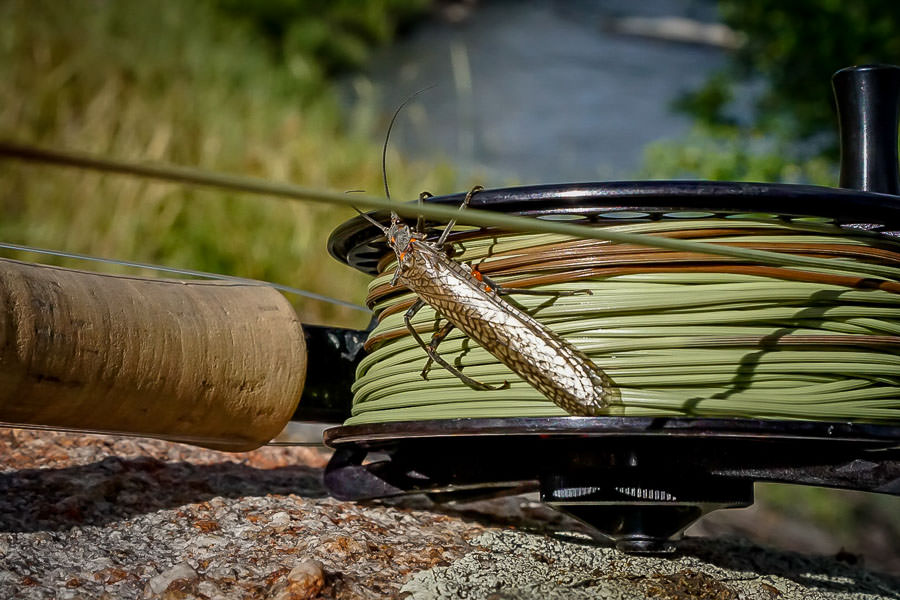
Salmon flies, Pteranarcys Californicus, are a member of the stonefly order of insects and can grow to be up to three inches long. When large trout get really big, they give up on eating small insects and focus on infrequent feedings on larger morsels like other trout, crayfish and small poodles. Catching a truly large trout, one that tapes longer than 23", on a dry fly becomes almost impossible with normal surface patterns. The exception to this rule is during the Salmon fly hatch. These insects are so large and full of nutrition, that even the largest fish in the river become interested. Normally, a monster trout in the 30" range will eat once every two or three days by eating another trout or whitefish often up to 12 inches. To be lucky enough to cast to this fish when he is ready to eat, and to be willing to throw a 10" rabbit fur streamer on an 8wt all day is not an event that is often realized. During the Salmon fly hatch, these large trout switch gears to feed on the oversized stoneflies. Because the large fish need to eat 50 or 60 of the big bugs, the number of feeding events drastically increases along with your chances of being in the right place at the right time with your imitation. Just because huge fish are willing to eat Salmon flies doesn't mean that you should expect to catch 20"+ plus trout just because you see big bugs in the air and are tossing a size 2 sofa pillow. The reality is, however, if you pay your dues and chase the salmon fly long enough you will catch your fair share of very large trout on a dry fly. The experience of watching a truly massive trout destroy a huge dry fly is a truly life changing moment that has ruined more good men than alcohol and women combined.
Challenges
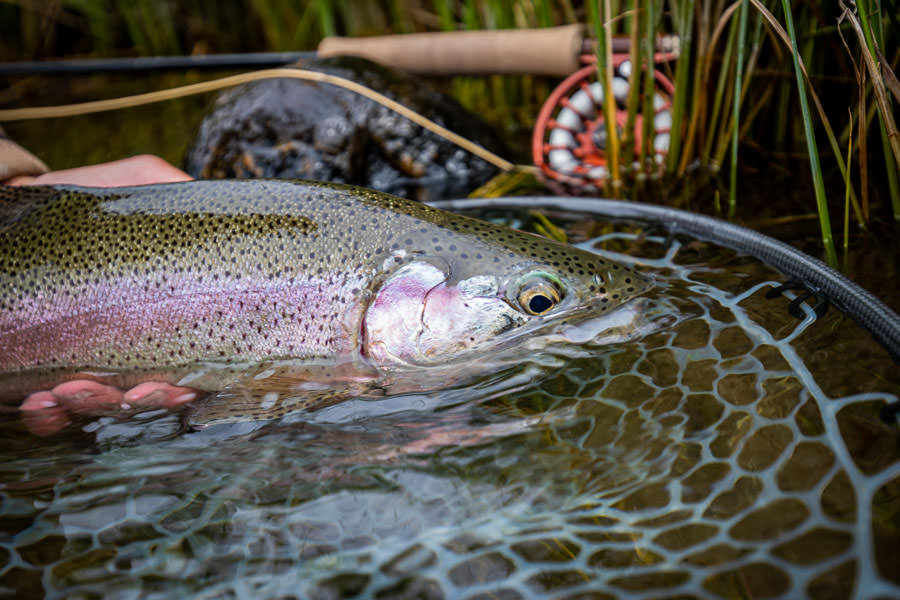
If the perks of fishing the salmon fly are the chance to catch a huge trout on a dry fly, what is the downside? There are three major challenges that occur with this hatch. The first is that the insects are so large that once the initial feeding bonanza is over (which during a thick hatch may only last a few hours for average sized fish) trout are so full that they may spend several days digesting before they are ready to feed again. There is nothing more infuriating than waiting all year to chase the big bugs then finally locate the peak of the hatch and cast in futility while hundreds of Salmon flies soar through the air and flop on the water without a feeding trout in sight. The second challenge of the hatch is the "angler hatch" that it attracts. Fly fisherman from around the world try to chase this hatch and everyone is throwing huge dries. Sooner or later the trout start getting wise to this and you start getting more and more false takes and bumps and a reduced number of fully committed takes. Finally, the Salmon fly hatch is notoriously hard to predict and time. I am on the water every day of salmon fly season and only have a few days where we run into an intense hatch. The salmon flies only hatch for one or two days on a specific section of river. The hatch migrates a few miles upriver each day, but it is not uniform and sometimes they pop up in very spotty, sporadic pattern. Because of the complexities and challenges of chasing the Salmon fly, I find that man days of the guide season I do whatever I can not to fish the hatch because of the risks that impose. With that being said, I always schedule one or two days off during salmon fly time to swing for the fences and take my chances on the big bug and the big fish that eat them.
Strategies
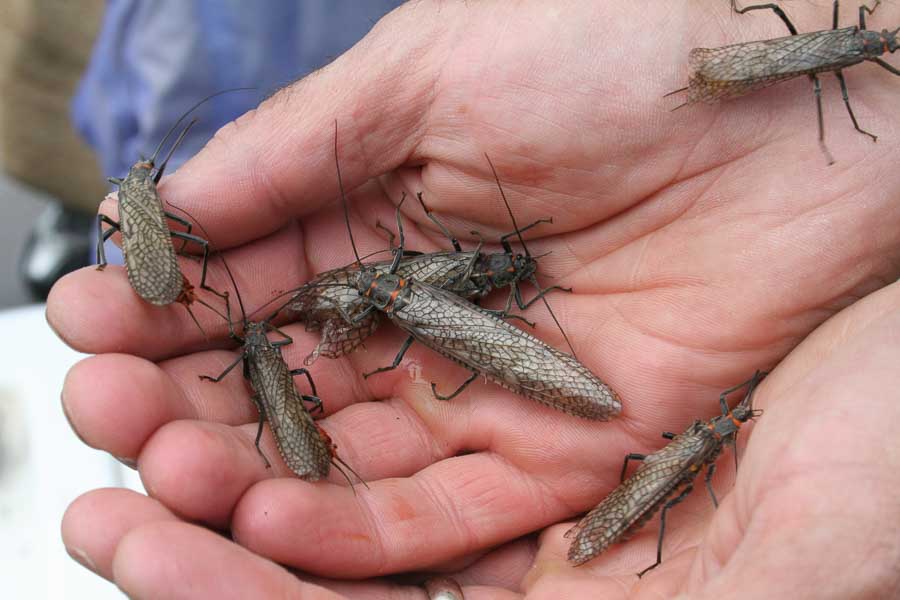
So what strategies should you employ if you decide to "chase the hatch". My biggest recommendation is to get up ahead of the hatch and fish the nymph migration or get far below the hatch and catch the fish when their hunger has returned but their memory hasn't faded. Stoneflies do not hatch at the surface like caddis flies and mayflies, but rather crawl from the fast deep rock habitat mid river to the banks where they climb onto vegetation and rocks to molt. Tumbling large size 4 brown or black stonefly patterns during this migration can be very productive. Once in a while you will drift down into the head of the hatch while employing this technique where you might get lucky enough to see a feeding frenzy (really lucky!). My favorite strategy is to fish about 5 days behind the main hatch. Most of the anglers targeting the hatch will be several miles upstream looking for the adults. Although you may not see many adult flies in the air or on the banks, the fish will just be getting hungry again, and they will still remember what the big bugs look like. My best days of dry fly fishing ever during Salmon fly time have all been under this scenario, and when you catch it right 100 fish days are a reality!
Parting Thoughts
My final advice for fishing the salmon fly is to find good habitat. These large stoneflies love swift, rocky sections of river. Canyons are often ideal habitat. A favorite trick of some Montana fishing guides is to hike or use whitewater rafts to get into remote parts of rivers with ideal canyon habitat that other guides in drift boats cannot access. Not only is the hatch much more intense in places like Yankee Jim Canyon of the Yellowstone or Bear Trap Canyon of the Madison, but the angling pressure is very low eliminating the problem of educated fish refusing your large dries. So if you are ready to be humbled, and don't mind losing your grasp on your sanity from time to time, you may want to throw you hat into the Salmon fly ring.somebody has to catch that 28 incher, why not you?