

Montana fly fishing has become synonymous with big rivers and large wild trout. With hundreds of thousands of miles of quality trout streams, spectacular scenery and an unspoiled landscape it is easy to see why the state holds a special place in the hearts of fly fisherman from around the globe. Montana is also one of the few places in the lower 48 where an angler can consistently catch wild trout over 20". As a longtime guide and Montana fishing outfitter, I have learned that nothing tops of a Montana fishing trip better hand catching a giant trout. 20 grip and grin photos of 14" fish can't add up to a single great photo of a truly big fish! All though anyone fishing the waters of some of Montana's legendary lake and rivers can stumble on to a trophy fish at anytime, there are several ways to maximize your chances of hooking and landing big fish.
Focus on waters that regularly hold large trout
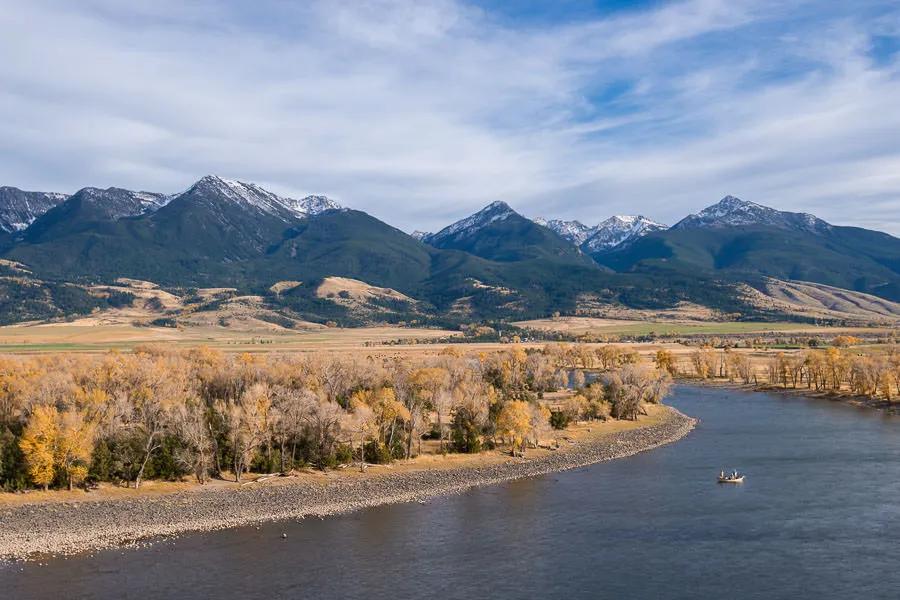
Just because you are fishing in Montana doesn't mean that you have a shot at large trout. There is wonderful action packed fishing to be had smaller rivers and mountain lakes throughout the state, but most of the smaller streams or high elevation lakes do not produce trophy trout (with some exceptions). On the other hand, most of the larger rivers like the Madison, Yellowstone, Missouri, Big Hole, and Bighorn frequently produce trout over 20" on a regular basis with a few monsters running over 35" and 15lbs. There are also a few high mountain lakes that hold populations of freshwater shrimp that fuel trout growth. Large trout in high mountain lakes is the exception rather than the rule, however, and they often are cyclical based on winter-kill. Finally, some lower elevation lakes and ranch ponds have a prolific supply of shrimp, mayflies and damselflies allowing for some gargantuan trout. In order to catch large trout you must target a fishery that holds large fish. The magic of fly fishing in Montana is that there are multiple fisheries that produce wild trout of trophy proportions. Many streams and rivers in other parts of the world simply do not offer the water temperatures, habitat and food supplies necessary to grow large trout.
Use flies and techniques that target trophy fish
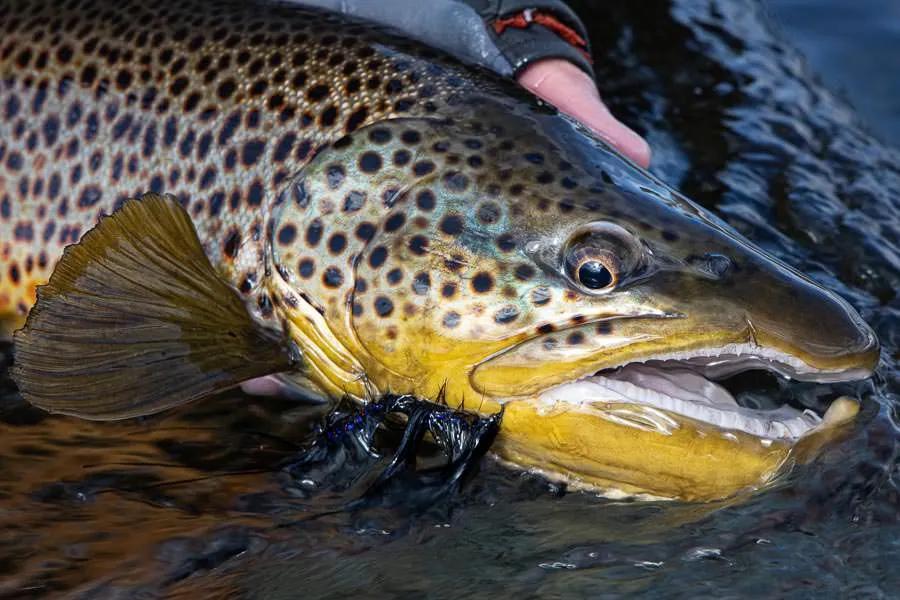
Trophy trout have a different energy budget than smaller trout. The size of large fish requires that they spend significantly more calories to move the same distance as a smaller trout. A small mayfly contains more calories than the amount of energy that a small trout uses to capture it. Large fish, however, need to spend much more energy to intercept a small insect and actually spend more calories in fueling that motion than they take in from the insect. Large fish, therefore, need to eat large items. Small trout typically have a diet that is composed primarily of small aquatic insects. In Montana, large trout key in on crayfish, sculpins, small trout and extra large insects such as large stonefly species. If you spend most of your time casting small attractor dry flies, you will have a great time catching lots of small and medium size trout on the surface, but you won't hook many really large trout. On the other hand, anglers that willingly huck monster streamers and crayfish imitations will rack up their fair share of huge trout. Occasionally large trout will key in on small insects. These exceptions occur on lakes and still waters where trout do not need to fight current to eat the smaller insects and during very intense hatches where trout do not need to move far to take in a large number of the critter of the day.
There are three primary techniques that Montana fishing guides use to produce big trout hook-ups. The first is to dead drift large nymphs imitation crayfish, sculpins, baitfish or large stonefly nymphs. Many anglers choose to drop a smaller nymph off of the back of the large fly in order to still catch smaller trout while still hoping for a monster. The second is to strip large streamers. Streamer fishing produces aggressive strikes but it is a low number game. Although streamer fishing usually produces a small number of fish, it is the best way to catch really large trout. Finally, massive dry flies can sometimes bring up the largest fish in the river during the salmon fly hatch. Salmon flies are enormous aquatic insects that can be over 3" long. This annual occurrence rarely produces fast action, but it does give lucky anglers an opportunity to hook trout over 25" on a dry fly.
Fish during the times of the day when large fish eat
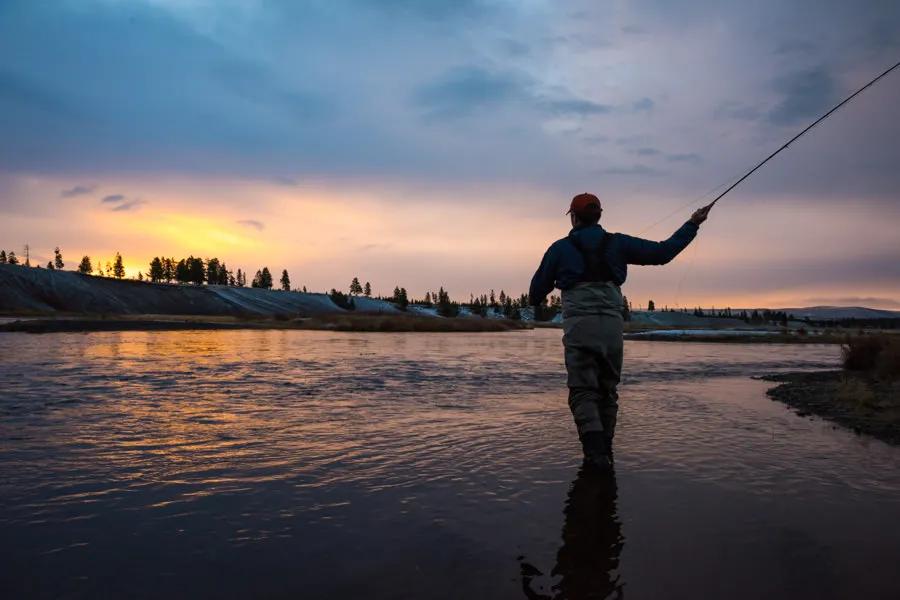
Although it is possible to catch a large fish at any point in the day, there are definitely prime times and prime days that produce big fish. Large fish do not eat consistently throughout the day like smaller trout often do. A large trout may eat a 9 inch trout in the morning and spend the next 24-48 hours digesting it. If your streamer swims by the fish later that day he won't be interested. In general, large trout prefer to feed during low light levels making early morning and evening prime time for landing big fish. On rivers that warm significantly during the day, large trout often feed in the middle of the night and some brave fly fisherman target these trout using large streamers after midnight.
Fish on the right days
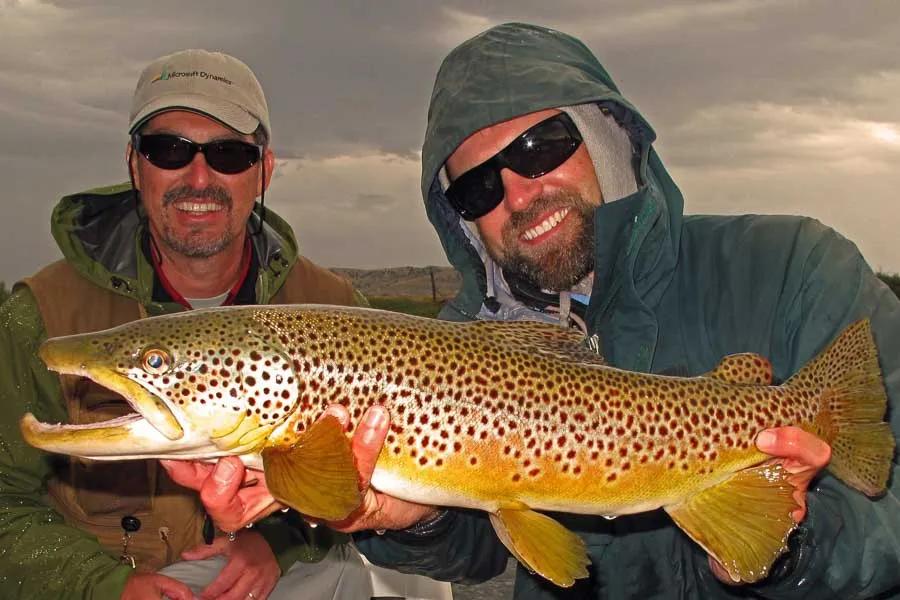
Some days are "big fish days". Although I have had a few days that seemed to produced multiple trout over 20" when the sun was shining, the vast majority of monster trout days that I have encountered have occurred when clouds were thick. Large browns are notorious for being wary on sunny days. If you have flexibility on the days that you fish, make sure you are on the water when the fronts come in and low lying clouds spit rain all day. These are also the days to consider shifting to techniques that specifically target huge fish. On more than one occasion, we have switched from dries to streamers when a large thunderstorm rolled in and experienced a 45 minute feeding frenzy of big fish. Sometimes these midsummer storms can produce five or six strikes from fish over 20" in less than an hour. By the end of the frenzy the fish are regurgitating sculpins. These same trout probably do not feed for at least two days after such binges so it is wise to swing for the fences when the weather is right.
Fish during big trout months
I have seen big Montana trout caught during every month and week of the year. There are two times of the year, however, that I believe you can maximize your chances of hooking big fish. The first is to target post runoff season. When rivers first drop and clear from runoff, big fish are hungry and have not seen many flies for several weeks. To top things off, the fish are often pressed against the banks to avoid the brisk mid river currents. The second time of the year that constantly produces huge fish is in October and early November, when brown trout are moving through the rivers in preparation to spawn. Browns get much more aggressive in the fall, making this a great time to hunt for big fish.
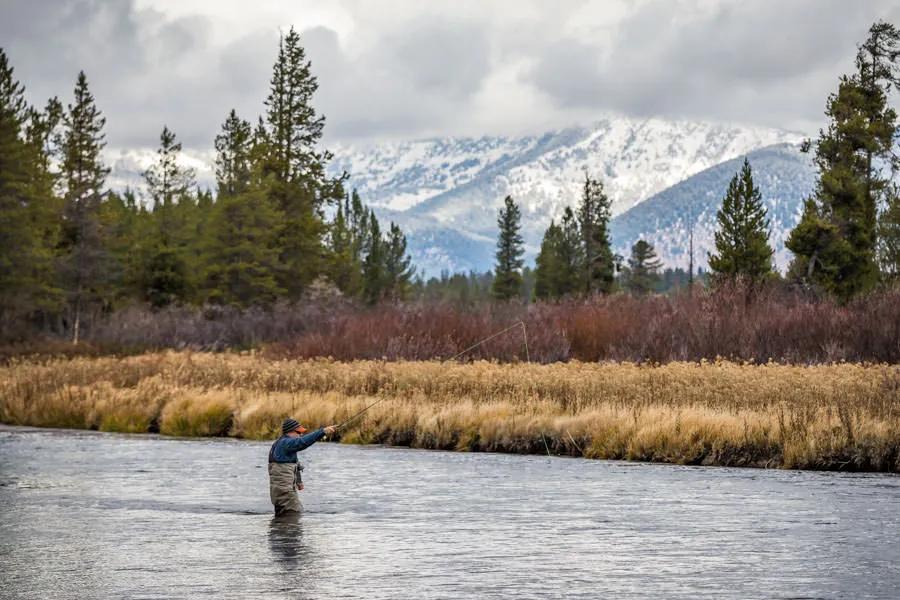
Landing a truly large wild trout is a special event that doesn't happen every day. If you are serious about chasing larger than average trout you need to stack the deck in your favor. Paying attention to where, when and how you fish can often make the difference between stumbling into a big one every few years and regularly netting trout over 20" every season.