


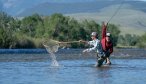
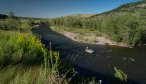
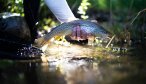
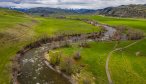

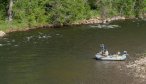
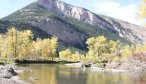
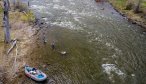
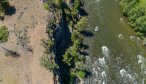
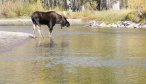
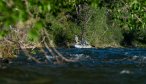
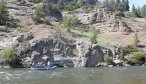
The Boulder River is one of the most beautiful fly fishing rivers in Montana. It originates in the Absorka Beartooth Wilderness just north of Yellowstone Park and flows north to its confluence with the Yellowstone River. The aquarium like water is absolutely loaded with very willing rainbows and browns. We focus our guided trips on the lower portion of the Boulder river where it flows through almost 100% private land making access to wading anglers very difficult.
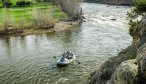
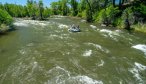
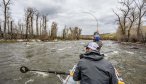
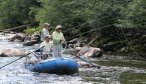
The Boulder is too rough for drift boats and there are no boat ramps so very few of the region's outfitters and guides are able to fish this treasure. Montana Angler Fly Fishing is one of the few fly fishing guide services in Montana that has a fleet of white water rafts equipped with fishing frames that enable our guides to access this amazing fishery.
The river usually drops to fishable water levels sometime between mid June and mid July. Once the river comes into shape, we have about a five or six week window of opportunity to do our floats before it becomes too low. In the lower water times of the season (spring, late summer and fall), the Boulder is exclusively a wade fishing river. Both wading and floating this river requires a high level of skill. Tragic accidents have occurred on this river when oarsman without significant rowing experience attempt to navigate the swift and continuous currents. The river is filled with slippery rocks of every size and wading staffs are recommended for the angler on foot.
Fishing on the Boulder ranges from good to spectacular. The fish never see enough flies to become too educated and we are able to fish large attractor dries through most of the fishable window. Watching large trout submarine up from the depths in this clear water to eat your fly is truly one of the greatest thrills in the sport of fly fishing!
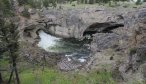
Upper Boulder - The upper Boulder above Natural Bridge is characterized by fast pocket water and smaller although aggressive rainbow trout. The forested stream is beautiful and paralleled by the Main Boulder road for lengthy portions. Concentrations of cutthroat trout increase in the upper most reaches. Getting around this section by boat can be challenging unless you're an expert whitewater kayaker.
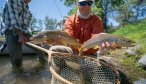
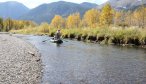
Lower Boulder - The lower Boulder emerges the alpine setting above to copacetic hay pastures and cottonwoods. The river gets its name in this section from the consistent riffles tumbling aggressively over boulders followed by a short deep aquarium like pool - - then repeat. Rainbow and brown trout dominate, usually averaging 15". Anglers are frequently surprised by larger browns extending up to 20", which are typically holdover spawners that migrated up from the Yellowstone River below. Fish respond opportunistically to well placed attractor dry and streamer presentations (similar to the Buy Now instinct of women perusing the home shopping network). The lower Boulder also maintains solid hatches of baetis, caddis, stones, pmd's, and terrestrials in that order throughout the summer giving an angler opportunity to match the hatch with emergers and dries. Almost 100% of the lower Boulder is on private property making access difficult. We utilize small rafts with deluxe fishing frames to put anglers into the action. The river has a short floatable season due to turbulent high water associated with snowmelt or low water caused by irrigation dewatering. River flow knowledge is a must in order to fish the river during its prime window.
Fishing the Boulder by time of year
Spring (March - May)
Anglers will need to wait for the ice to release and the water temperatures to increase before spring fishing on the Boulder gets good. The river remains in its low winter flows until early run off. During this time, the Boulder is left to wade fisherman, although the large boulder sized substrate makes wading farther than a few hundred yards from the limited public access points a challenge. Sometimes in late April and mid May river levels rise to floatable levels just before run off begins in full force. The Boulder also receives a few extra rainbows moving in from the Yellowstone River on its lower reaches in April. Be sure to bring a selection of stone fly nymphs, attractor nymphs, and baetis nymphs in the spring.
Run off (Late May - Mid July)
The Boulder drains directly from the Absaoroka-Beartooth wilderness, which is home to Montana's highest peak. The large snowpack upstream turns the river into a torrent typically swelling well into the willows lining the banks for almost two months. Fish can be found congregated in slower stretches along inside bends, however these are far and few between during high water.
Summer (Mid July - August)
Anglers often observe productive hatches of golden stones, PMD's, caddis, and terrestrials. Along with nymph patterns used to match the aforementioned insects, anglers should also bring an assortment of attractor dries and terrestrial patterns in order to turn the heads of aggressive trout. Matching a PMD hatch with emergers, cripples, duns, and spinners is effective mid-morning. The attractor dry fly fishing is best just after run off and then the trout begin to prefer smaller dries until hopper season arrives. Hopper fishing can be excellent on the lower river where alphalpha fields and dry hillsides provide ideal habitat for these large terrestrials.
Fall (September - November)
Low water arrives quickly on the Boulder due to immense dewatering for agricultural irrigation. At this time, the Boulder is left to wade fisherman, although the large boulder filled substrate makes wading farther than a few yards from the limited public access points a challenge. Attractor nymphs, stone nymphs, attractor dries, and streamers continue to be effective. Terrestrial fishing often holds out well into September. Baetis hatches often produce excellent dry fly opportunities on overcast days beginning in late September.
Winter (December - March)
The Boulder ices over for a long winter nap. Target other famous tailwaters or spring creeks in the area for the best action during winter.