

When it comes to freshwater fly fishing, there are few species that pique the curiosity of the adventurous angler more than golden dorado and peacock bass. Both species are known for ferocious takes, stunning beauty, and exotic destinations. Each has its own distinct fishing culture and angling techniques. And both species may be pursued from some of the finest fishing lodges on the planet. For the accomplished angler, catching one of these South American behemoths is the stuff of dreams. But how to decide: golden dorado or peacock bass?
I’m here to tell you up front that whether it’s golden dorado or peacocks, do not hesitate. Life gives us brief opportunities to pursue our dreams. If it’s not vacation time or family obligations, it’s global politics or home improvement projects. There will always be a reason to second-guess buying that ticket south, but we only get one shot. If you want to catch a dorado or a peacock and a window to make it happen opens, find a way to say yes. And do it as quickly as possible.
With that in mind, here are a few thoughts to consider when weighing your decision on which of these amazing species to check off your bucket list. When you’re ready to pull the trigger, give us a call at Montana Angler, and we’ll take care of the details.
Species Profile
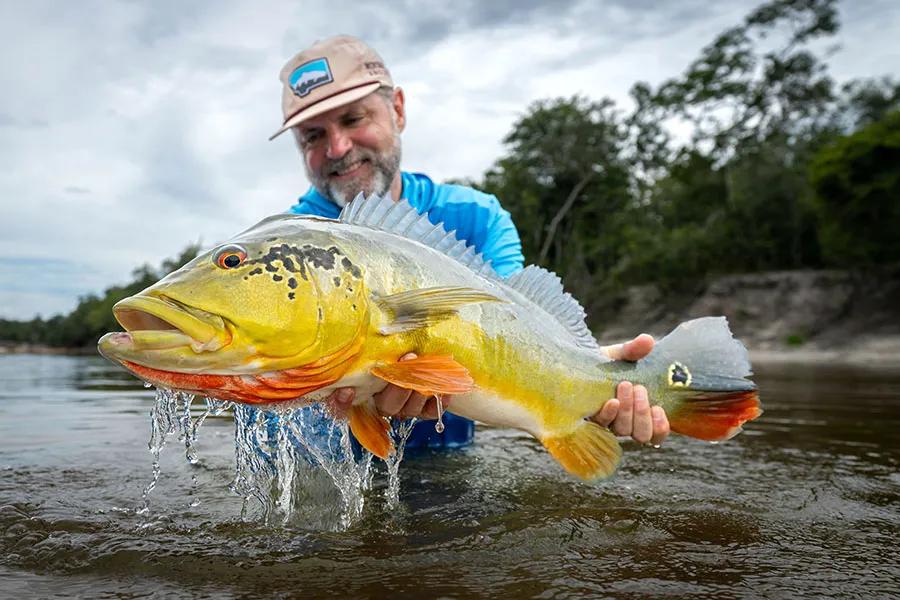
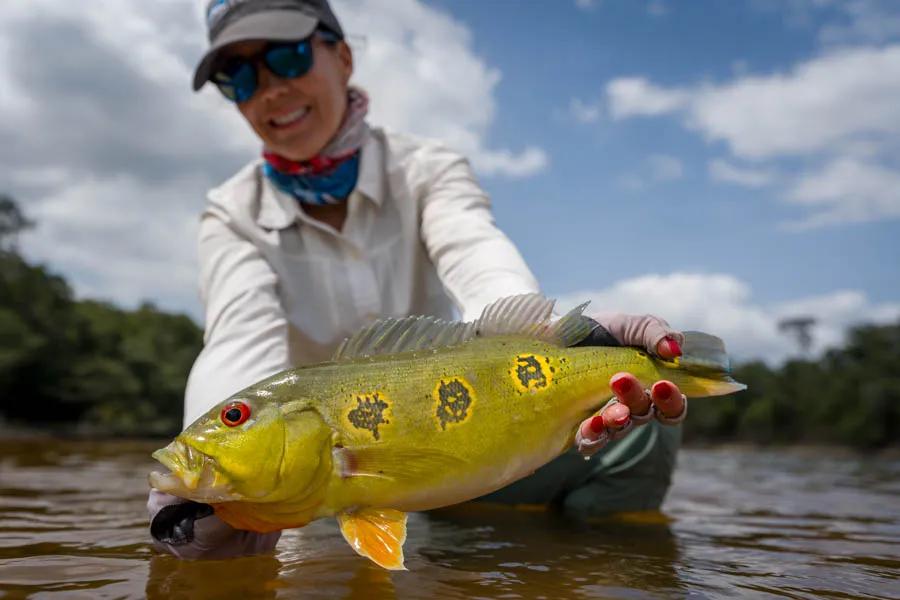
Let’s begin with a little background on each of these two species, Colombia, starting with the peacock bass. Peacocks are the all-pro linebackers of the freshwater fly-fishing world. Every little kid who picks up a fly rod will sooner or later come across an article about peacock bass. It’ll feature a photograph of an angler somewhere deep in the jungle holding a multi-colored tank with shoulders like Mike Tyson and a mouth bigger than Rodney Dangerfield’s. These fish are stacked and loud. They fight as hard as any freshwater fish I’ve caught. They break rods and blow your mind when you lift them out of the water. And oh my god, the takes! Watching a peacock inhale a popper or gurgler off the surface isn’t a thing of beauty; it’s a fearsome explosion of raw aggression.
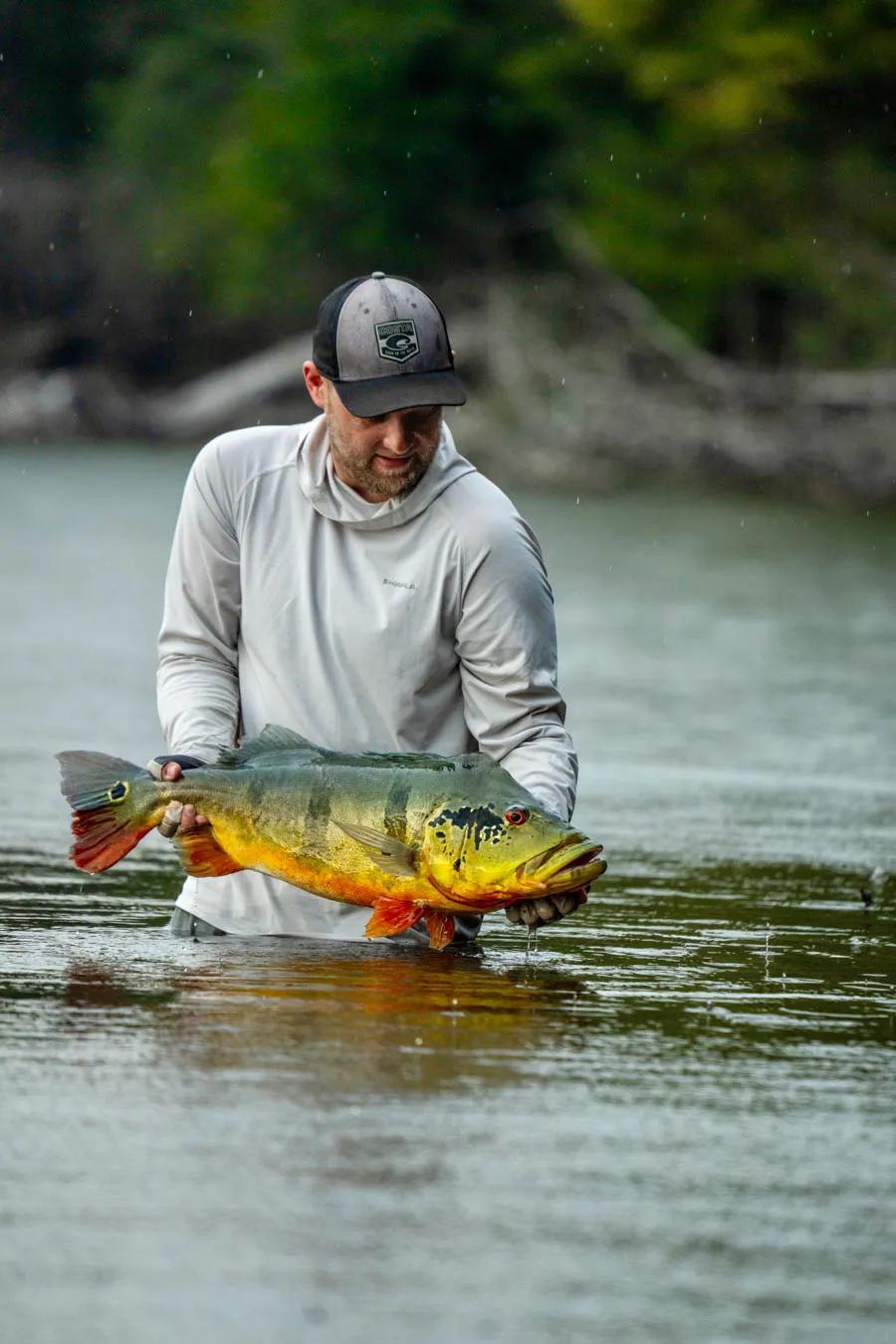
Peacock bass are native to the tropical regions of the Amazon Rainforest, including the Amazon and Orinoco river basins. The fish can be found in Brazil, Colombia, Venezuela, and the Guianas. Peacocks have been introduced as a sport fish to Hawaii, Florida, Puerto Rico, the Virgin Islands, Guam, and Singapore. My most recent experience fishing for peacocks came on a Montana Angler trip to Agua Boa Amazon Lodge deep in the Brazilian rainforest. The Agua Boa is a clear-water tributary of the Amazon. For anglers who enjoy sight fishing, there can be no better place to start.
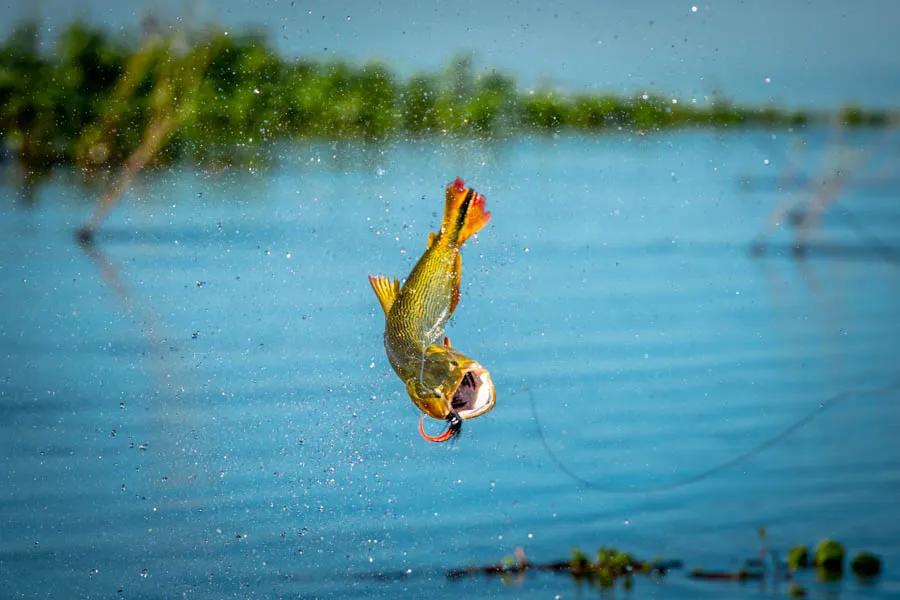
Golden dorado are the national fish of Argentina. While trout fishing gets a lot of attention in Patagonia, dorado are the country’s native species, and the culture surrounding dorado fishing is as passionate as I’ve seen anywhere. These golden brutes, known as “river tigers,” inhabit a broad variety of habitats throughout the northern reaches of Argentina, including marshlands, rivers, spring creeks, and lagoons. Golden dorado possess razor-sharp teeth capable of slicing prey in half, quite literally. They are tremendously acrobatic fish. Nearly every dorado you hook will leap from the water repeatedly, which makes for dazzling fights. When you lift a dorado out of the water for the first time it is truly breathtaking. Their golden flanks, shape, and size make dorado one of the most appealing fish on the planet to pursue with a fly.
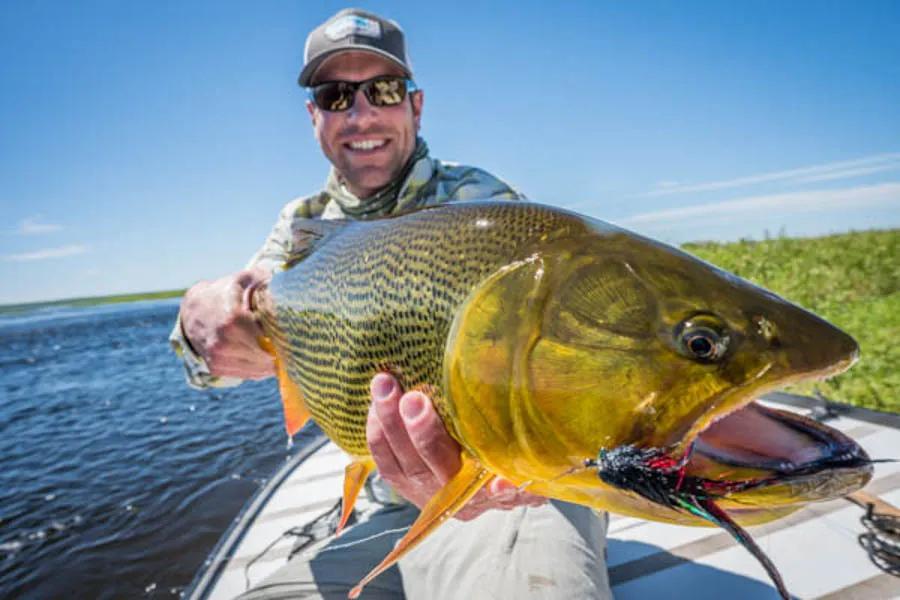
Primary golden dorado habitat when fly fishing in Argentina includes the Paraná River system and the Iberá Marshlands. Numerous other areas of Argentina hold dorado and exploring the country’s off-the-beaten-path locations makes for a real adventure. Dorado can also be found in the Mamoré and Chapare river systems in Bolivia, and in Uruguay and Paraguay. Dorado have been introduced to river basins in southern Brazil. First-time anglers should focus on the Paraná River and Iberá Marshlands, where numerous world-class lodges, including Pirá Lodge and Suindá Lodge, offer comfortable accommodations and professional guides that provide a deep dive into the sport.
Advantage: Peacock Bass
Turn it up to 11
I first travelled to the Amazon to fish for peacock bass with a group of anglers from Montana on a week-long trip. To say the excitement was palpable is an understatement. Fly fishing for peacocks at Agua Boa Amazon Lodge is about so much more than the fishing. For many people, a trip into the Amazon is really the culmination of a dream. I, like many others, grew up scanning the pages of National Geographic magazine and watching nature documentaries set in the wildest places on Earth. The Amazon Rainforest is one of those mythical spots that just begs to be explored. The birdlife, plants, and animals of the Amazon are so varied and diverse as to be overwhelming. Not even counting peacock bass, Arapaima, and other game fish, there are more species of catfish living in the Amazon River system than all the species of freshwater fish in North America combined.
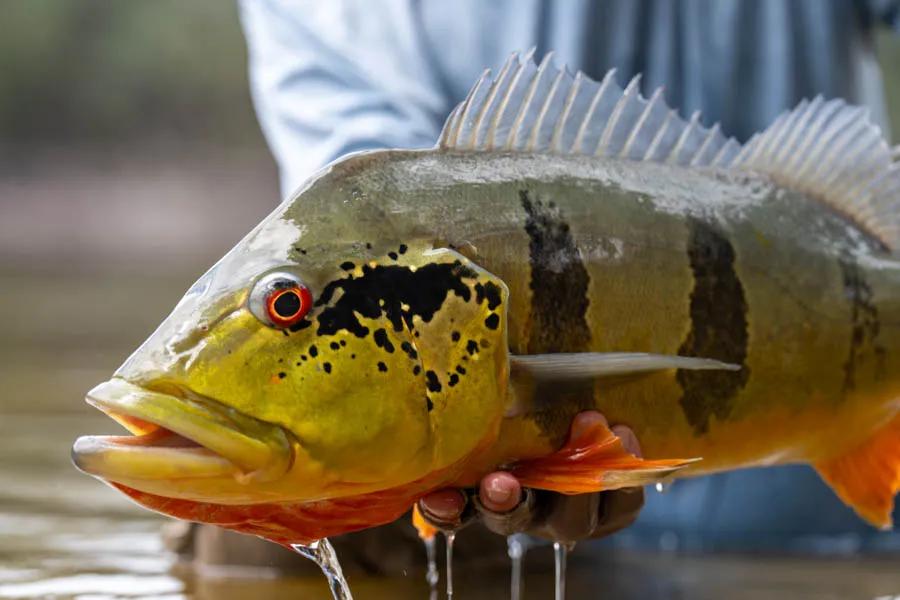
The Amazon Rainforest is the world’s most biodiverse region, hosting 10 percent of all the species on the planet. Of those species, the Amazon is home to more than 15 varieties of peacock bass. Two species of peacock bass dominate the fishing at Agua Boa Amazon Lodge: Chicla temensis and Chicla ocellaris. Temensis are the giant fish you envision when you think about peacocks. The largest of these fish are caught during their spawning phase when the fish develop pronounced humps on their backs, crimson gill plates, and dark bands on their sides. The non-spawning phase of the same fish is referred to as “paca” which are typically smaller but often fight with even more vigor. Paca have striking markings along their lateral line and an often-azure hue. Ocellaris are referred to as “butterflies” and are a lot of fun to catch on surface flies. The world record peacock bass caught on the Santa Isabel Do Río Negro in Brazil in 2010 weighed 29lb 1oz.
Fishing for dorado in Argentina means flying through Buenos Aires, one of South America’s most vibrant cities. There is just something about BA – the asado smoke wafting through the streets, the electricity of the city’s soccer fans, the vibrantly-colored homes of La Boca – it is an intoxicating city. And it is in BA that dorado fever ensues. As you fly into Ezeiza International Airport you’ll first see the Río de la Plata estuary where the waters of the Río Paraná flow into the Atlantic Ocean. You’ll see anglers with lines in the water, and you’ll know that dorado are nearby.
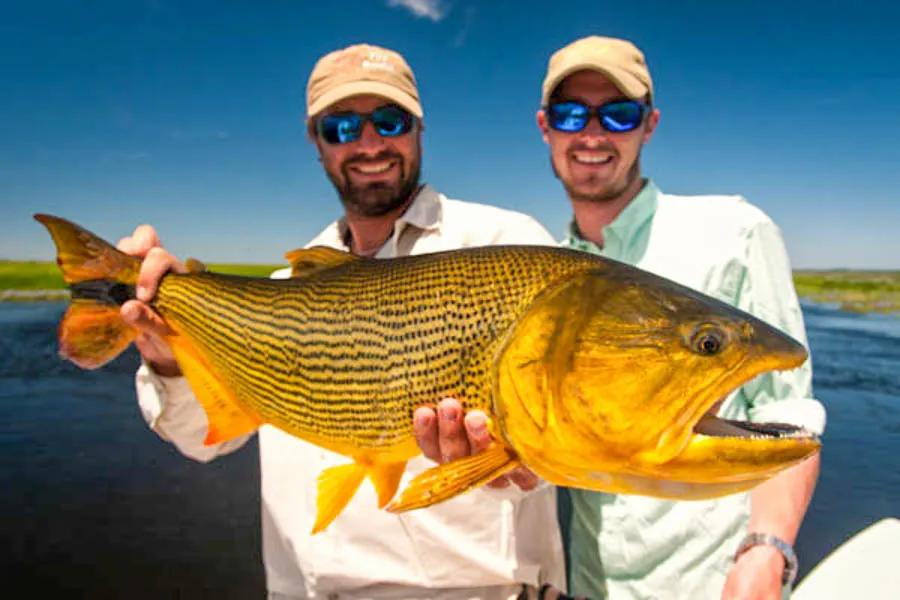
Anglers can begin fishing for golden dorado right in Buenos Aires, with opportunities to cast on the Río Paraná and Uruguay River, a short trip from the city center. However, most anglers will want to travel a bit inland to find the best fly-fishing opportunities. Dorado (Salminus brasiliensis) are migratory fish that travel long distances upstream to feed on sábalo, their primary prey species, and to spawn. The migration on the Paraná begins in June. Depending on what time you arrive in Argentina, there are different fishing opportunities to choose from, but the biggest dorado are often caught between September and December. The world record dorado caught on the Uruguay River in Argentina in 2006 weighed 55lb 11oz.
Advantage: Dorado
On the water
Whether you’re in Brazil fishing for peacock bass or dorado fishing in Argentina, you’ll likely use a boat to fish and access water. While there are certainly opportunities to fish on foot, a boat provides the best means of access and an elevated perspective from which to fish. Dorados and peacocks both prefer hot, sunny conditions, so be prepared for warm days on the water. A midday break from fishing is typical in both Brazil and Argentina, as the early and late hours of the day provide the best sport.
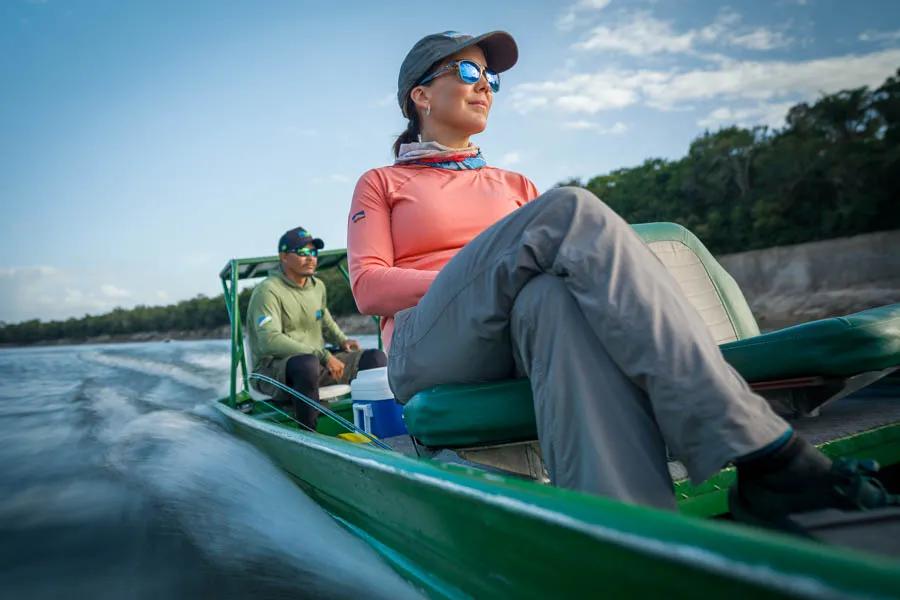
One of the great joys of fishing for dorados in the Iberá Marshlands out of locations such as Pira Lodge is the morning boat ride out from the lodge. Fishing begins at dawn, and watching the sunrise over the marsh is awe-inspiring. All manner of waterfowl and shorebirds fill the skies. Capybara, marsh deer, and caiman are frequently sighted. The marsh is typified by tall grasses. It is baffling how the guides manage to navigate the complex waterways. Speeding through these channels while drinking a morning mate sets quite a stage for a day’s fishing. Boats used in the marsh are the skiff-style flats boats typical of the Florida Keys. A casting deck provides a platform from which to spot fish, and spot them you will. The waters of the Iberá Marshlands are filtered clear. Identify signs of movement, and you’ll likely see dorado nearby.
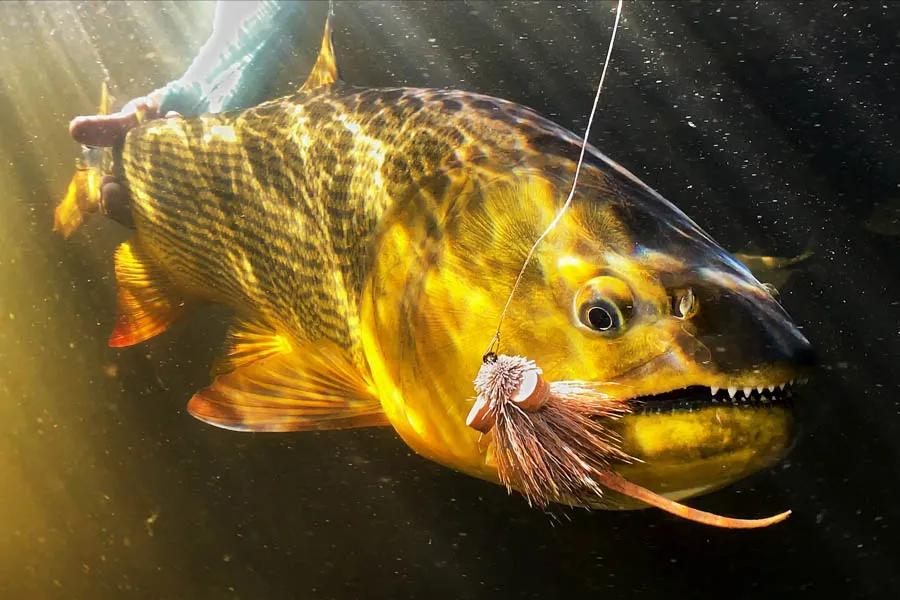
While fishing in a marsh may give the impression that you’re fishing still water, the opposite is in fact true. The Iberá Marshlands are the headwaters of the Corrientes River. The wetlands are constantly in flux as rainwater falls and recedes, creating a labyrinth of lagoons and channels where water moves swiftly. Dorado prefer these locations of moving water. You’ll frequently find yourself casting to dorados in tight quarters where flow rates increase. The effect is akin to targeting big trout on a small spring creek. Streamers work well subsurface, while poppers, gurglers, and mice patterns entice dorado to the surface.
As you move down the river system, the Corrientes flows into the mighty Parana River. The Parana is home to bigger water and giant golden dorado. There are several dams on the upper Parana that result in some large tailwater effects. Programs such as Suinda Lodge allow anglers to target these clear waters. In addition to golden dorado, anglers can also target the dry fly-loving pira pita on the main Parana system. Many of our guests travelling to Argentina also enjoy a combined dorado program that works in both Pira and Suinda lodges on the same trip.
On the Agua Boa anglers fish from 18-foot Jon boats with a poling platform. These boats are fitted with a motor for quick movement up and down the river. Once fishing, guides climb the platform to quietly move the boat with a pole. Water levels on the Agua Boa fluctuate massively from day to day. It is not unusual for the river to drop or rise six feet or more overnight. As such, the on-the-water experience can vary greatly and adds to the diversity of experience.
Some of the best fishing in the Amazon is off the main rivers in lagunas. These areas can be backwaters, oxbow bends, or former river channels that provide a stable environment for fish. Navigating into these lagunas can be quite an adventure. Guides use machetes to chop through downed trees and frequently hop out of the boat to push through tight areas. The experience gets you up close and personal with the Amazon Rainforest. I’ll never forget looking out into a forest scene that was completely still and silent, save for one small tree with its leaves drifting wildly, as if it possessed a wind all its own. Macaws, pink dolphins, tapirs, howler monkeys, herons, and manatees can be sighted, along with dozens of other fascinating and colorful creatures. A few times a year, a lucky angler may spot a leopard emerging from the forest for a drink from the river.
Peacocks can be sighted from the boat on the Agua Boa and will often move in schools. Casting a streamer in range and stripping long and quickly will draw strikes. More often, you’ll be looking for spawning beds, which peacocks defend with supreme aggression. Peacock bass spawn all year, and their beds can be identified by looking for light or dark patches on the bottom. Casting beyond and drawing your streamer back over these beds often results in solid fish. Poppers, or other similar top-water flies, are also fished frequently, especially for butterfly peackocks.
Advantage: Toss-up
razor-sharp
Beast mode
I’ve seen a peacock bass shatter a 9-weight fly rod with a blistering run beneath the boat. I’ve also had a 15-pound dorado on my line and watched in mystified horror as a much larger dorado came up and took a chunk out of its back. I’ve returned from the Amazon with forearms so tight from fighting fish that I’ve had to lay off racquetball to recover. And I’ve seen dorado hunting sábalo in packs, erupting like an electric charge bolting through the water when they turn to kill.
When it comes to freshwater game fish on a fly rod, dorado and peacock bass are heavyweights. Peacocks demand a 9-weight rod, and they are strong enough that you’d be well advised to bring two. Dorado can be handled on a 7-weight rod, but many anglers prefer an 8- or 9-weight rod to cast sinking lines or target trophies. Regardless of which species you choose you will be casting a lot, and that can take its toll after a week on the water. Do yourself a favor and pick a rod and line combination that you’ll be most comfortable with. The last thing you want for these fish is to be undergunned.
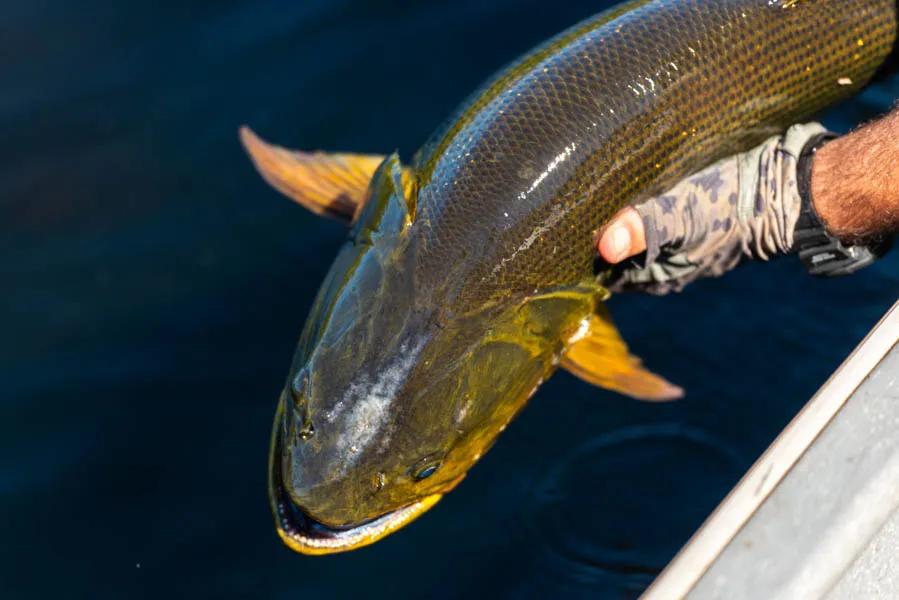
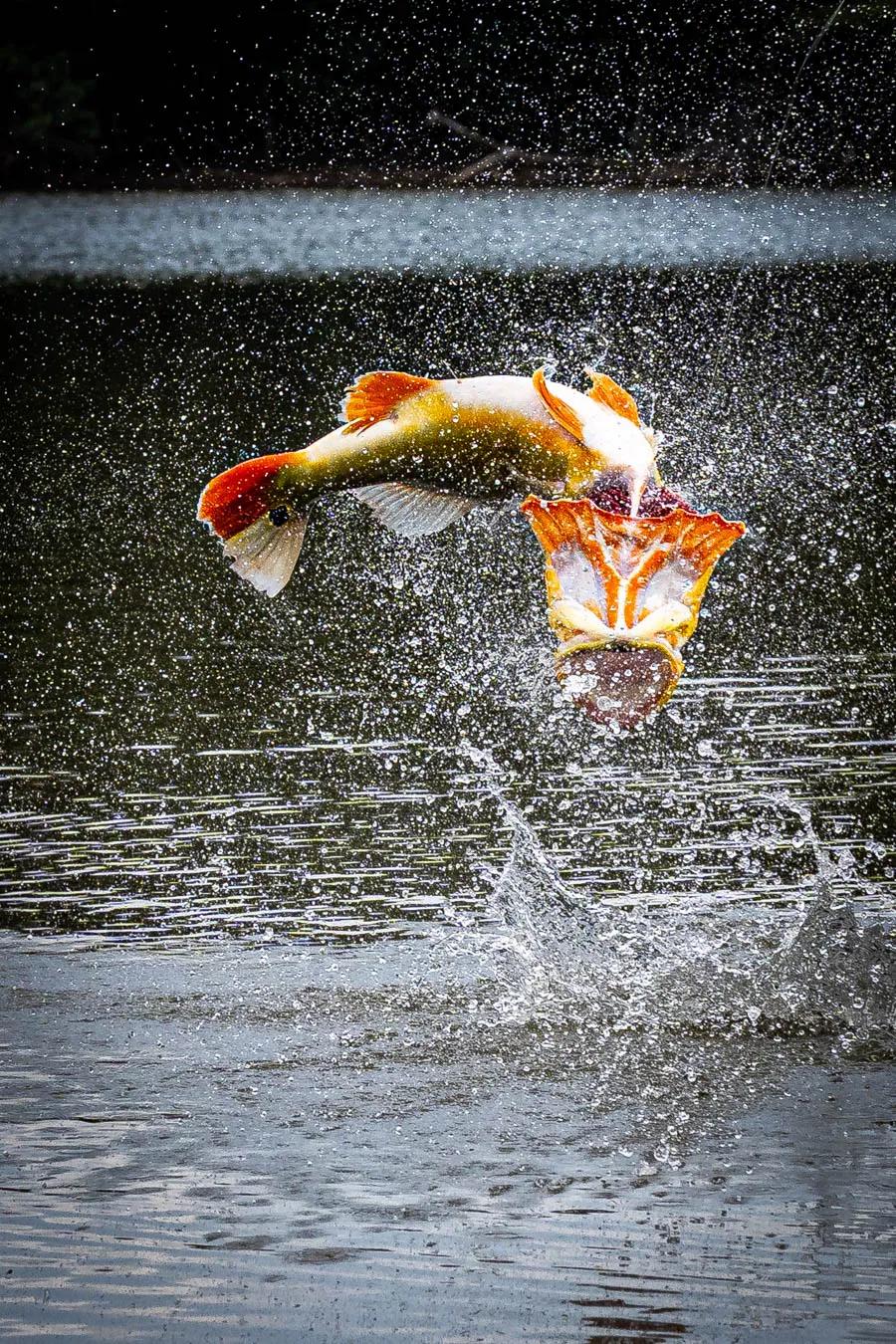
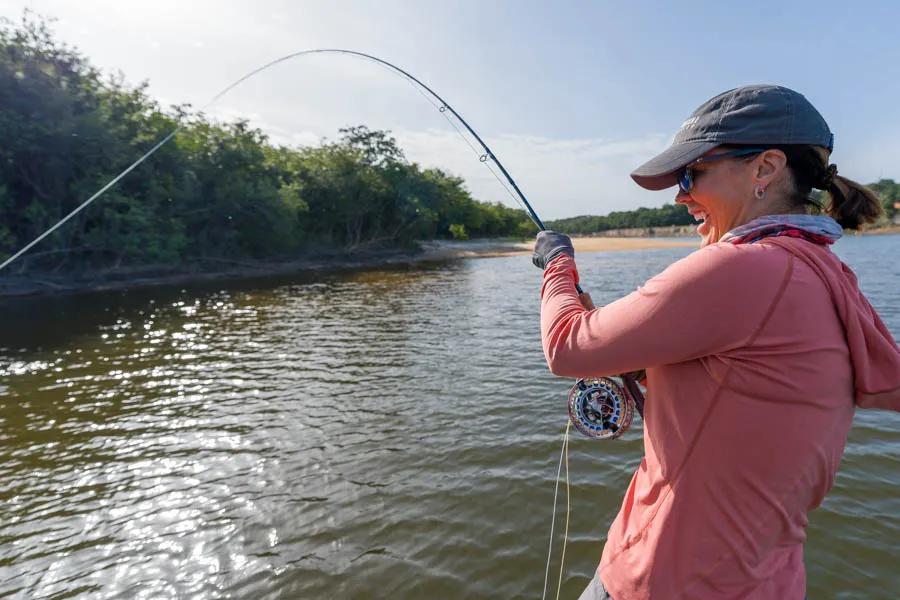
While butterfly peacock bass tend to jump, temensis and paca peacocks are bulldogs when it comes to the fight. An initial strong run that will frequently tear line off your reel is often followed by a deep-water battle. Peacocks use their enormous heads, fins, and tails to exert an incredible amount of pressure. Paca, particularly, are strong fighters. You may need a breather after landing a solid fish. Dorado, on the other hand, are aerial artists. Frequently travelling in packs and wholly cannibalistic, dorado frenzy when they sense prey in the water. When a dorado is hooked, its response triggers other dorado in the area to attack, which may be why they so frequently leap from the water.
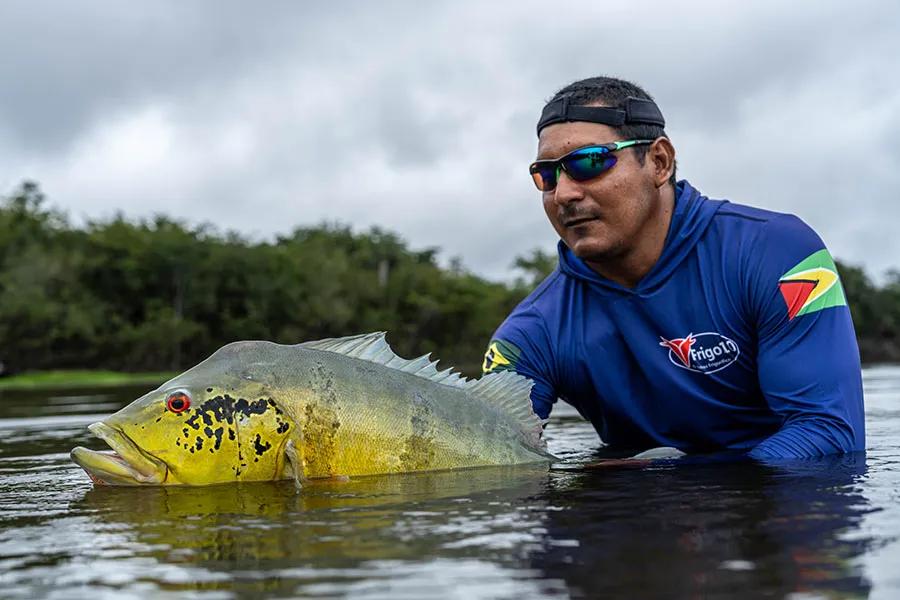
Peacock bass are incredible-looking fish. There is no other freshwater game fish taken on a fly that has shoulders to match it. The size of their mouths speaks to their tremendous nature as predators, and witnessing a take is knee-buckling. Dorado are equally stunning specimens, radiant beyond belief when lifted from the water. Their jawline of razor-sharp teeth means you need a pair of pliers (think the kind in your toolbox, not the forceps you use for trout fishing) to release your hook. Wire tippets are not an option for dorado; they are a necessity.
When it comes to pure pound-for-pound power, I’ve got to tip my hat to peacock bass. But a trophy dorado on a fly is even more formidable than the biggest peacock, and for pure fury, there is no freshwater fish on the planet as fearsome as a dorado.
Advantage: Golden Dorado
Everything else
Whether you choose to fish for dorado or peacock bass, you’ll be in an environment with countless other fish species, some very cool and fully worth your attention. The Paraná river system and the Amazon Basin hold some of the most amazing fish species on the planet, and targeting a few on the fly is a great way to fully experience the fishery you choose.
The herbivorous pacu is one of my favorite secondary fish to target when dorado fishing. These powerful fish are known as the “permit of the Paraná” and can be targeted with fly patterns resembling small fruits along the shoreline. Pacu eat nuts, fruit, and seeds that drop from trees at the river’s edge. They have powerful jaws to crush and consume these foods. Their broad, permit-shaped physiques make them strong fighters. Pacu will often be found alongside pirapita. Think of pirapita like mini dorado. They will rise to dry flies and have beautiful, iridescent colors.
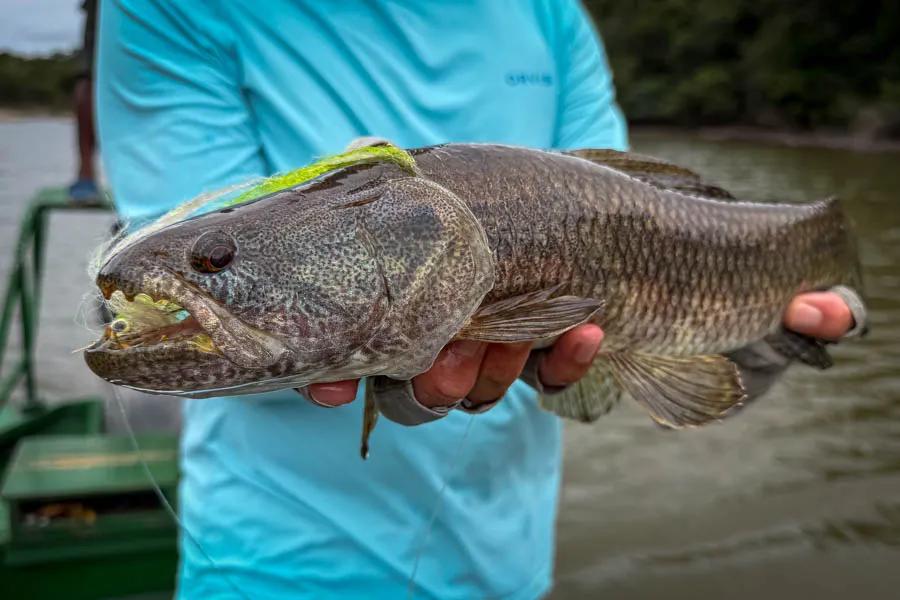
Wolf fish and payara are also a possibility when fishing for dorado. Wolf fish prefer slower-moving water and can be taken on surface flies that imitate frogs and mice. Payara, known as vampire fish for the two long fangs rising from their lower jaw, are predatory fish that prefer the same fast water where dorado are found. Don’t be surprised if you catch one during your time in Argentina. Surubi are amazingly beautiful catfish with leopard-like markings. You’ll need to switch up your fishing techniques to catch one, but it’s well worth the effort.
The Amazon has so many interesting fish species, it’s hard to narrow down just a few, but for the fly angler, arapaima and arowana are my favorites. Arapaima are among the largest freshwater fish in the world, reaching lengths of 10 feet and weighing more than 400 pounds. When casting for peacock bass, you may be startled to see a massive fish roll by your boat. Think Loch Ness and you’re on the right track. Arapaima use a primitive lung and must breathe air to survive. You’ll target them with slowly stripped streamers on intermediate or sinking lines. I fought one to the shore with a 9-weight (huge mistake). It took 90 minutes. The fish weighed an estimated 120 pounds and was by far the largest fish I’ve ever hooked.
Arowana are my personal favorite fish in the Amazon. Once you’ve had your fill of peacocks, turn your attention to the sandbars. Arowana move in schools over these flats, swimming in and out of the overhanging forest canopy. They’ve evolved eyes that allow them to see both below and above the surface of the water. They coil their flat bodies like a spring and lurch from the water to prey on beetles and insects off tree branches. This adaptation has made them difficult to approach, like a wary New Zealand brown trout. Arowana prefer dry flies slowly stripped on the surface and have a hinged jaw not entirely dissimilar from a tarpon, making them hard to hook. I’ve only landed one, but there’s no doubt that fish is one of my favorites.
Advantage: Peacock Bass
And the winner is:
It's a tie. Go ahead and send the hate mail my way. Seriously, though, you cannot go wrong with a trip to Brazil or to Argentina to fish for peacock bass or dorado. These are the species and the fishing experiences we dream about as anglers. The memories made on a trip south will be seared in your memory for the rest of your life. Trust me, you won’t regret it.
And who knows … maybe after you are lucky enough to catch one on a fly rod, you’ll want to fish for the other.