

As the snow starts to melt, anglers begin to feel the excitement of casting large stoneflies in June and July to hungry trout. But did you know you can sometimes do that in the spring? Often overlooked is the opportunity for the same experience during the months of March and April when fly fishing in Montana. That’s when the skwala stoneflies make their annual appearance in Montana.
The skwala stonefly hatch is a favorite time of year for many fly anglers in the West. For the traveling angler, or those with a liberal schedule, the skwala hatch can occur as early as late February in warmer Western states or at lower elevations on famous fly fishing rivers like the Madison, Gallatin, or Rock Creek. In Montana, look for the skwala stoneflies to make their annual appearance in late March through the end of April.
The great thing about this hatch is that skwalas are a large insect, and hungry fish coming out of the long Montana winter tend to go crazy for them. The emergence produces amazing fishing, and the hatch when going fly fishing in Montana is not to be missed, rivaling any summer fishing Montana offers.
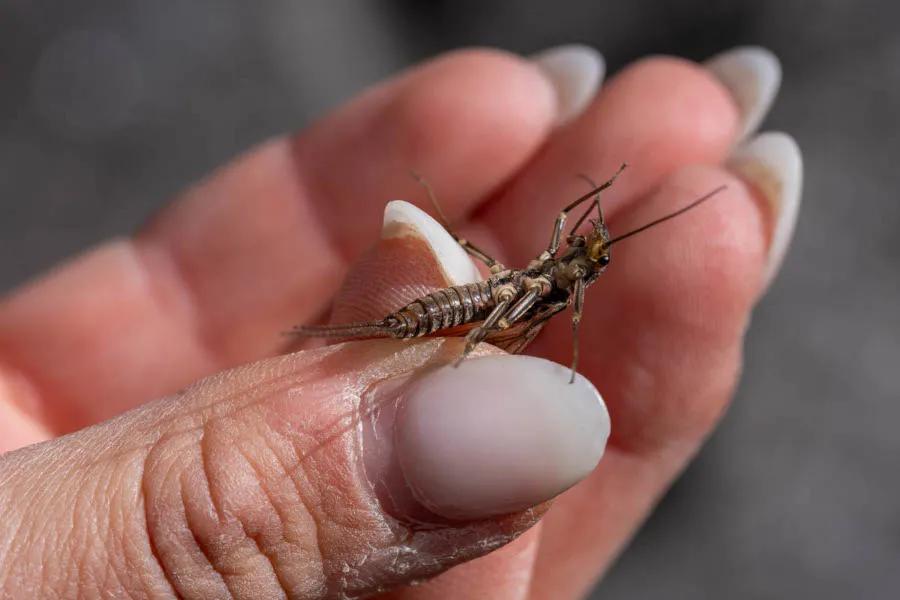
Skwala Life Cycle
The skwala, like all stoneflies, has an incomplete life cycle, which means that they don’t have a pupa stage. Skwalas transform directly from the nymph to the adult form. This dark-colored nymph with olive accents on its underside lives for two to three years as a nymph before emerging from the water as a winged adult to complete its life cycle.
Skwala nymphs live in highly oxygenated, swift water, such as Montana's Madison River or Gallatin River. The nymphs will migrate to the river’s edge, where they crawl out of the water. Skwala nymphs love to seek shelter in riverside woody debris, where they will shed their exoskeleton and transform to their adult form.
Skwala adults rarely fly. They often mate in woody debris or riverside vegetation, and the females crawl back to the water to deposit their eggs. Trout feed both on the nymphs as they migrate to the river’s edge and on the females that are drifting in the water while depositing their eggs.
Weather and Water Temperature are Key to Success
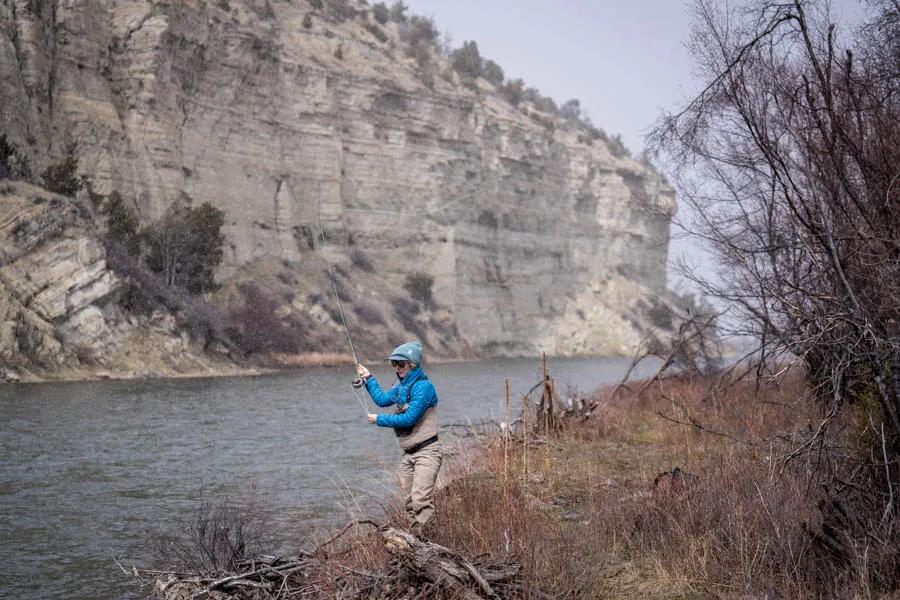
The skwala hatch is extremely weather-dependent when fly fishing in Montana. Let’s start with water temperature. Skwala nymphs begin to migrate when water temperatures reach 42 degrees. At this temperature, the nymphs begin their migration to the water’s edge. During this period, nymphing can be productive because the nymphs often lose their footing in the swift current and tumble downstream until the water slows enough for these poor swimmers to find the bottom again.
When considering the adults, 45-degree water temperature is the starting point for the most productive dry-fly fishing. Fishing really heats up when water temperatures reach 46 to 48 degrees. Sunny days are far more productive than cloudy ones, as skwala stonefly adults like warmth. These sunny days when the water temperatures hit the previously mentioned benchmark can be very productive for fishing dries. With that said, don’t turn down a fishing opportunity on a cloudy or rainy day once the skwalas have emerged because trout will key in on them. The fishing might be better a little later on cloudy days when air and water temperatures kick in, and the adults become more active. The best dry-fly fishing takes place during the warmest part of the day, almost always in the afternoon, when the female stoneflies crawl back to the water to deposit their eggs.
Something to consider during the skwala hatch is water levels and water clarity. Sometimes a warm stretch during the skwala hatch can produce muddy water from snowmelt. Keep an eye on the hydrograph for changes in streamflow during this time while planning your fishing trip.
Where and How to Fish
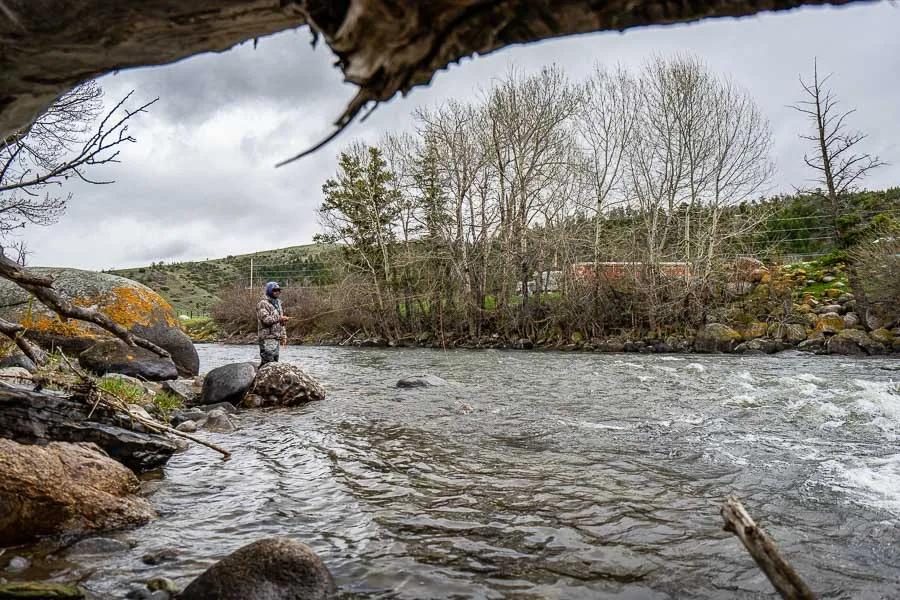
In Montana, the most well-known rivers for skwalas are west of the Continental Divide, including the Bitterroot River, Rock Creek, the Blackfoot River, and the Clark Fork River, but many of the rivers east of the Continental Divide and near Bozeman, Montana, can be good as well. The skwala hatch does occur all over the West and can be pursued in other states, including California, Oregon, and Washington.
Skwala nymphs are very active during their life cycle. They are predators and actively seek out food in faster stretches of rivers where oxygen levels are high. As skwalas hunt, they often lose their grip on the river’s bottom and are cast free momentarily in the current. The nymphs are poor swimmers and will often tumble helplessly for great distances before they find the bottom again. These drifting nymphs provide an excellent feeding opportunity for trout in run-outs below riffles. As a result, drifting a size 8- to 10-weighted skwala nymph set about the water’s depth below a strike indicator can provide great fishing. It is always a good idea to touch-up on your Montana fly fishing tactics and skills.
Also, focus on nymphing a week or so before the hatch when the nymphs are migrating to the river’s banks. Here too, the nymphs will lose their footing in swift water during their migration, yielding some great nymph-fishing action. Fish around boulders, the downstream ends of islands where currents converge, and drop-off ledges where the nymphs find shelter from fast water.
Skwala Fly Fishing Tactics and Tips
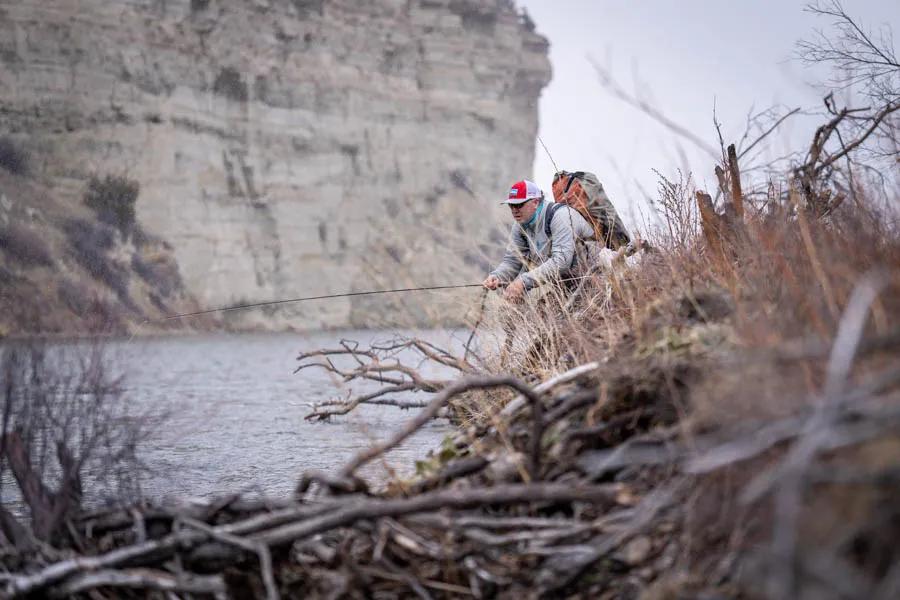
During the skwala hatch, the water is still cold, and the trout are still in their winter habitat. Seek out mid-speed to slower water. The best places to look for are the “walking speed” waters next to the riverbank or woody debris. Back eddies, slower inside seams, and the downstream ends of islands where currents converge can also produce fish. Reading water on a Montana trout stream is vital to success when fishing skwalas.
As the water warms, fish will move to slightly faster water. As the skwala hatch progresses, the adults tend to be a little smaller than the initial emergence, so be sure to have some size 10 and 12 imitations in your fly box. For tippet, you can get by with 3X early in the hatch or if the water has some color to it. As the hatch progresses, you might have to drop down to 4X.
When fishing a dry fly, cast as near the woody debris as you can without losing your fly. While fishing the banks, focus on the aforementioned “walking speed” water and cast near the bank or just on the drop off near the banks. While fishing, a dead drift can be productive, fish do respond when the fly is twitched just a bit.
Drowned adult skwalas also work well fished as a dropper or below an indicator. During this hatch, also look for March Browns, and Blue-Winged Olives. Using a buoyant skwala dry with a dry blue-winged olive, or March brown can be effective. Or, drop a skwala, blue-winged olive, or March brown nymph as a wet dropper.
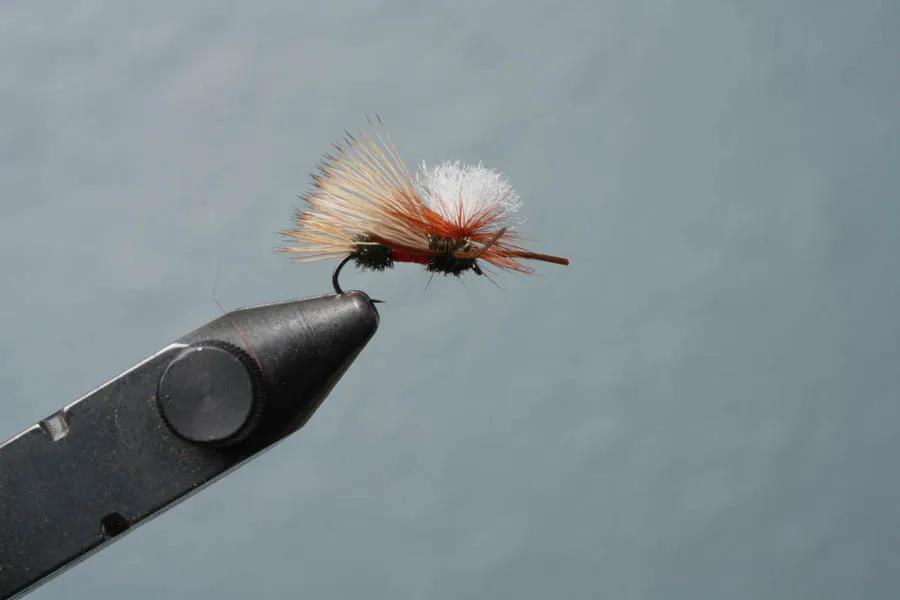
Flies for Fly Fishing During the Skwala Hatch
For the adult skwala, choose a fly that rides low in the water in a size 8-12. The adults get smaller and a little thinner as the hatch moves along. Adult skwalas have yellowish markings on their underside, and if you can find or tie flies with this underside coloring, you will match the adult perfectly. For the nymph a sizes 8-10 work the best. Many of the best Montana fly fishing flies for spring lists include a skwala stonefly. Popular flies include double-bead stonefly nymphs in hare’s ear or peacock bodies. A brown rubber legs or 20 incher nymphs work well too. Olive chubbies, skwalameister or a bullet head skwala are great choices for dries.
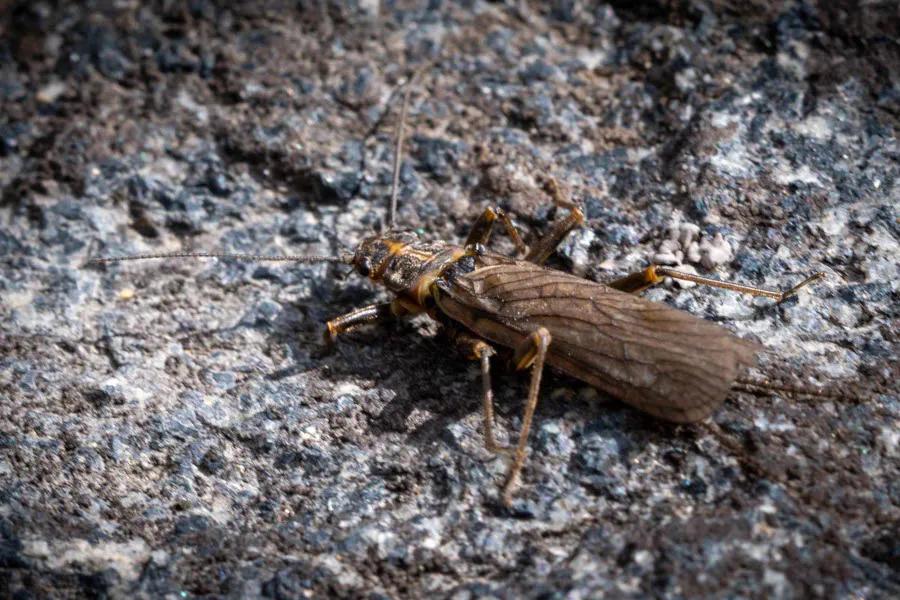
In Conclusion
The skwala hatch is a great opportunity for fly fishing in Montana to shake off the winter blues and should be a staple on all fly anglers’ calendars. Nymphing during the skwala’s underwater dash for the river’s edge can produce great fishing, but it’s the dry-fly fishing that is truly addicting. Warm, sunny March and April days and casting large dry flies to hungry fish cannot be matched after a winter of fly-fishing anticipation. Couple all of this with a lack of crowds and the skwala hatch really does equal fly-fishing bliss.