

Wading safely when going fly fishing is important to keep from getting injured, but also important to be able to access a variety of fishing opportunities on varied terrain. Choosing which type of sole for your wading boots is more important than you might think. There are a lot of differences when it comes to comparing felt-bottomed, studded or barred bottomed, compared to rubber-bottomed, and pros and cons for each. Along with environmental concerns, the style of fishing should determine which boot bottom is best for you and your individual needs.
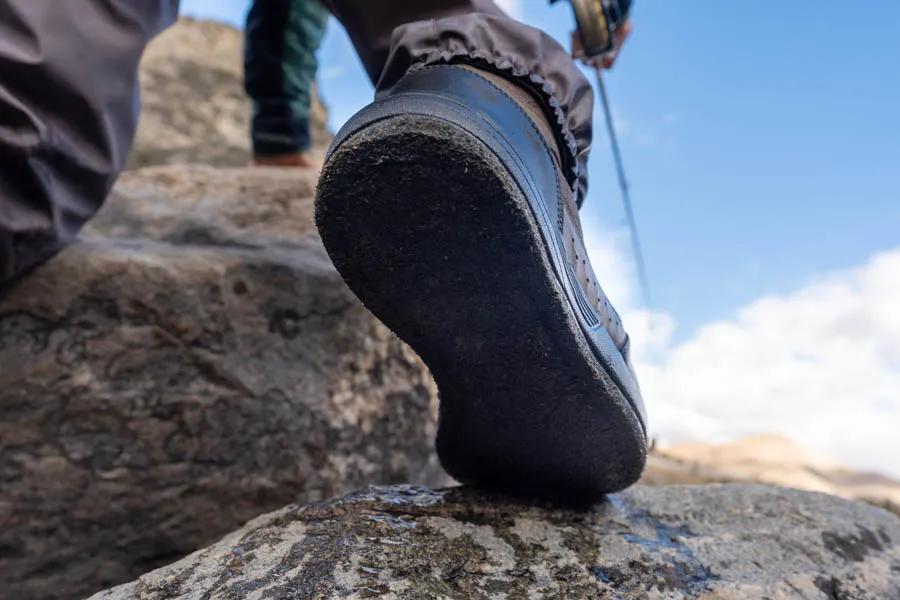
When are felt sole wading boots the best choice?
Felt is tried and true and offers the most reliable traction for slippery bowling-ball-sized moss-covered rocks found in many of our rivers around the West, and especially when fly fishing in Montana. The soft felt is able to form around the rocks and act similarly to Velcro when maneuvering in potentially dangerous wading situations. If traction in the water is a top concern without adding metal studs, then felt is still pretty hard to beat. If you spend all of your time fishing one river or one region and do very little travelling, then felt can still be the best option.
When are felt sole wading boots not the best choice?
Due to the increased risk of transporting aquatic invasive species, some states and countries have banned felt boots in an attempt to slow the spread of plant and animal life from one river to another. If you want to fish in Alaska, New Zealand, or Yellowstone National Park, you need to leave your felt boots at home. All of the aquatic invasive species that we know of require a damp environment to get from one river to the next when hitchhiking. Zebra mussels in particular can live in damp felt for days, as an angler bounces from one drainage to the next, accidentally bringing along unwanted hitchhikers for the ride. A strong argument can be made that shoelaces, and other water-holding materials on all wading boots and waders can be just as likely to support the damp environment for these unwanted pests, but the felt bottom is probably the most likely area these invasive species would end up on over long periods of time. There are some things you can do if you choose to wear felt, such as clean your boots with a light detergent and dry them out completely before fishing new bodies of water. Still, with how mobile river users have become, is it worth the added risk?
Felt is also very slippery outside of the river, in areas such as grassy slopes leading down to the water, or areas with thick dead leaf cover. Mud also becomes very difficult to walk on along the river banks, since the felt does not provide a textured surface to grip anything. Think of felt like a slick highway tire, good for one thing, but bad for traction on other surfaces, and rubber as more of an all-terrain option, yet not quite as good in the river.
If you ever plan on fishing in the winter months around snow and ice, felt is almost completely ruled out. Snow will build up on the frozen, waterlogged felt, and provide almost no traction on ice whatsoever.
When is the best time to use felt soled wading boots
If all of your fishing is limited to one watershed, which reduces the risk that you are transporting invasive species
If you don’t need the boots for winter fishing, where snow and ice are prevalent
If you need maximum traction without using studs
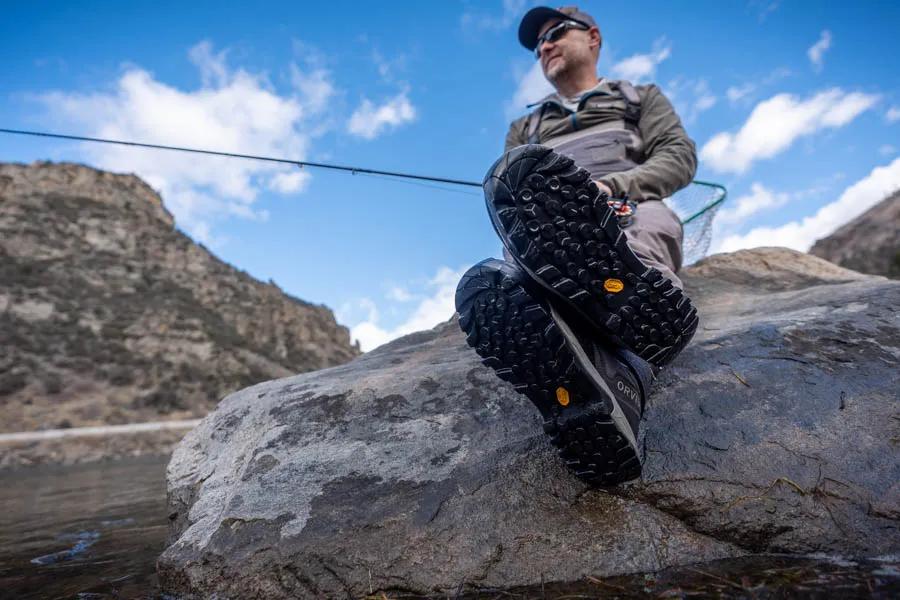
When are rubber sole wading boots the best choice?
Rubber bottom wading boots have come a long way in recent years. If you have ever tried to wade fish in tennis shoes or sandals and had a wading experience equivalent to walking on a greased kitchen floor, you may be a little gun-shy to switch from felt soles to rubber. Unlike tennis shoes, which would surely lead to slipping and falling, modern technologies in rubber bottom wading boots allow soft rubber to form and grip to rocks quite well. Brands like Korkers and Simms have teamed up with Vibram to produce unique tread patterns and soft rubbers that work well both in and out of the water. Patagonia features a rubber sole option that they call “Sticky” rubber, which essentially does the same thing. Orvis recently partnered with the Michelin Tire Company to use the same proprietary rubber technology that Michelin uses on its all-season road tires. Not only do these various soles produce better traction in the water where we need it most, but you also gain traction outside of the water in environments where felt fails, such as snow, grassy hillsides, and mud. Also, if you are a mobile wader fisherman who likes to hike in, spots like Bear Trap Canyon on the Madison River, for example, the rubber bottom will wear better than felt, similar to an actual hiking boot. Additionally, if you go fly fishing in winter, rubber-soled boots do not collect snow like felt.
Without the water-trapping felt, rubber-bottomed boots are much less likely to transfer invasive species, yet care should still be taken to clean and dry boots in between fly fishing trips.
When are rubber sole wading boots not the best choice?
Although big leaps in rubber technology have been made in the fishing world, rubber still provides slightly less traction underwater compared to felt. Each year, rubber soles get better in terms of traction on slippery rocks.
When is the best time to use rubber sole wading boots?
When you want the most versatile boot that you can wear everywhere you go, including in boats.
If you travel a lot to fish
If you need good traction on trails, such as hiking into fish or dropping down steep banks to get to the river
If you do a lot of float fishing and want to avoid studded boots
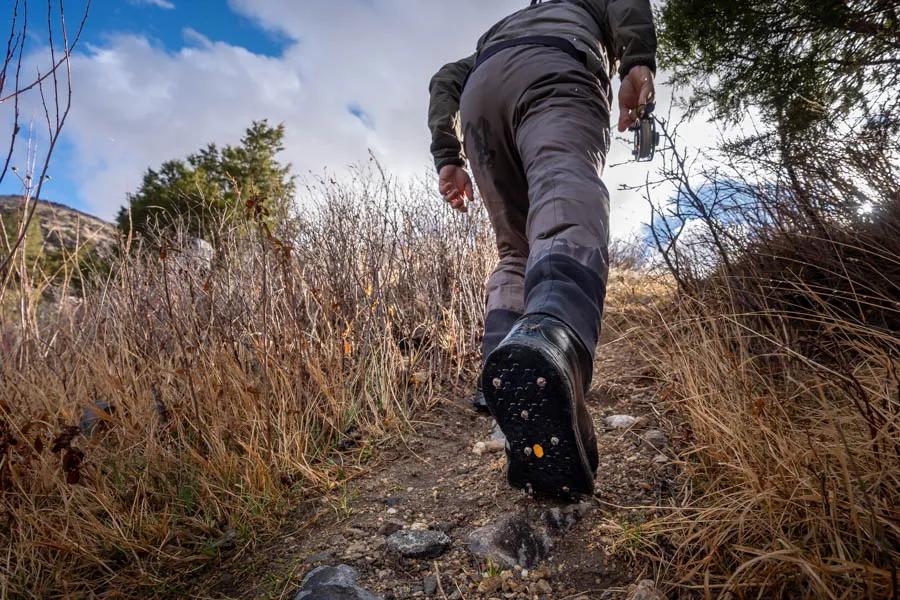
When are using studded or barred sole wading boots the best choice?
Metal studs or bars can be added to both felt and rubber boots to make up for many of the shortcomings each possesses. The main problem with studs or bars is that they should not be used in rafts or drift boats with unprotected floors, as the metal can damage the boat. Some anglers choose to use boots with aluminum bars on the soles vs. studs, which are a little gentler on boats, but still most people who own a boat won't let in the boat with bars or studs on your soles. Studs or bars can make an amazing difference for traction on rivers with slippery boulders or with lots of large rocky shelves.
When are using studs or barred boots the best choice?
When you are only wade fishing and don’t need a boat for access
When you need the ultimate traction on slippery boulders or rocky shelves AND need good traction outside of the water
What is the best wading boot to choose for fly fishing?
The wading boot market is very competitive and improving constantly. There are many options out there, and the best boot is going to be different for everyone. Consider the local laws where you plan on fishing, how much hiking you plan on doing, how comfortable of a walk-and-wade angler you are, and the potential risks of invasive species, and you are certain to narrow down the options out there.