

From Montana's Madison River to the saltwater flats of Mexico to the backcountry rivers and creeks in Patagonia, oftentimes fly fishing's greatest memories are when you see a fish moving to eat your fly. When going fly fishing for trout in Montana, many anglers hope their paths cross with a rising trout. If you are fortunate to be in the right place at the right time when trout are feeding on the surface, choosing the right fly is crucial. Here is some help deciphering what makes a good dry fly so you can answer the age-old question: what dry fly should I choose for fly fishing for trout?
Can the fish see your fly? When a hatch is thick, food is readily available for trout. But as hatches dwindle in late summer, trout become more opportunistic, and a fish must see your fly for them to even consider eating it. Therefore, choose a fly large enough that a fish can see it on the surface from several feet deep. Odds are slim you’ll entice every fish in the river to rise to the surface, but commit to a large, high-floating dry fly and eventually a trout will go for your offering. Large wings, parachutes, and shucks or tails are all elements of successful patterns this time of year. For grasshoppers, check out some of our favorite hopper patterns.
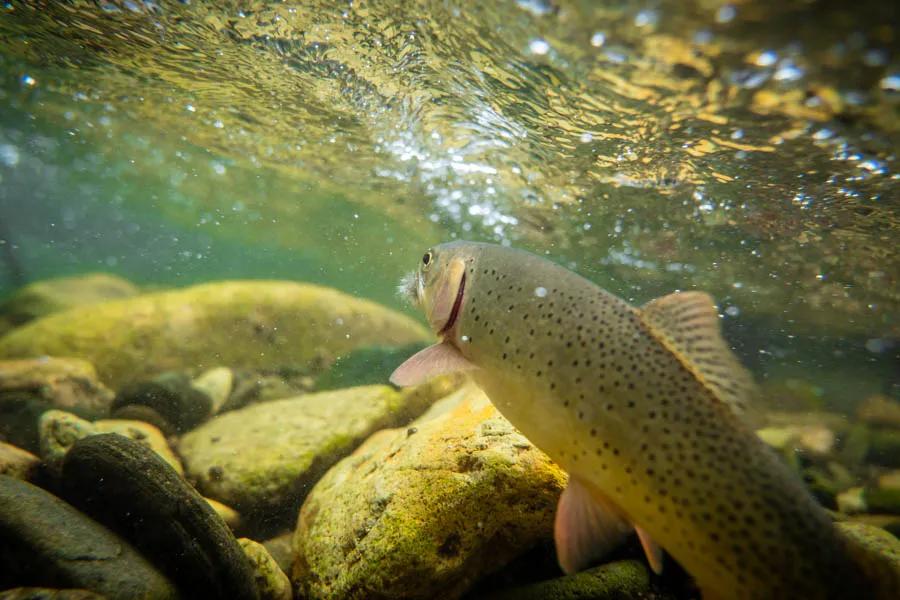
The materials in the fly matter. Foam, cul-de-canard, flash, peacock hurl, and the list goes on and on. When selecting a dry fly, pay close attention to the materials, as each material can serve a unique purpose. The addition of foam to any pattern increases its ability to float longer. Also, most parachute patterns are tied with calf tail or polypropylene yarn – materials that are easy to see and retain little water. They can also be dyed in a variety of colors. Peacock herl is a time-tested material and is found in some time-tested patterns: Royal Wulffs, Trudes, and H and L Variants. Cul-de-canards are feathers from a duck and have a unique property that allows them to hold tiny bubbles of air when in contact with water, creating a very lifelike appearance.
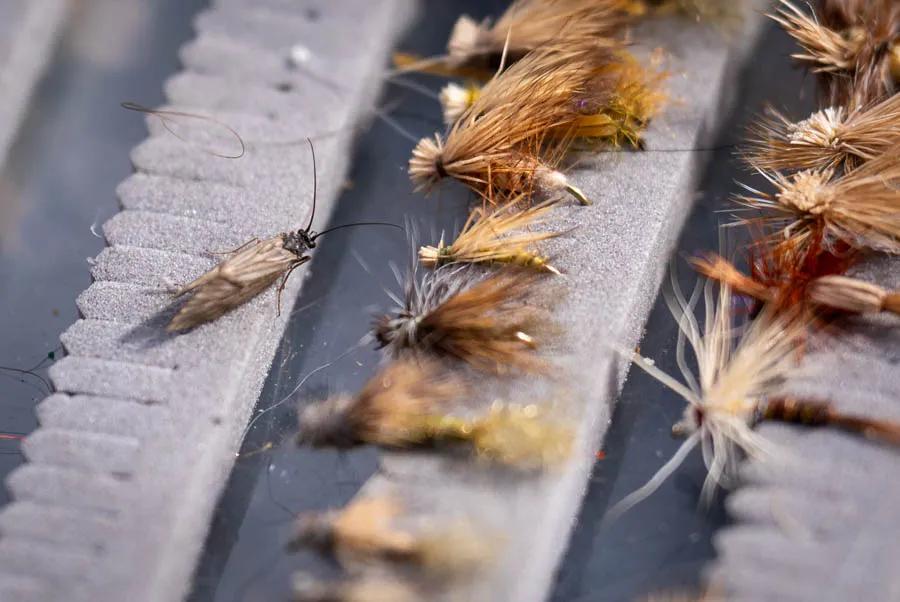
Be sure you can see your dry. One of the easiest ways to see your fly is to ensure you are using the most appropriate fly floatants, desiccants, and outside agents to help it float. If you can’t see the fly, you can’t see if it’s drifting correctly, and you won’t be able to detect a strike either. The addition of parachute posts on dry flies increases your ability to see them tremendously. Taking the parachute concept one step further, many flies now have contrasting colors tied into the parachute. The contrast is often more visible than a solid color in low light conditions. After fishing for a while and the fly starts to sink, or after you a catch a fish, use a high-quality desiccant or drying powder, then repeat the liquid soak and allow it to fully dry, and then add the gel floatant again. It is handy to have another fly at the ready so you don't have to wait for your original fly to fully dry. Second, dial in your cast and learn a reach cast. This is crucial to success when fishing the salmonfly hatch in Montana. Hats and sunglasses are also essential to seeing your fly.
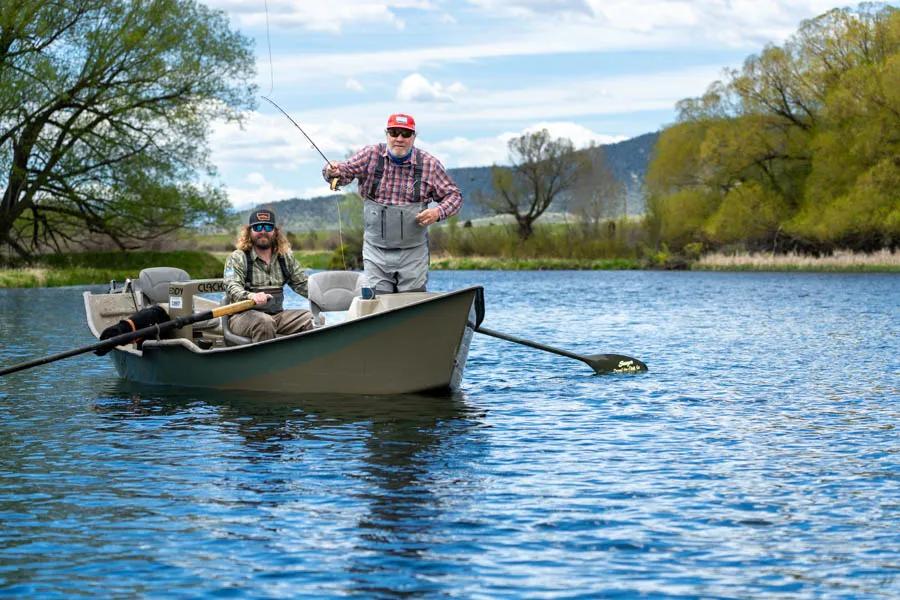
Choose a dry fly with contrasting colors that you can see. The Moorish Hopper has pink foam atop its gray body, and high-riding dry flies such as Chubby Chernobyls and Neversink Caddis often have two-colored wings. They’re ideal if you’re fishing faster water or targeting riffles, or if one fly isn’t enough and you want to fish a dropper. To get the most out of fly fishing in Montana during a hatch, you need to be armed with the right flies to help you enjoy your fly fishing in Montana. Even though fly selection varies season to season and river to river, every experienced angler and every Montana fly fishing guide has confidence in a slightly different set of patterns, and we definitely recommend going with what your guide recommends on a given day.
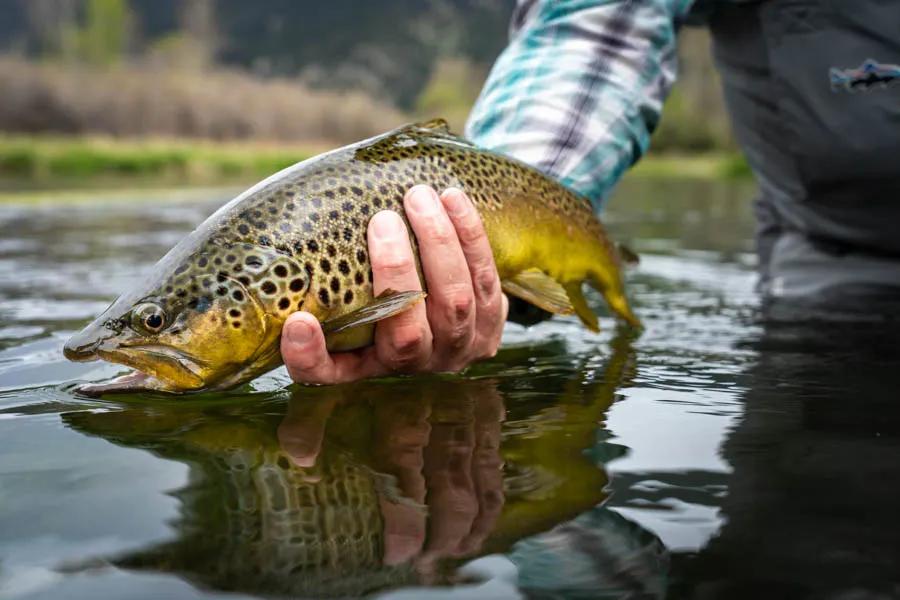
Faith. Many guides might come into the Montana Angler fly shop talking about some great dry fly fishing. They might come into the shop saying they love patterns like the “Hollaback Girl” or the “Thunder Thighs Hopper.” Despite the exciting new names, many of the existing, time-tested patterns will catch fish just as well as the new patterns. This is mostly because they include many of the characteristics from above. But, faith can be just as important as a well-designed fly--believe in the fly on the end of your line, and if the fly you're fishing has worked well for you in the past, stick with it and have some faith, and odds are good a trout will rise!