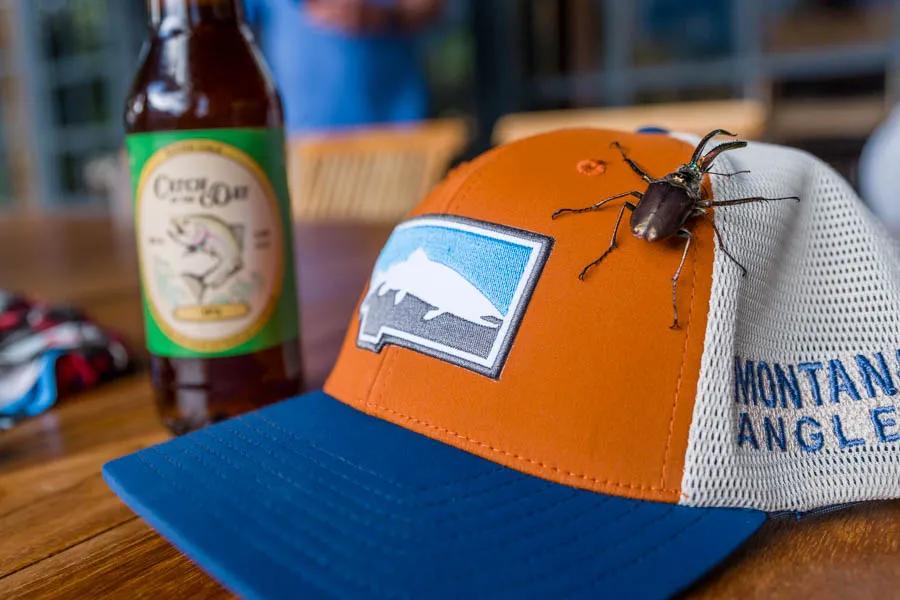

The answer to the best dry fly fishing in the world is complex and nearly impossible to answer. To find the best dry fly fishing for trout, anglers really need to understand that there are so many ways to catch trout on dry flies, and they all offer a variety of experiences and skills, and can exist on several continents. For matching the hatch, Blue-Winged Olives and Pale Morning Duns on the Paradise Valley Spring Creeks are some of the best; for stalking big fish in crystal-clear water, New Zealand possibly takes the cake; and for casting big dry flies on wild rivers, fly fishing in Patagonia is perhaps the best. The Cantaria beetle provides some of the most exciting dry fly fishing on the planet.
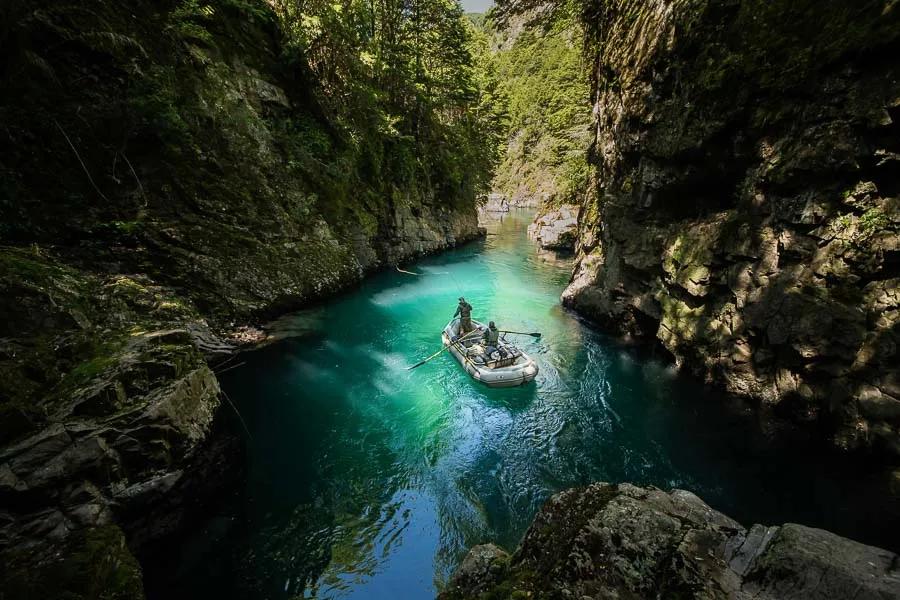
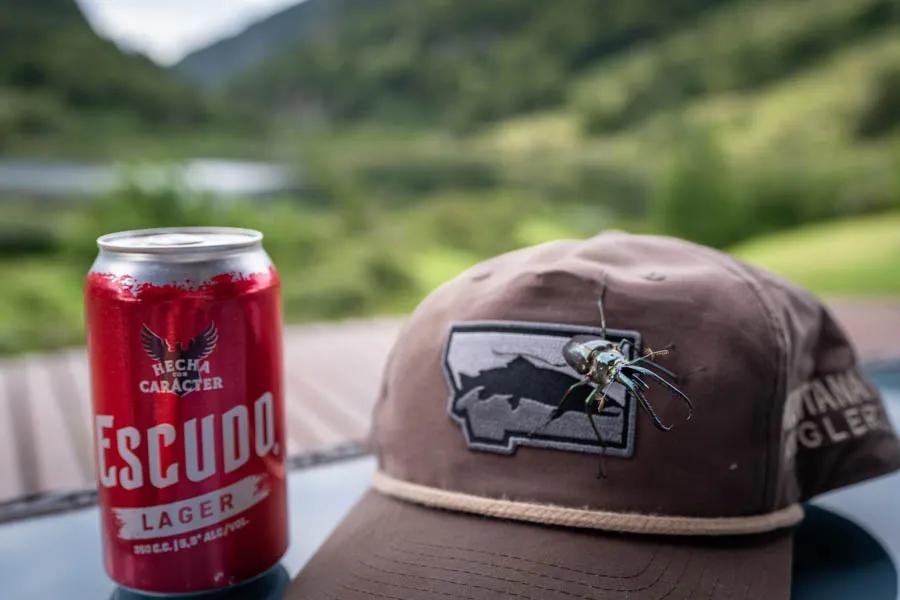
Many of the trout rivers in Chile are flanked by dense, temperate rainforest-like timber. Living amongst these large trees and in the thick brush cover, lurks the Cantaria beetle (Chiasognathus grantii). Also known as Darwin's beetle, these large beetles can be up to 3 to 4 inches long from tail to tip of their largest fang. Yes. These things have fangs. They cling to limbs and brush, eating microscopic insects, yet they are clumsy fliers, often plopping into the many trout-filled rivers of Chilean Patagonia. For anglers looking for an exciting fly fishing trip for trout or wanting the perfect bucket list fly fishing trip, fishing the rivers of Chile will fill the bill and then some.
How to Fish the Cantaria Beetle
The answer here is actually pretty simple--trust your fly fishing guide in Chile that you are on the right river at the right time and choose a fly that is big and foamy. Because natural Cantaria beetles are prehistoric in size—ranging from 1.5 to over 3 inches long—matching the hatch requires huge, high-floating imitations. Other than its size, the most notable feature of the beetle has got to be the huge mandibles that the males have. While not capable of pinching hard enough to cause pain, the beetle’s jaws are surprisingly strong and are more than adequate to hold on to a branch or a finger. The evolutionary purpose of the jaws is to throw other competing males from the tree branches, so only the strongest and largest male beetles can mate with the females, who have a similar body shape, but lack the huge mandibles.
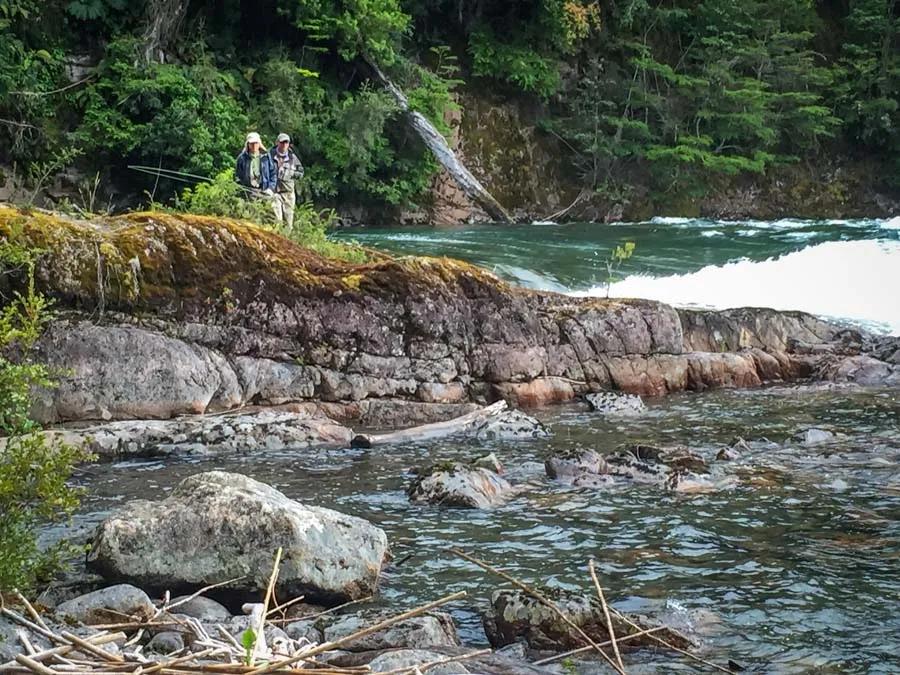
While dead-drifting certainly works well in most situations, it can also be fun to twitch or “pop” the big beetles. They are very clumsy fliers and tend to hit the water with a splat, so a little motion can get fish’s attention. The less-pressured fish of most Chilean waters are more willing to chase a twitched or popped dry fly as well. A missed strike on a cantaria eat doesn’t always mean “game over” for that fish. The fish aggressively eat the large, pokey bugs and are used to them being crunchy and prickly. If an angler is too quick on the strike and pulls the fly away from the fish, casting right back at that fish can often bring about a second-chance strike.
The best months to fish these large beetles are February and March, but anglers desiring to fish large dry flies to big trout can find that any day of the angling season in Patagonia.
What are the Best Flies for Fly Fishing in Chile During the Cantaria Beetle Hatch
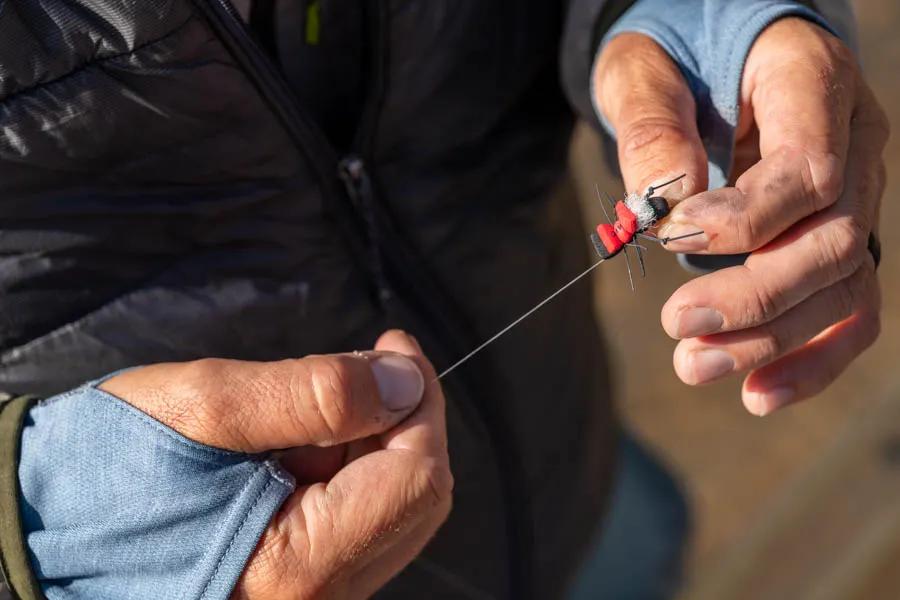
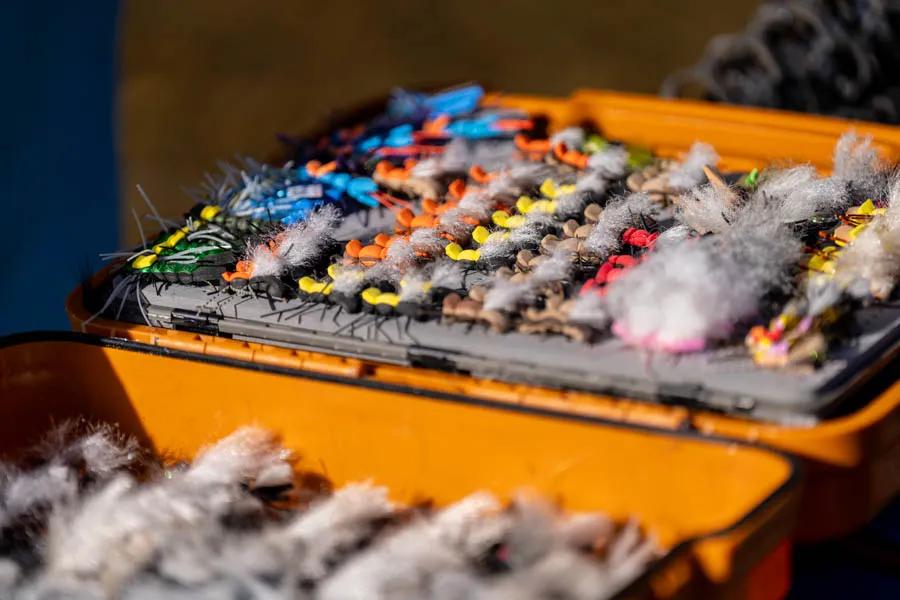
Don't overthink this--choose big and foamy. Fortunately, most trout in Patagonia see little angling pressure, and a large morsel plopping down in their feeding zone often elicits an agressive strike. Many longtime and experienced Chilean fly fishing guides at some of Chile's best fly fishing lodges, choose foam flies that have lots of legs. Foam flies are durable and will float all day, even after the flies have taken a beating from being struck by trout after trout. Montana Angler hosts several trips each season to go fly fishing in Chile. Here are some of our favorite flies for fishing the Cantaria beetle.
What are some Special Tips for Fly Fishing the Cantaria Beetle
Because these large beetles prefer to be on land much more than they do being on water, once the fly lands, it is helpful to create some action with the fly. This is best accomplished with a few different retrieves or twitches. The first thing, however, is to ensure your fly lands on the water with a plop. Because of the large size of the flies, this usually isn't a problem at all, but, do not be bashful when presenting your fly, and sometimes the bigger the splat and splash, the bigger the trout that responds. If a take doesn't immediately happen, then be sure to do any of the following retrieves:
Drag it and swing it. Allow your fly line to become tight as the fly drifts downstream. This allows the fly to swing away from the bank or structure and drag, creating movement in the current. This action can elicit a very aggressive strike because a large trout thinks the fly is getting away.
Pop it and twitch it. Just like you would when fishing a popper for bass or snook, strip in the fly using short strips. Before and after strips, jig or pop your rod tip to create a popping action with the fly on the surface of the water. While this takes a little bit of coordination, it also takes a lot of concentration to be ready to set the hook.
Patience and prepare for short strikes. Because these flies are so big, the trout do not always get them the first time they eat them. If you see your fly disappear into the fish's mouth, go ahead and set the hook. But, when a large fish attacks your fly, be patient---which is hard to do when your heart is pounding after these takes--but try to wait until your fly disappears before setting the hook.
Learn a reach cast. Whether you plan to drag and swing or just pop and twitch, a reach cast is very helpful when fishing these large rivers of Chile because it allows the fly to land with a mend already in the fly line.
Refine your double-haul. In order to drop the fly tight to a bank to drive it into the wind, being able to double-haul will help you catch more large Chilean trout.
What is the Best Rod and Gear to Use for Fly Fishing Cantaria Beetles in Chile
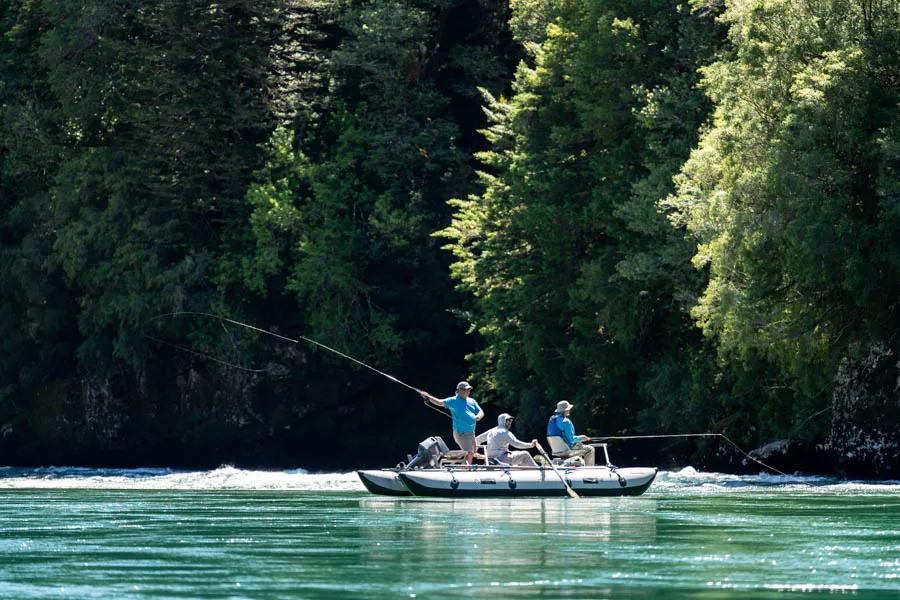
Because these flies are large, the rivers are big, the trout are massive, and wind is almost always a factor, a stiff 6- or 7-weight rod is crucial. Most of our fly fishing guides prefer 9-foot rods, and some even fish 9-foot 6-inch rods, as the extra length helps to turn over the large flies. Choose short, stout leaders that are no less than 2X, as you will need the stiff leader to help the fly land where you want it to land. A 9-foot leader will work, but because trout are not leader-shy, you can often choose a 7-foot leader. While a fly line isn't as important as the proper fly and learning how to double-haul and reach cast, choose a fly line that is weight-forward or has a strong front taper to help turn over the large flies.
What are the Best Fly Fishing Lodges in Chile for Fishing the Cantaria Beetle
Leave your nymph box at home when visiting Chilean Patagonia because dry flies rule the day. Trout in these remote regions see very few humans and have a strong affinity for the large Cantaria beetle. These lodges offer up some of the best opportunities to chase large trout using the Cantaria beetle.
Magic Waters Patagonia Lodge offers some of the most diverse fly fishing opportunities in the world. Anglers can fish emerald green mountain rivers in a lush forest one day and small spring creeks in the arid pampas the next. Expect to fish a different water every day of your trip. This region offers spectacular dry fly fishing, and the fishing pressure is virtually nonexistent.
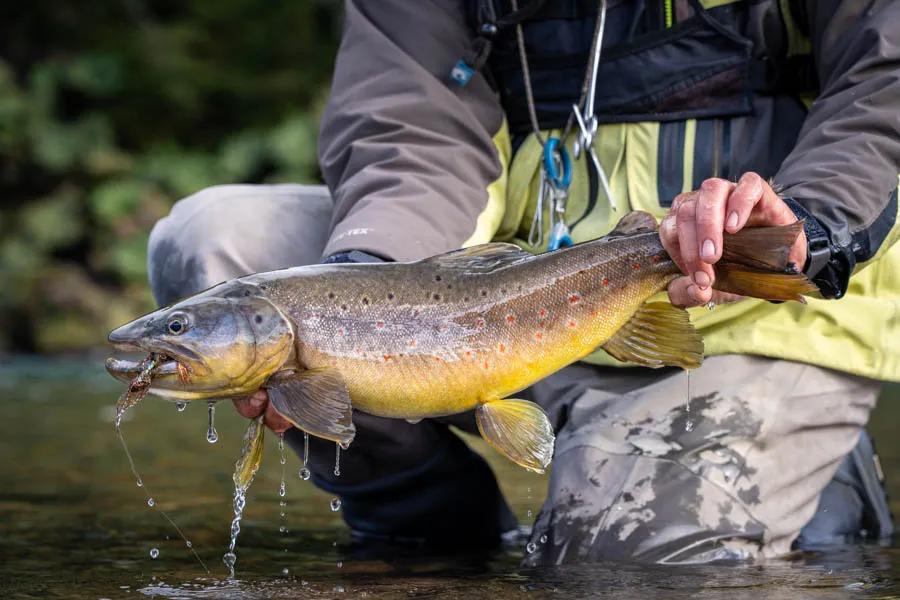
The Rio Baker is Chile's largest river and is truly one of the world's most beautiful trout rivers. The surrounding scenery is equally dramatic, with rugged mountains dripping with glaciers in nearly every direction. Although the Rio Baker is the crown jewel of the lodge's program, there are several other nearby fisheries to add variety to a week at the lodge. These include the outlet of Lago Carrara, Lago Bertran, Rio Maiten, the amazing Cochrane River, and a few other gems.
The River of Dreams Basecamp provides anglers access to three distinct fisheries: the Rio Blanco, an unnamed spring creek, and the Rio Bongo Bongo. These are hands down the most remote fisheries in Patagonia, and the team at Magic Waters has this unique backcountry fixed basecamp that allows unique access to these waters. Anglers can expect to encounter extremely lightly fished waters (only a handful of anglers see these waters each season) filled with aggressive wild brown trout.
The program seamlessly blends 2 lodges over 7 nights and 6 days of fishing where anglers have access to 12 rivers and 8 lakes in one of Patagonia's most beautiful regions. With over 35 boats stashed in different locations, each day anglers are paired with experienced guides and take "off the beaten path" fishing to another level. Two strategically located lodges put guests at the heart of an extensive assortment of fisheries, including Río Yelcho and Lago Yelcho, Río Futaleufú, Río and Lago Rosselot, Río Figueroa, Río Pico, and others that are too numerous to list, while jet boats, rafts, catarafts, and hybrid power drifters deliver never-repeated days.
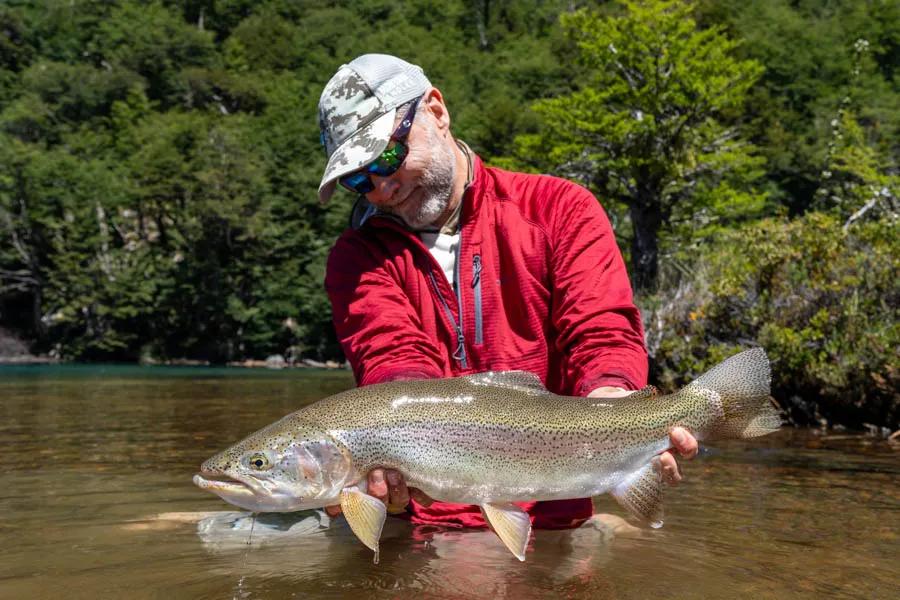
A Chile fly fishing trip at Rio Palena Lodge features a fishing program with a nice mix of quantity and quality—some days are spent catching and releasing lots of good-sized rainbow and brown trout, while others are focused on finding, catching, fighting, and landing large, trophy-sized trout pushing the 10-pound-plus barrier. Anglers can float or walk-and-wade right out the front door or enjoy heli-angling opportunities and then return to a lodge that is purpose-built as a destination fishing and adventure lodge for fly fishing in Chile
Across the border from Esquel, Argentina, and deep into the Coyhue Forest, flows the azure depths of the Futaleufu River. A world away from hustle and bustle, the "Big River" (Futaleufu's translation from the native Tehuelche tongue) rolls along amid some of the most unspoiled mountain scenery on the planet. This giant river grows healthy stocks of rainbow and brown trout that are fed by abundant hatches of mayflies, caddis, and stoneflies. The dry fly fishing on the Futaleufu and other rivers can be spectacular on a plethora of hatches and on terrestrials. The "Futa" offers some of the world's best sight casting to large pods of rainbows.