

Seeing is believing, right? If you can see a fish, you should believe you can catch it. However, oftentimes, if you can see a fish, it is also likely that the fish can see you. Whether you are fishing a crystal clear spring creek in Montana’s Paradise Valley or casting to pods of rising trout on the Missouri River, sight-fishing to trout is one of the most enjoyable ways to fly fish…especially when it all comes together, and you catch a fish. Here are 5 Tips to Find More Trout When Sight Fishing.
Slow Down
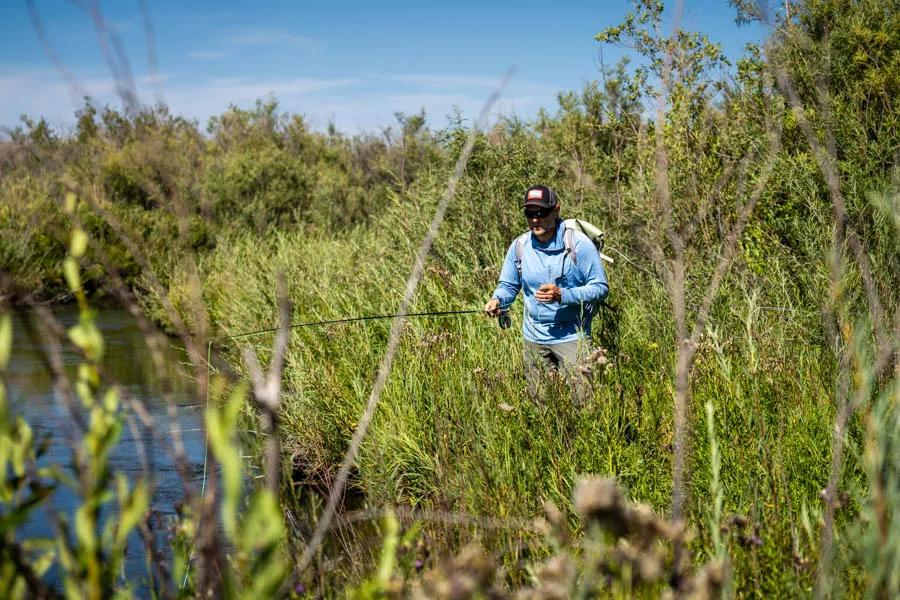
This tip is almost so obvious that many anglers simply can’t do it right. Anglers who have the most success when sight-fishing act like predators seeking out prey. From jungle pumas or African savannah cats, many great predators' successes come from patience and observance before striking out at prey. For many anglers, fly fishing for trout is a game of leisure…but for a trout staying away from predators is a matter of life or death because in most rivers, creeks, or lakes there is always something bigger than you—a bigger trout, a muskrat, an osprey, a beaver, etc. You get the point. Deciding to cast is the moment you pounce, strike, or sprint to catch your prey, just like a predator in the wild. Everything leading up to the moment you decide to make your cast depends on your ability to move into striking posting without alerting your quarry.
Observe the Correct Areas
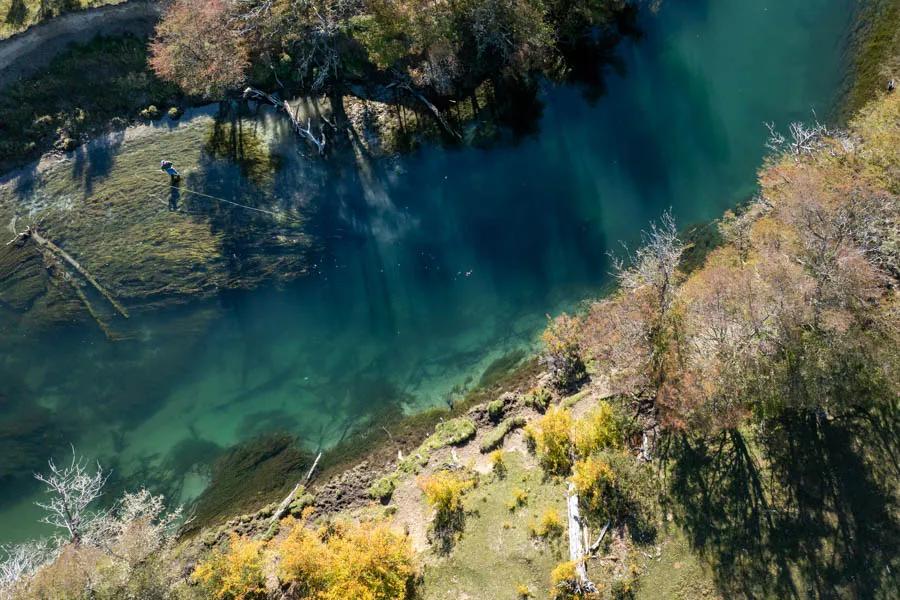
There’s a lot of real estate in a trout stream, and a lot of it is devoid of trout. Some basic knowledge of reading water is essential when sight-fishing for trout. Additionally, it is helpful to be aware of any forthcoming hatches because fish may change from holding to feeding lies as a hatch progresses. If it is early summer and PMDs are on the menu, focus most of your observations on riffles or runs where PMDs are likely to hatch and not bankside structure. You should always look near structure as large trout use it as a place to wait in ambush, but depending on hatch activity, it may or may not be the best place to find trout. Equally important as hatch activity is knowing what trout need—food, current, and cover. Current might be the most important of the three, so observe current and, more importantly, observe any place in a trout stream where two current speeds mix or align. The slower current might provide a place for trout to hold while the faster current brings food or provides cover. Types of cover to focus on consist of logs, other structures, depth changes, overhanging branches, cut-banks, or weed humps.
Essential Gear
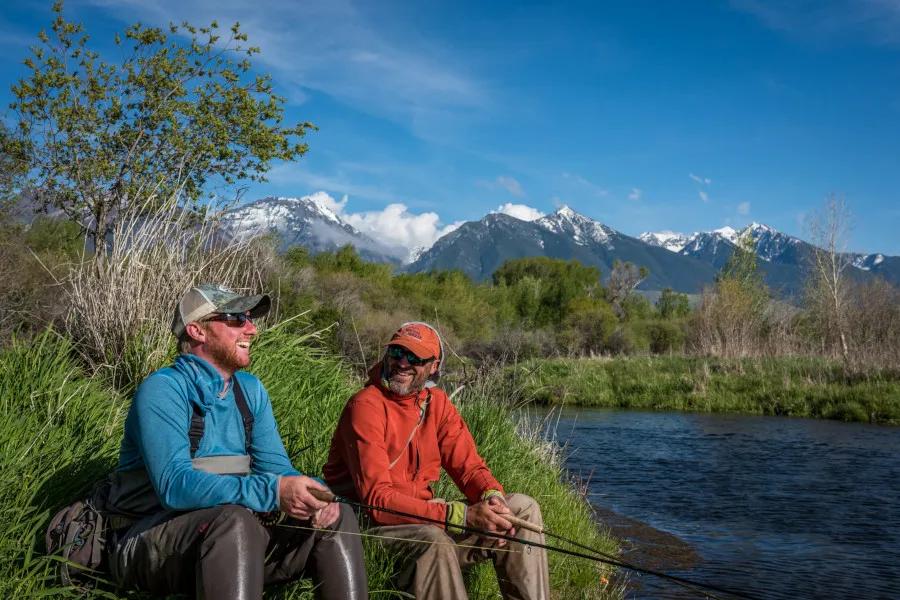
Trout are designed to be camouflaged under the water. Seeing into the water and reducing glare are paramount to successful sight fishing. To give yourself the best chance for success, you must have polarized sunglasses, a hat with a satisfactory brim, and clothing that isn’t too flashy or contrasty to alert fish. By using an extremely thin film on the lens, polarized glasses cut out horizontally vibrating light, which reduces glare on the water, allowing you to see into it and across it more easily. Choose glasses that also have good coverage to avoid side glare or glare from below. Wearing a hat with a wide or long brim cuts out light from above, making it easier to see. Additionally, choosing a hat with a dark underbrim helps reduce glare as well. Clothing should be natural tones that match the surroundings, for example, shades of olive, green, and blue are always good choices.
Elevate to Elevate
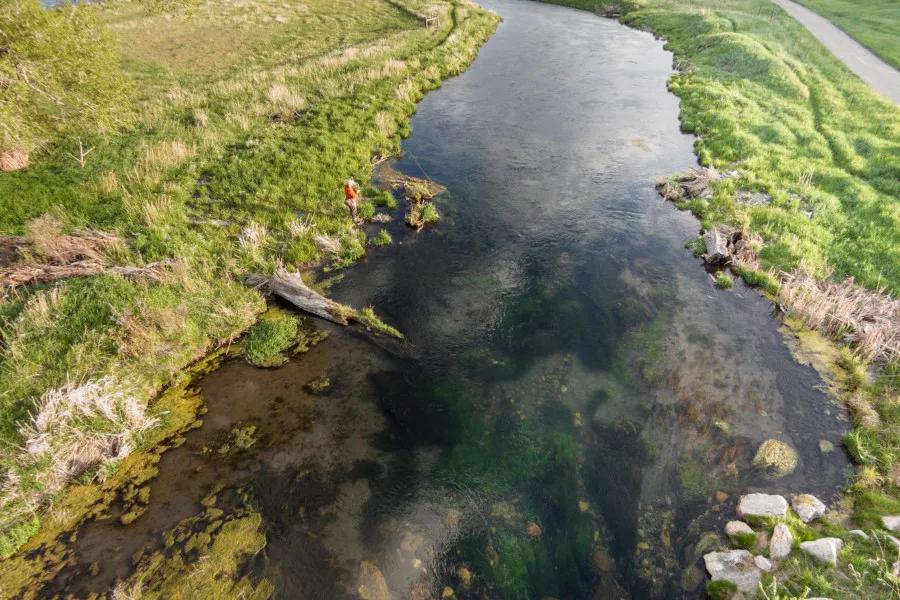
Glare on the water is often what makes it difficult to see fish. Some glare can be overcome with quality polarized sunglasses, tilting your head to reduce the amount of sunlight directly in your eyes, or finding a dark background behind the section of water you are looking into. But an often overlooked tactic is to find a vantage point that allows you to look down into the water, compared to across the water. Of course, we can’t carry a step ladder in our fishing vest, but we can look to find a small hill, fence, stump, or something else to gain a few extra feet in elevation. Elevation is sometimes easier accomplished if you are fishing with a buddy, and you will learn that being the fish spotter can be just as much fun as being the fisher. As a fish spotter, you can learn a lot about trout behavior by observing your quarry.
Let the Sunshine In
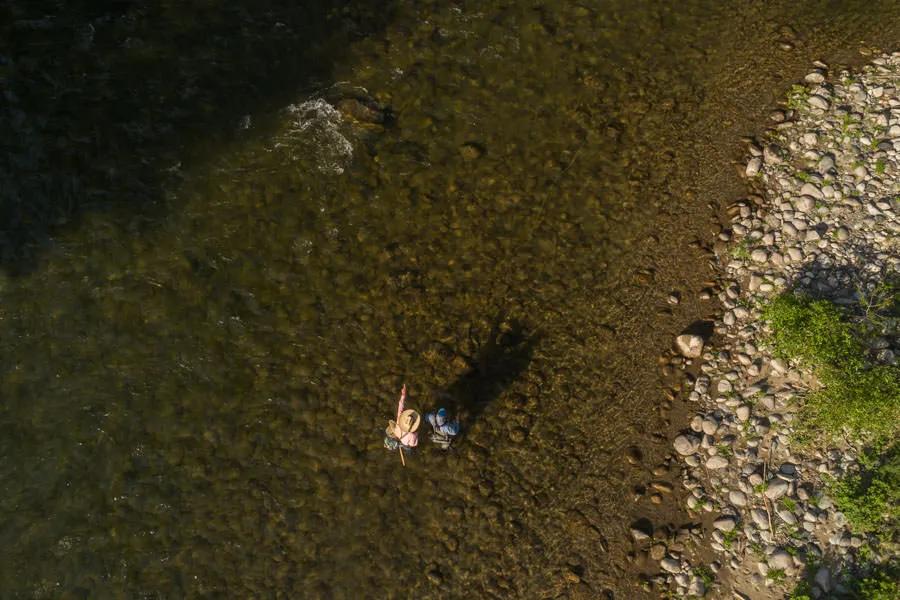
On every piece of fly fishing water in the world, the sun is a factor in your success as an angler. On saltwater flats, guides need the sun to see in the water. Many trout anglers aren’t aware of the sun’s positive effect for sight fishing for trout. We think the quintessential day for fly fishing for trout is overcast skies and light rain or drizzle…and that’s not wrong, but we can’t all drop everything and go fishing when conditions might be ideal. When the sun is bright, use it to your advantage. When fishing, look to find ways to have the sun at your back, making it easier to see into the water. But be careful not to also cast a shadow with your profile. Time of day is also an important factor because in the morning and evening, glare can be more prevalent, making it harder to see into the water, but fish or hatches may also be more abundant, like tricos or evening caddis. Midday is ideal for spring creeks and shallow waters because the sun is at its highest angle to aid you in seeing into the water.
To successfully land a trout on a fly, many pieces of the puzzle must come together at the right time. Often, the first piece of the puzzle to fall into place is finding a feeding trout. On any trout stream from Argentina to Montana, plenty of trout are caught sight-unseen, but the appeal of fly fishing truly lies in the visual nature of the sport. Seeing a trout, watching it, casting to it, and then hooking and landing a wild trout is the whole enchilada.