

It is fitting that Montana's Madison River begins when two of Yellowstone National Park's most renowned rivers meet. The world-famous Firehole River and the scenic Gibbon River are where fly fishing on the Madison River begins, but it is not until the river exits Quake Lake that anglers find consistently good fishing on this unique Montana river. Known for producing hard-fighting rainbows, brown trout that can top-out at well above 24-inches long, and populations of native Westslope cutthroat trout and Mountain whitefish, there are plenty of fish to on this spectacular river. With several distinct sections and a variety of hatches throughout the angling season, to get the best out of your Madison River fly fishing experience, some knowledge is crucial. Here is our Guide's Guide to Fishing the Madison River.
Overview of Fly Fishing on the Madison River
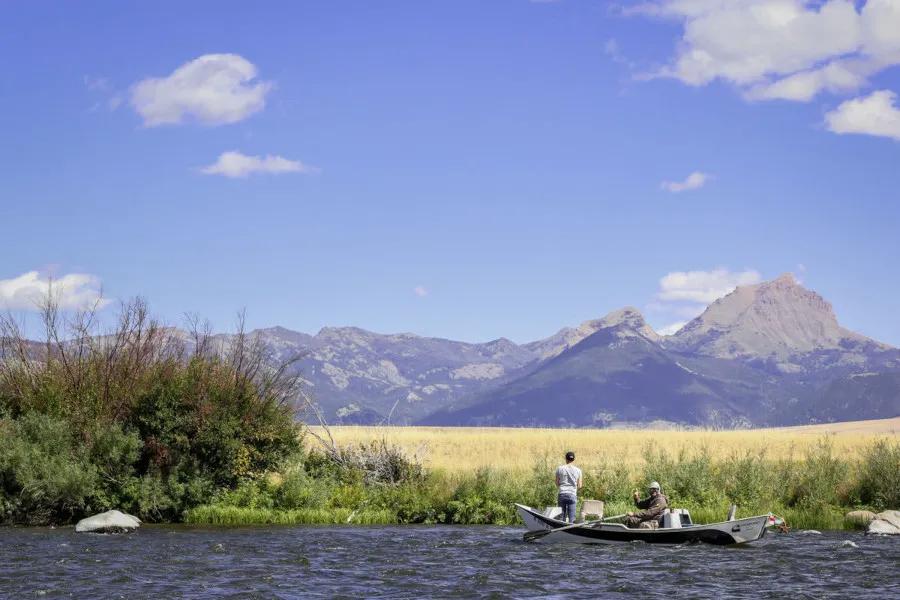
The Madison River offers an amazing diversity of water and can vary significantly in its character as it travels on its course from Yellowstone National Park to the Missouri River. Different sections of the river offer different habitats, scenery, hatches, and fishing techniques. In many ways, the Madison feels like a completely different river from one location to the next. The variety along this legendary fishery is one of the many factors that make it one of the most consistent rivers in Montana. It is a favorite for both DIY anglers and guided fishing trips. Although different sections of the river have their own peak fishing times, there is almost always a location on the Madison that is fishing well nearly every month of the year.
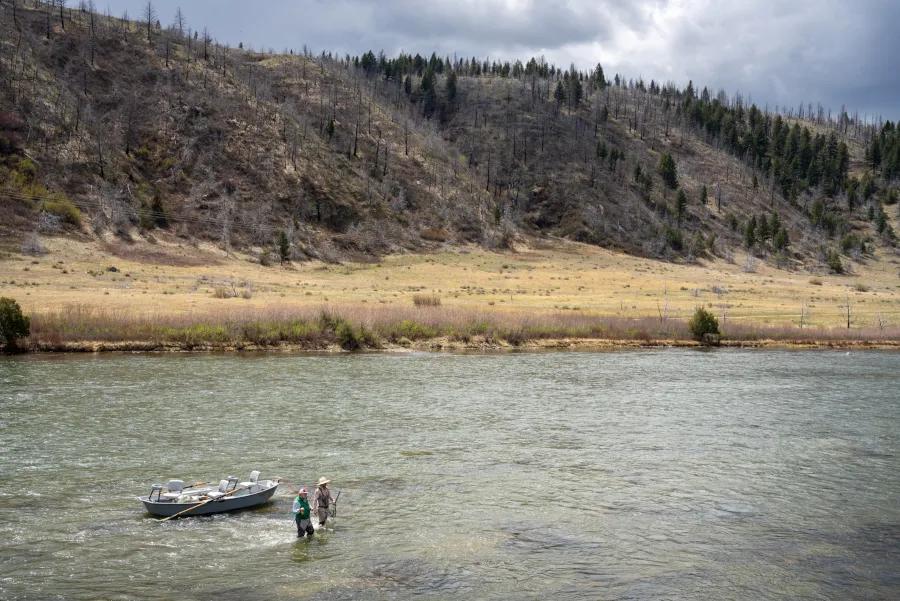
The Madison River truly offers some of the most diverse and consistent fly fishing in Montana. The Madison River flows through one of the most scenic valleys in Montana and is flanked by the towering Madison, Gravelly, and Tobacco Root ranges. The impressive scenery, high trout counts, potential for trophy fish, and proximity to Yellowstone make this a must-fish river for every serious fly fisherman.
Hatches for Fly Fishing on the Madison River
The Madison River is one of the most biologically diverse trout streams in Montana. Home to an abundance of insect species, it is no wonder the river is world-famous for producing high-quality fish and plenty of them. Due to the river’s water quality and natural habitat, it harbors large populations of mayflies, stoneflies, caddis, and more. The Madison River’s hatches are varied and prolific, resulting in large populations of wild trout.
Blue Winged Olives (BWOs)
These mayflies hatch in spring and fall on the Madison River. Beginning in late March and lasting through May, BWOs can hatch on any day. Overcast days may see the strongest emergence, especially on the Lower Madison river. On the Upper Madison BWOs can have equally strong hatches on sunny or overcast days. Spring BWOs range from size 14 to 16 and fall BWOs range in size from 16 to 22.
March Browns
March Browns on the Madison have increased in recent years, making this hatch noteworthy. Typically hatching in late April to mid-May, these large insects become easy pickings for hungry trout. March Browns on the Madison range in size from 10 to 14, with most being size 12. Both the Upper Madison and Lower Madison can have strong hatches.
Caddis
The famous Mother’s Day caddis hatch on the Madison can begin in late April, but most years the hatch begins around its namesake. An abundance of caddis species live in the Madison. Attempting to name them all would be cumbersome and mind-blowing. However, most caddis range in size 12 to 20, with sizes 14 and 16 being the most prevalent. The Lower Madison sees the bulk of the Mother’s Day caddis hatch, while the Upper Madison has opportunities for caddis hatches from May through October.

Salmonflies
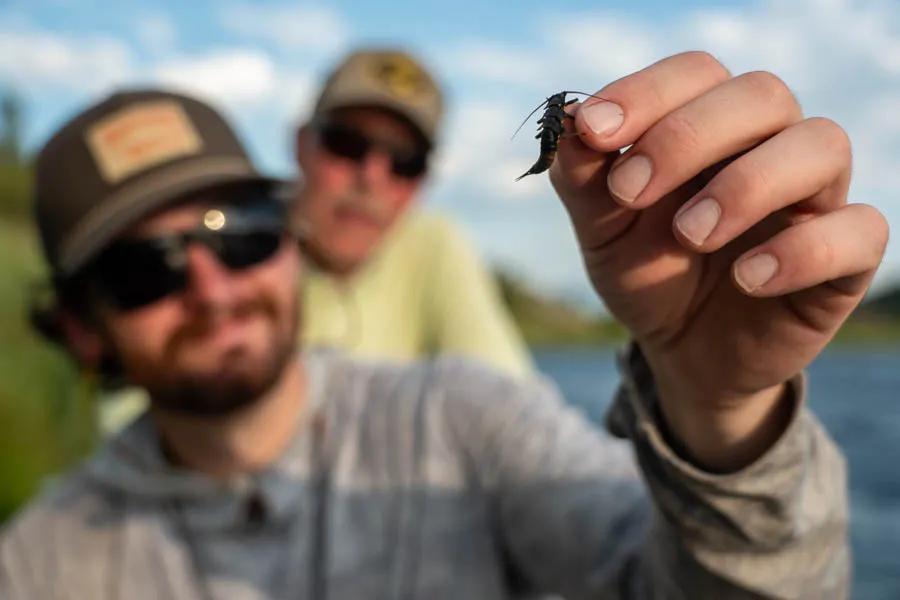
This is the hatch that put the Madison River on the map decades ago, and it is the hatch that still brings many anglers back to the river. Beginning in mid-June on the Lower Madison and migrating upstream well into July, salmonflies are the largest aquatic insects in the Madison. A salmonfly “hatch” occurs over the course of a few days. Nymphs crawl to bankside structure and remove their outer shell—also known as their shuck. When this occurs, an adult insect, complete with legs and wings, emerges. These adults cling to structure until it is time to fly and find a mate. Once airborne, males and females will mate, females deposit eggs on the surface of the water, and males will soon die. Weather, sunlight, and streamflows are all factors in the quality of fishing during a salmonfly hatch on the Madison River.
Golden stoneflies
After salmonflies, golden stoneflies hatch. Beginning in late June and lasting into July, a golden stonefly hatch occurs in the same sequence as a salmonfly hatch, however golden stoneflies are smaller. Ranging in size from 8 to 12, golden stoneflies are equally important to trout as salmonflies; they just don’t have the same celebrity status.
Yellow Sally stoneflies
Often mistaken for caddis or PMDs, this small stonefly is a crucial part of a Madison River trout’s diet. On the Madison, both Upper and Lower, Yellow Sally stonefly nymphs become active in early June, with adult insects hatching from mid-June well into early August. The nymphs range in size from 8 to 16, with size 10 and 12 being the most common. Because adult Yellow Sallies have very sporadic flying habits, trout rarely key on them, but the nymphs are consumed on a daily basis.

Pale Morning Duns
Pale Morning Duns (PMDs) may be a Madison River guide's favorite hatch. Beginning in late June and lasting all through July, the riffle-run-pocket-water nature of the Upper Madison river is ideal habitat for these summer mayflies. The Lower Madison is also home to a healthy population of PMDs, but the river above Ennis and its “50-Mile-Riffle” is known for exceptional hatches of PMDs. Nymphs are available to trout year-round, but during a hatch, the hatching insects are a boon to trout in riffles and runs. Most PMDs are size 14 and 16, with size 16 being the most common.
Spruce Moths
A land-dwelling and distant relative of caddis, spruce moths can be a significant hatch on the river above Ruby Creek. They may emerge as early as mid-July or as late as mid-August; flights of hatching spruce moths cannot be mistaken for anything else. Fluttering near pine trees and bankside bushes, Madison River trout can be overly opportunistic during a strong spruce moth emergence, creating plenty of dry fly fishing opportunities for anglers lucky enough to be in the right place at the right time. Most spruce moths are size 14 or 16.
Terrestrials: Grasshoppers, ants, and beetles
As summer moves on, hatches of aquatic insects dwindle. By mid or late July, grasshoppers, ants, and beetles are a common occurrence, and these land-dwelling insects become easy prey for the Madison’s hungry trout. Grasshoppers may seem the most appealing choice, but many Madison trout may forego a ‘hopper and choose a well-presented ant or beetle. A variety of sizes can be successful, but in recent years, smaller ‘hoppers in sizes 14 and 16 are more popular than larger sizes, and black and brown ants and beetles in sizes 16 and 18 are the preferred choice.

Sections for Fly Fishing on the Madison River
The Madison River begins in Yellowstone National Park and flows for nearly 100 miles before it meets the Jefferson and Gallatin Rivers to form the Missouri River. With a series of lakes and a rugged canyon, the Madison River has three distinct sections. They include: the Madison River above Hebgen Reservoir and in Yellowstone National Park, the famous section from Quake Lake to Ennis Lake, and the Lower Madison River downstream of Ennis Lake.
Madison River inside Yellowstone National Park to Quake Lake
The Madison River originates inside Yellowstone National Park, where the Firehole and Gibbon Rivers join together. Float fishing inside the park is not permitted, so this section of the river is wade fishing only. The elevated temperatures of the Firehole from the thermal influence of hot springs and geysers also extend to the Madison in the park. Fishing during the peak summer season is not as productive as in other locations due to the warm water temperatures. The park opens Memorial Day weekend, and fishing can be good if the river is not too high from snowmelt. Most locals consider October to be the ideal time to target the Madison River in the park. During the fall, water temperatures are once again cool, and large trout from Hebgen Lake enter the river. From Hebgen Lake to Quake Lake, the Madison River changes dramatically from the river inside of Yellowstone Park. Water flowing out of Hebgen Dam is released from the bottom of the lake, producing cold water throughout the summer season. This section of the river has a lot of trout and a few bruisers that make their way up from Quake Lake. It is only a few miles long and receives a lot of fishing pressure, especially during runoff when it is still running clear due to the effect of the dam. The easy access and visually appealing water make it popular with visiting anglers.

Madison River from Quake Lake to Ennis Lake--most often referred to as the Upper Madison
The water immediately downstream of Quake Lake is often very high and fast, and the river in this area is difficult to fish until it drops below 1,300 cfs, which is usually just after the peak of high water. Wading in this area is not for the faint of heart, and the large, bowling ball-sized boulders combined with fast current are not to be taken lightly. This stretch is a wade fishing only section of the river, and it sees fairly heavy pressure relative to the Madison River during July and August when many visiting anglers hit it. Once the river passes under Raynold's Pass bridge, the river changes character and transitions to the classic large riffles that have made the Madison River so famous. As the river gets closer to Lyons Bridge, the river slows just a bit in its gradient and switches gears from boulder-strewn canyon-style water to large riffles with numerous islands, large rocks, and side channels. Fishing pressure is relatively high from Reynolds Pass to Three Dollar Bridge, but drops off from there to Lyons Bridge. Upstream of Lyons Bridge, the Madison River is wade-fishing only. Trout counts are still very high on the bottom of this stretch, but the upper water is easier to read for visiting anglers and thus attracts more attention. This stretch of the river fishes well during high water since there are only two small tributaries that add sediment below the dam, and it is rarely enough to completely dirty the river.
Float fishing is permitted from Lyons Bridge to Ennis Lake, and this stretch receives light traffic from wade anglers but is popular with floaters in drift boats and rafts. The West Fork of the Madison enters just above Lyons Bridge and can dump a lot of sediment during high water at the end of May and into early June. Often, the east side of the river remains clear for several miles below the West Fork. The river in this stretch offers outstanding trout habitat. Most of the river is fairly shallow and resembles a massive riffle with numerous huge glacial boulders interspersed. Trout counts run very high in this stretch, and it is a very consistent fishery. The high catch rates, large trout, and amazing scenery make this a popular reach of the river for guides from West Yellowstone, Big Sky and Ennis. A variety of fly fishing techniques are employed at different times of the year, including nymphing, dry fly fishing, and streamer fishing. There are a few world-class destination fly fishing lodges in this section.
For anglers new to fishing the Madison River, this stretch of the water can be very frustrating because the water looks so uniform in character. Upon very careful inspection, however, anglers will begin to notice the subtle changes in depths and current that concentrate fish. Reading this part of the river can take years of practice, but the rewards can be huge. Many Montana fly fishing guides consider the sections between McAtee Bridge and 8-Mile Ford access sites to offer some of the best dry fly fishing on the Madison River.
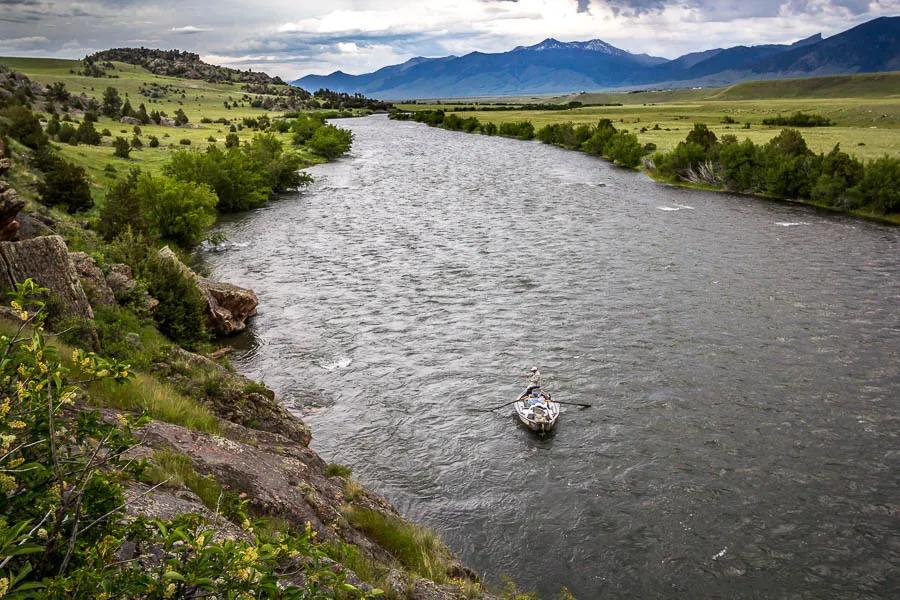
Some of the Madison River's largest brown trout are caught on the lower end of the float section between Varney Bridge and Ennis. The river gains a lot of character, and the large, continuous riffle water gives way to long, deep runs, multiple channels, steep cut banks, and numerous gravel depressions. This portion of the Madison River takes a lot of time to learn, and fish are heavily concentrated in a relatively small percentage of the river. Many guides plan shorter floats on this water, enabling us them get out and work some of the most productive water.
Below Ennis Bridge, the Madison River is closed to float fishing. Public access is only available at the Ennis Bridge in town and the Valley Garden FAS, which is 2 miles downstream of Ennis. Below Ennis, the river becomes very shallow and branches into numerous braided channels. At higher flows, it is very difficult to wade fish. At lower flows in late July and August, warm water temperatures can be an issue on hot days, especially in the afternoon. This section of the Madison can change from year to year when large ice flows in the winter act like bulldozers plowing new channels and moving “buckets” of small gravel. Fishing the channels can be very good if you know the water. Much of the river is shallow and offers poor habitat, so it pays to only focus on the productive fish holding riffles and runs and skip the rest.
The Lower Madison River and Bear Trap Canyon
The Madison River enters Bear Trap Canyon after exiting Ennis Lake. Bear Trap Canyon extends for 8 miles from the last access point. This is a rugged canyon with a class V rapid that keeps most boaters out. Anglers can hike in from the bottom section from a trailhead near the bottom. Wading can be difficult with the big canyon water, and safety is an issue at higher flows. There is a good salmonfly hatch in Bear Trap, but it often coincides with high water. On low water years, the salmon fly hatch can be outstanding. Other important hatches in Bear Trap include the Mother’s Day Caddis, PMDs, and baetis. The canyon is filled with crayfish, so nymphing and streamer fishing are often more productive than dry fly fishing.
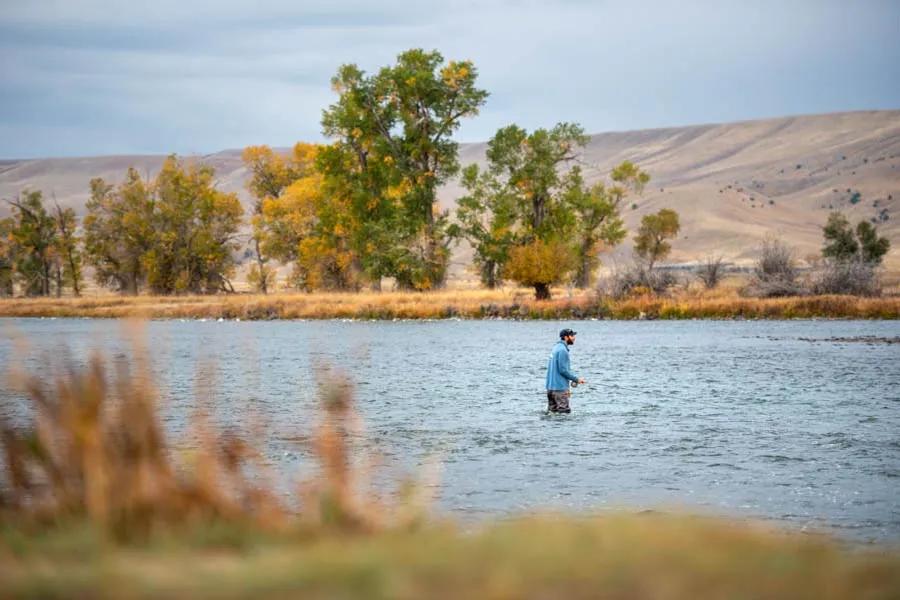
The section of the Madison River referred to as the Lower Madison begins below Ennis Lake Dam. Most of the fishing and floating is done from the Warm Springs Fishing Access Site to the Black's Ford or Greycliff Fishing Access sites. The trout numbers begin to drop off quickly after Greycliff due to warm summer temperatures, but there are some large trout on the lower reaches. The entire Lower Madison is a spring and fall fishery. Summer water temperatures get too warm to ethically fish for trout. In most years, the best angling is from February to early July and from mid-September until December. The Lower Madison is also a good winter fishery when the wind isn’t blowing too hard. The stretch from Warm Springs to Blacks Ford has a lower gradient and is known for its numerous massive weed beds. The best fishing is usually associated with these weed beds, and trout hold either on top of or in the many depressions and channels in the weeds. The Lower Madison has some explosive hatches of baetis, PMDs, Yellow Sallies, and caddis. There is also a lot of subsurface food like crayfish, so hatching insects don’t always bring trout up. Even when pods of rainbows are on the surface, fishing subsurface with crayfish or streamer patterns is often the way to hook the biggest fish.

Seasons for Fly Fishing the Madison River
The Madison River is one of the most consistent year-round fisheries for all of the Montana rivers for fly fishing. However, because the Madison River flows for nearly 100 miles, it has a variety of characteristics. Because the fish counts and catch rates are the highest in the sections downstream of Quake Lake to Ennis Lake and again on the Lower Madison, these guidelines are for the Madison River in these two primary sections.
Early Spring (March-April)
The spring fishing on the Madison River can be some of the best of the season. Trout are still concentrated in the deeper and slower water, and nymphing egg patterns, worms, and crayfish trailed by baetis nymphs can be very productive. The fishing on the Upper Madison can be very good between Hebgen and Quake lakes when rainbows move in from Quake Lake. Fishing is often best in the afternoon on all sections because of cold morning temps, and wade fishing often outproduces float fishing since the fish are concentrated in slow holding water. Nymphing streamers trailed by eggs, San Juan Worms, or small mayfly nymphs is more effective than dry fly fishing on most days. Baetis hatches can bring up some fish on cloudy days in the slower side channels or slicks behind rocks.
Late Spring (May)
Fishing really heats up in May on the entire river. The Madison River below Ennis Lake Dam experiences the explosive Mother’s Day Caddis hatch in mid-May, along with continued baetis and March Brown hatches. The warming water temperatures also produce great nymph fishing, and the streamer fishing starts to really heat up in all sections of the river. The Madison River above Ennis Lake also produces great fishing in May. The river upstream of Ennis Lake also receives a good Mother’s Day Caddis hatch that starts in mid-May. The fishing between Hebgen and Quake lakes remains good, and the water from Quake Lake down can be outstanding. Runoff can start early on big snow years and dirty the upper river below the West Fork above Lyons Bridge. Usually, the Lower Madison holds out and often has clear water into early June. The Upper Madison above Lyons fishes well even during runoff. Fly patterns include San Juan Worms, egg patterns, sculpins and Zonkers, caddis pupae, attractor nymphs, and baetis emergers.
Run off (late May-Mid June)
The timing of runoff on the Madison River changes from year to year depending on the snowpack. Typically, runoff on the Madison River begins around late May and extends until mid to late June. In extremely high water years, runoff can extend into early July. Runoff on the Madison River is generally shorter than surrounding rivers, and it clears earlier than the Gallatin or Yellowstone River. The Lower Madison is more resistant to runoff and, in most years, provides good fishing even during June. The Upper Madison actually fishes very well during the middle of runoff upstream of the West Fork near Lyons Bridge. Hebgen Dam releases clear water year-round, and the two small tributaries (Beaver Creek and Cabin Creek) between Hebgen and Quake Lakes only put enough sediment in the Madison River to turn it a dark green color, which has enough clarity for fish to feed.
Early Summer (mid June- mid July)
Early summer is an exciting time on the Madison River. This time of year, the entire river from top to bottom fishes well. The Upper Madison fishes very well when the river first gains about 1 foot of clarity below the West Fork. Some of the biggest fish of the year are caught just as runoff subsides. Shortly after the run-off ends, the salmonfly and golden stoneflies hatch. This is the busiest time on the river as many anglers come to chase the famous hatch. These hatches occur in late June or early July. Following the stoneflies, the river receives strong hatches of PMDs, caddis, and Yellow Sally stoneflies. The aquatic hatch cycle begins to slow down in mid-July. During the early summer period, trout are mostly keyed in on the different hatches, and matching both surface and subsurface insects is very important. The Lower Madison also fishes very well in early summer with strong hatches of Yellow Sallies, caddis, and PMDs. On the Lower Madison, water temperatures begin rising fast, and trout go on a heavy feeding binge just before the daytime water temperatures begin to get too warm around the fourth of July.
Late Summer and early Fall (mid July-mid September)
Once the bulk of the major aquatic hatches run their course, the trout in the Upper Madison begin to become more opportunistic. This time of year can produce very good dry fly fishing once the trout begin to key in on terrestrials such as ants and beetles. The early mornings in July and early August can still produce good caddis hatches, so starting out with caddis pupa or dries can be productive. Nymphing with large streamers trailed with attractor nymphs can also be very productive. As the water levels drop, trout begin to concentrate in “buckets” where gravel is scoured deeper or around large rocks with depressions on each side. The reservoirs, such as Hebgen and Ennis lakes, also produce intense hatches of tricos and callibaetis that bring large trout to the surface every morning and afternoon. The Lower Madison is generally too warm during the late summer, but occasionally drops to good temperatures during early cold fronts for a day or two.

river feels less busy than in the summer months, and solitude reigns supreme on the Madison River.
Fall (mid-September - November)
Autumn is an exciting time on the Madison River. Large brown trout begin moving in the river, and some trout move out of the reservoirs into the river. The browns are colored-up and aggressive, and this is a great time of the year to target huge trout. The baetis mayfly appears and can produce good dry fly fishing on cloudy days. Streamer fishing also becomes very productive. On sunny days, the hopper fishing can hold out into early October. The Lower Madison is also back in prime shape with good water temperatures. Weather in the fall is often very pleasant, and once kids go back to school and the tourist season slows down, there are very few people on the water, making the fall season an ideal time to target this legendary fishery.
Winter
Winter fishing on the Madison can be very productive when the wind isn't howling. The section between Quake Lake and Pine Butte provides good winter opportunities in winter, but below that, water temps drop. Ice can render much of the Upper Madison unfishable around Ennis. Some of the best winter fishing is on the Lower Madison. Plan on targeting the deeper and slower runs where the fish hole up during the cold water months. Egg patterns, San Juan worms, crayfish, and small mayfly nymphs or midge larvae are the go-to patterns in the winter months.