

The world is a big place and holds more unique fly fishing destinations than any one angler can visit over the course of a lifetime. There are few things I love more than travelling to see new waters in novel locations. Sometimes, however, a place simply demands return visits. New Zealand is on the shortlist of “must return” places, even when it means another venue gets bumped down to the “still never been there list.” I am a trout fisherman at heart. While I will never say no to a trip targeting permit in Belize, Golden Dorado in Northern Argentina, or fly fishing for Musky in Wisconsin, at my angling core I am grounded by the speckled ghosts that inhabit the cold, clear waters of mountain streams. After four decades of chasing trout on every continent where they swim, I have determined that the absolute apex of the experience is found in New Zealand. It may seem counterintuitive to endure 14-hour flights and significantly more expenses to dramatically reduce your average daily catch rates compared to your home waters, but on New Zealand’s South Island, that is exactly the experience we intentionally immerse ourselves in…because it is unlike anyplace on the planet.
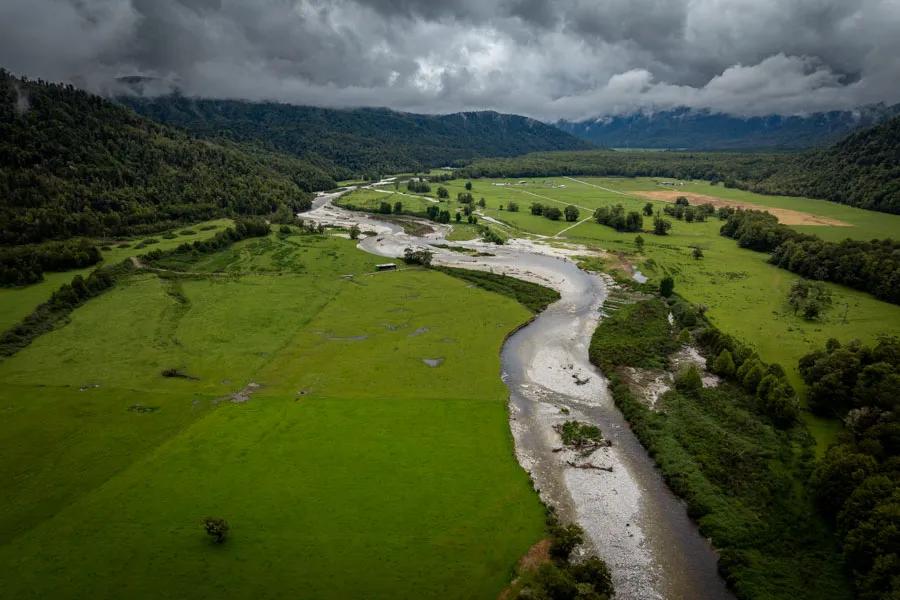
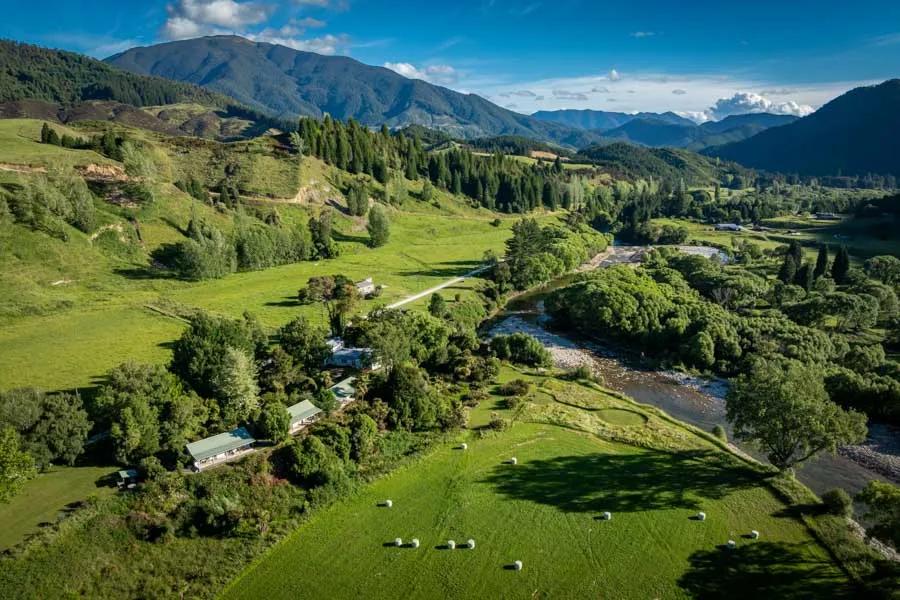
The South Island of New Zealand’s northern waters offer the quintessential “down under” fishing experience. On our return visit to Owen River Lodge, we enjoyed incredible access to some of the finest trophy brown trout waters in the world. Owen River Lodge has over 30 streams and rivers within driving distance of the lodge, and many more for anglers who add the optional helicopter fly-out fishing options.
Fishing for trout in New Zealand is synonymous with spot and stalk sight casting--think big game hunting, but with 5- and 6-weight fly rods instead of rifles. Most of the fisheries on the South Island are not exceptionally productive when it comes to biomass, and the trout densities are quite low by North American standards. What New Zealand rivers lack in fish numbers, though, they more than make up for in average trout size.
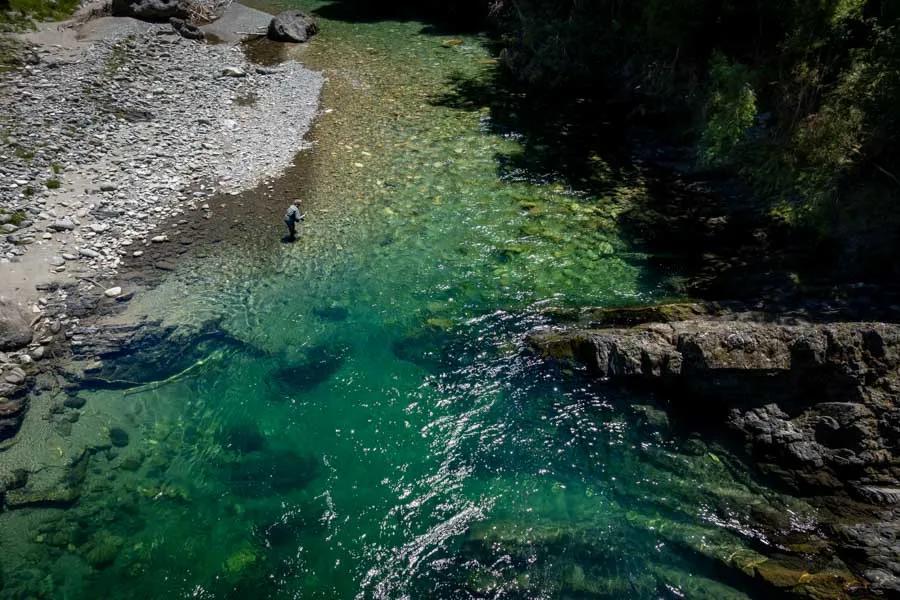
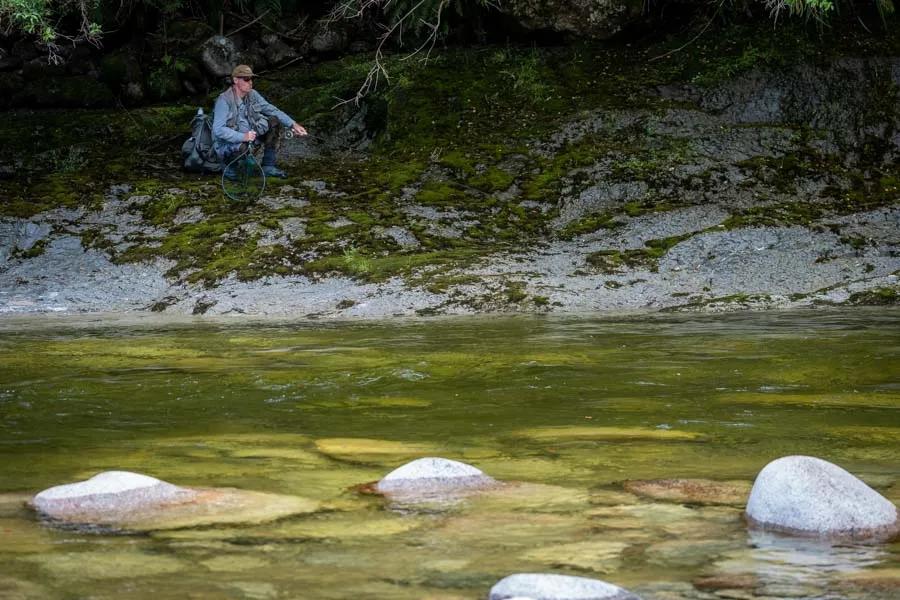
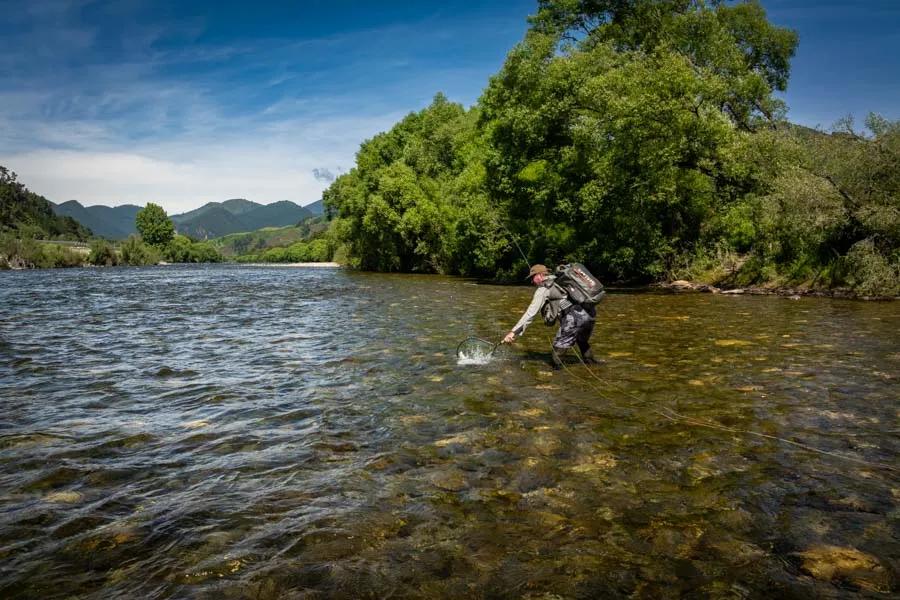
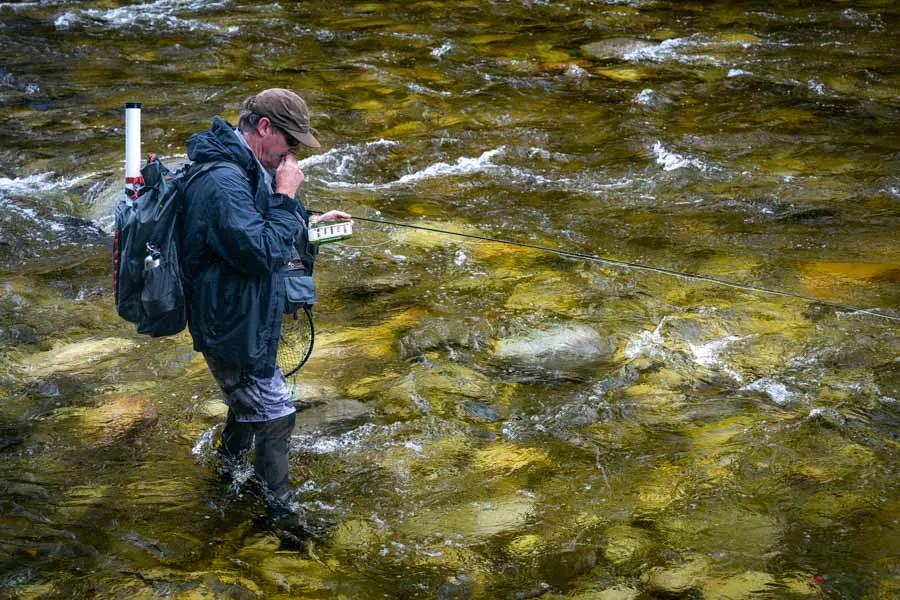
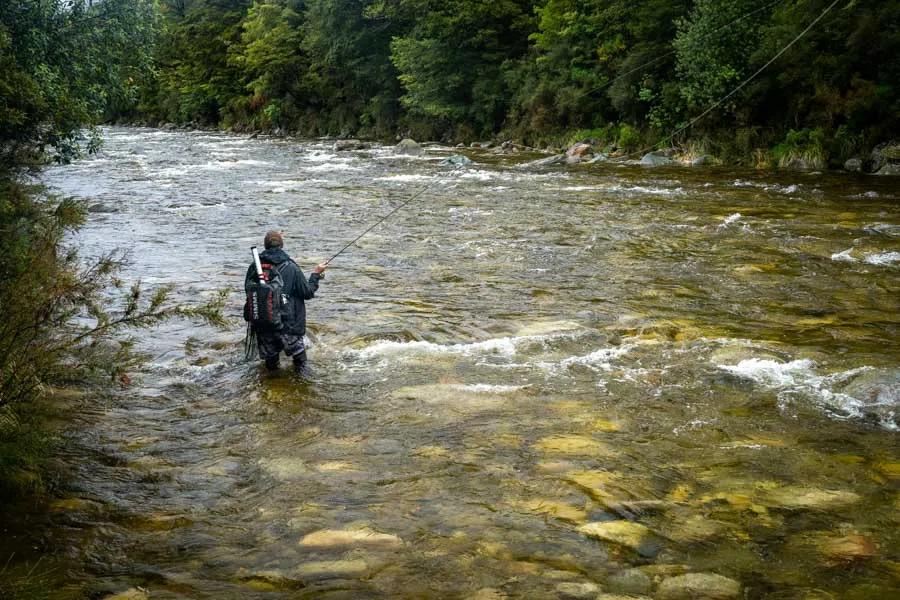
Our trips in New Zealand are exclusively walk and wade. The majority of the day is spent walking and watching, with only a few casts made each day when trout are located. Compared to most Montana fly fishing trips, fishing in New Zealand requires hard work. A day of wading in Montana often involves spending most of your time in a handful of productive runs, but a day of wading in New Zealand means covering as much water as your legs can handle. Simply put: the more water you cover, the more trout you find. When wading while fly fishing in Montana, if you find a nice run, you may spend an hour in it to effectively target dozens of trout holding there. In New Zealand, a nice run may have a single feeding fish that you might make a few casts to and either spook it (most common) or hook it (whoop whoop!). Afterwards, it is back to hiking up the stream looking for the next opportunity.
After making several trips to New Zealand, I have always been amazed at the sparse fishing pressure on the local waters. Even when we are on streams and rivers that are easy to drive to, we seldom encounter another angler. I asked David, the manager at Owen River Lodge, why these rivers remain unpressured. He said that fly fishing New Zealand’s South Island waters is too much work for most locals, or “kiwis” as he calls them. David says kiwis prefer outdoor recreation with a bit more action. In a country famous for adrenaline-infused outdoor pursuits such as whitewater rafting, bungee jumping, mountain biking, and class V jet boating, there is some truth to his statement.
Owen River Lodge
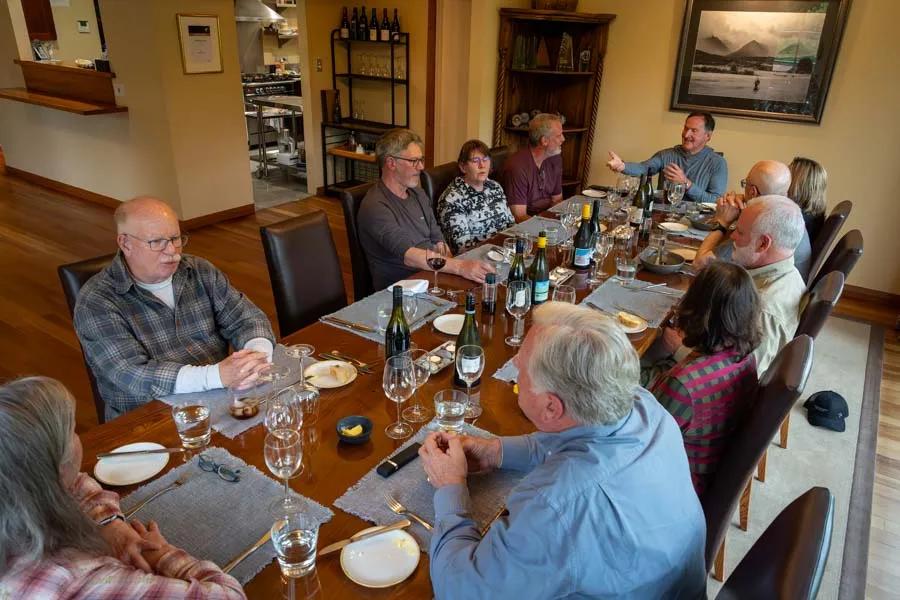
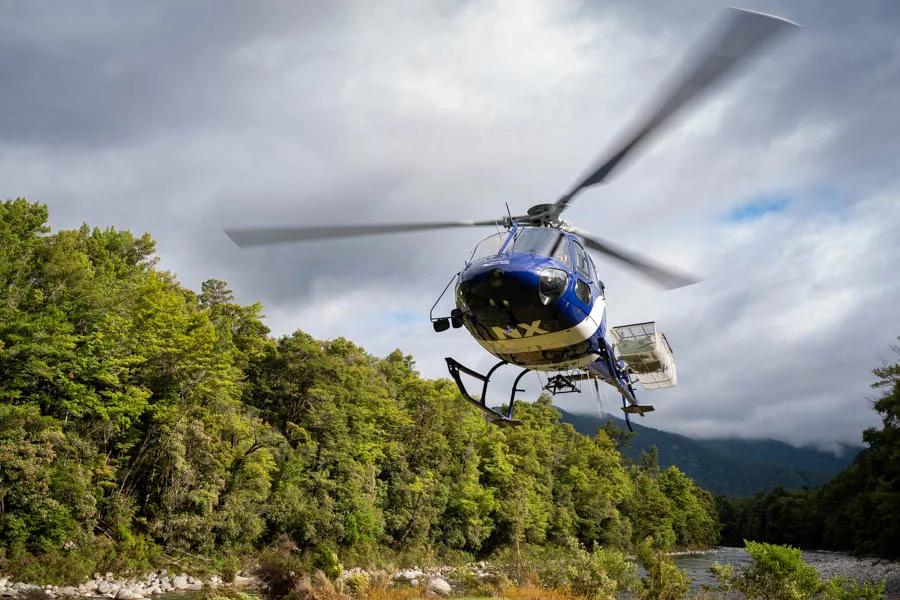
Owen River Lodge is one of the few all-inclusive fly fishing lodges on the South Island. The lodge capacity is 12 guests. It is ideally located in the Owen River Valley, which allows guests to radiate outwards to target a huge variety of streams and rivers. Weather patterns in New Zealand can vary significantly depending on the storm direction, and lodge guests can access fisheries in drainages with several different subclimates to optimize opportunities for finding ideal conditions. Owen River Lodge also partners with three different helicopter operators for guests who want to fly into the many different backcountry rivers in the region. Heli-flyouts are an added cost and are not needed to explore great fishing, but they can add some extra variety. Many of the guests on our hosted week opted for a day of fly-out fishing during our week. After a day on the water, the lodge offers incredibly comfortable accommodations and an outstanding culinary program. The beautiful landscaping and exceptional views of the valley provide a tranquil backdrop when enjoying the lodge grounds or the large picture window while dining.
The Fishing
Each day after breakfast, guides depart the lodge with guests in a variety of directions. Most of the fisheries are within an hour's drive of the lodge, although occasionally we drive a little farther if we have a unique fishery in mind. With Kahurangi and Nelson Lakes National Parks in close proximity to the lodge, there are also bountiful backcountry rivers that guests can access with some hiking or a short helicopter flight. Owen River Lodges' sister lodge, Cedar River Lodge, runs a similar program but in a different region. In this trip report, I will refrain from using the specific names of each stream and river.
Generally, we use one of three fishing techniques: single dry fly, dry dropper, or single nymph. The guides are exceptional at spotting the well-camouflaged wild trout. In this region of the South Island, the vast majority of the rivers are dominated by brown trout. The goal is not just find fish, but also to find actively feeding trout. While it is enticing to make casts to some of the monsters that lazily cruise in the heart of slower pools, these fish are much more difficult to fool. Most of the time, we pass these “pool fish” unless they are absolute monsters. The ideal target fish is one that is holding in faster currents and that is higher in the water column. When these fish are actively feeding, you can observe them sliding back and forth as they take nymphs or sometimes rise to dries on the surface. These are the more catchable trout.
Once a feeding fish is located, we then take time to observe the fish and see how it is behaving. If it is surface-oriented, we generally switch to a single dry. If the trout is deeper in the water column, a single nymph is often preferred. Occasionally, we will try a dry dropper, or if a trout is quite deep, a double nymph rig with a weight fly and a smaller dropper. Leaders are exceptionally long to fool the big trout in the clear waters. Guides often prefer to fish 14-16-foot leaders. If the trout see the fly line, they almost always spook. Casts are generally made directly below the trout with the end of the fly line ideally dropping 6 feet behind the trout and the flies several feet above the fish. The goal is to then watch the trout’s behavior as the fly approaches. If fishing subsurface, you can often watch the trout slide to the left or right and then move back to their position, which generally means they have intercepted the fly to either inspect it or take it. There is an art in knowing when to set the hook, and often a slow acceleration of the fly to tighten on the nymph to see if the fish is on. This also helps to avoid spooking the trout if it hasn’t taken the fly.
Day 1 – Shaking the Rust Off
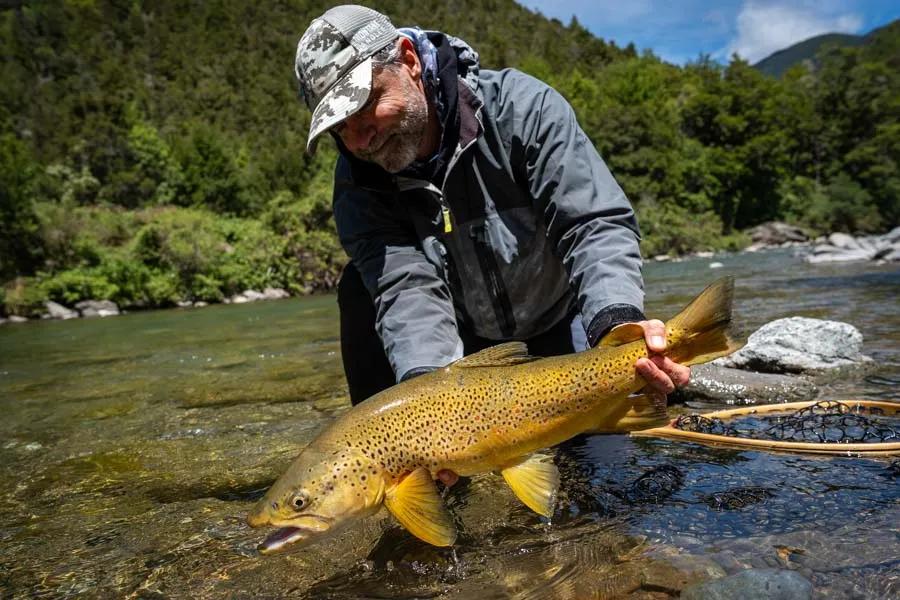
I arrived in Nelson two nights early to get settled in and break up the travel. I booked a day trip for fly fishing in New Zealand with one of the local guide services and spent the day fishing with my guide, Robbie, on one of the more famous rivers in the region, which has a reputation for very technical fishing but also for big fish. There had been a bit of rain two days earlier, but the river was dropping and coming into perfect shape, so we opted to give it a try. I had fished this river in years past and was familiar with some of the monsters.
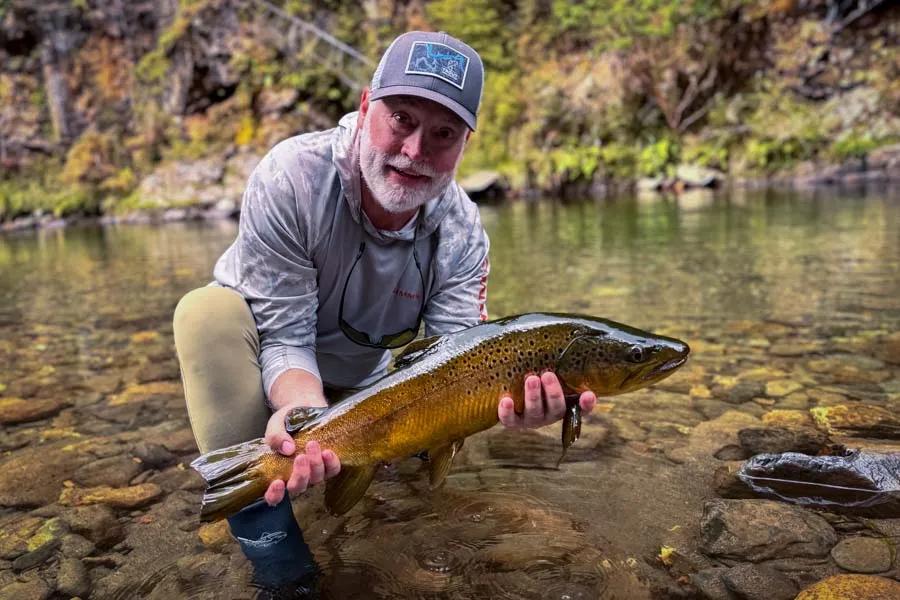
We worked incredibly hard and covered a lot of water, and we found a few huge trout. Some were approaching 28-30” and looked to be over 10lbs. The water was still a little on the cool side from a recent weather cycle, and the big fish were mostly in the slower currents of pools, making them incredibly spooky. We tried for a handful of these monsters only to be humbled. The pocket water, which is often more productive, didn’t have many fish holding, but we eventually found a nice 25” brown actively feeding high in the water column in relatively fast water. This was our chance, and I switched to a single small CDC caddis dry. On the first cast, the big fish came for an aggressive take, and the fight was on. This turned out to be the only fish hooked this day but I was lucky enough to land it. While this was a single fish day, the fact that I was able to hook my biggest trout of the year to date while sight casting a dry fly was enough to vault it into one of my best days of the season!
Day 2 – Stalking the River Flats
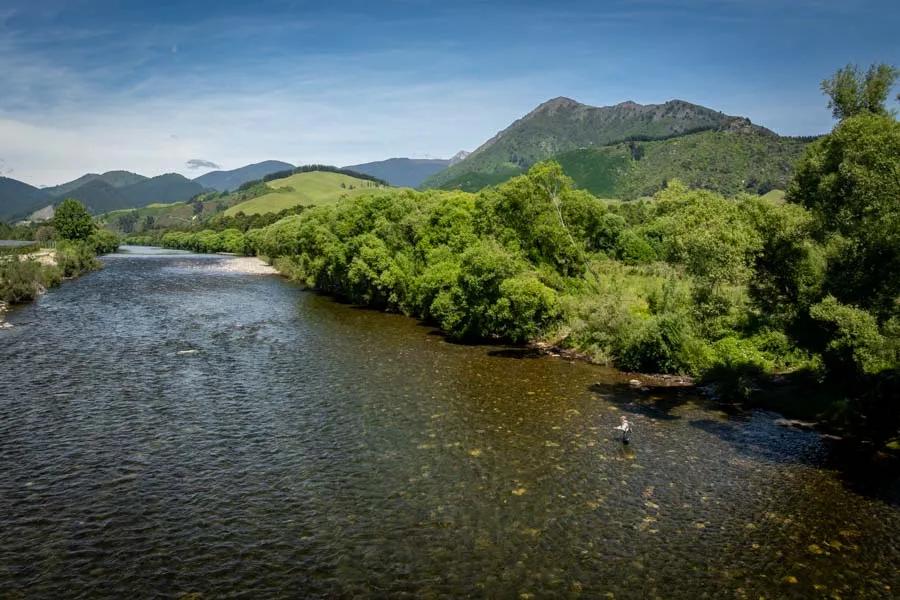
After a day off from fishing to transfer to the lodge and get settled in, we were now on track for our fishing program at Owen River Lodge. Since we had a full house, I teamed up with David for the week to get out and explore the waters in the region. David had spent years as a guide at ORL and has a great knowledge of the local fisheries. On our first day out of the lodge we visited one of the larger rivers in the region, and a new river that I hadn’t fished before. David explained that while it had a handful of bigger trout over 5lbs it was best known for its strong population of 15-20” browns.
We spent most of our day working a few different long flats. The currents were slow and subtle in these flats, and they were shallow enough that we could slowly walk up river in waist-deep water. Some of the trout were holding in place while others were slowly cruising across the flat. We enjoyed an exceptionally rewarding day taking turns fishing to these cruising trout. Most of the fish we spooked and were not able to hook, but occasionally one of us would make just the right cast and get rewarded with a take. By day's end, we had landed eight trout; by New Zealand standards, this was an exceptional day of “catching.”
Day 3 – A Wild Card Adventure to the West Coast
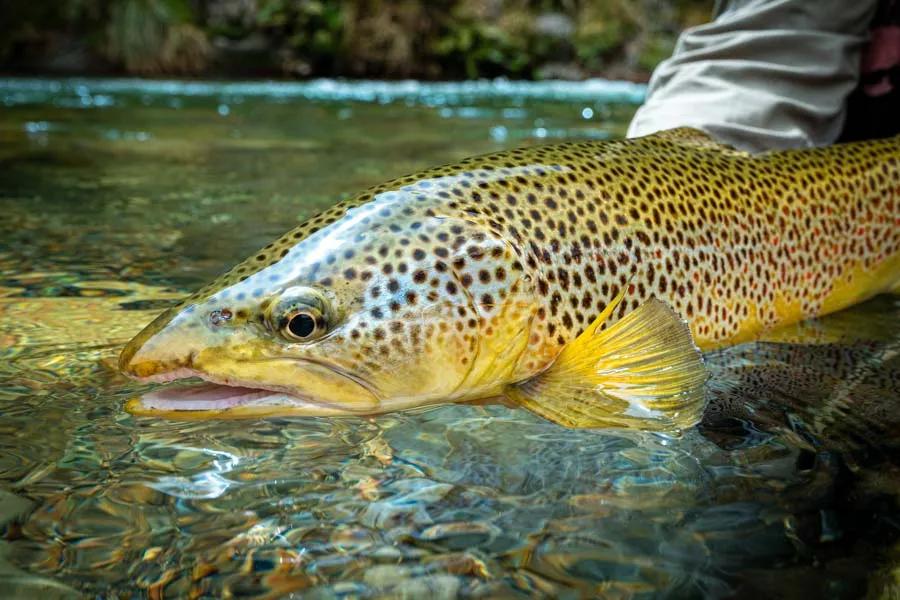
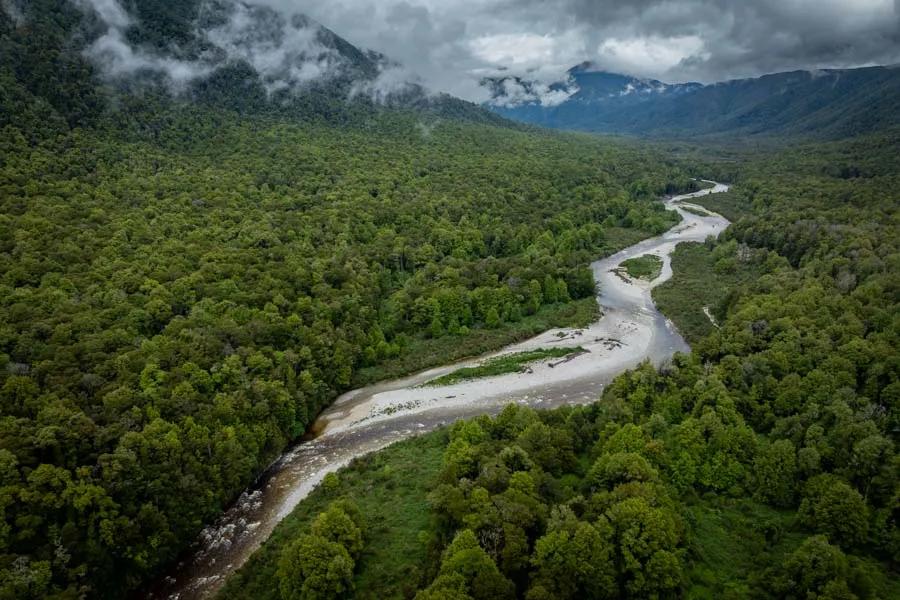
Now that we had a day of good action under our belts, we opted to head on toward a small stream on the other side of the mountains in the “West Coast” region. The forests in this area receive significantly more rainfall and are very lush and dense. We decided to target a smaller fishery that David hadn’t visited in a few years, but where he had found huge trout in the past. He explained that it was tough fishing with a rugged river bottom and very low trout numbers, but some big ones. The wading meant I could use some of the walk-and-wade skills. I love seeing new water, and he had me at “a few big ones,” so off we went. After a long drive, we found our way to a pull-off on a country road. The hike into the river was rugged as we had to do some major bushwacking through the shrubs and underbrush. On our way to the river, we encountered some heavy rain, but the water was still in good shape at the start of the morning. After about an hour, we noticed a tinge of color to the stream as it started to rise a bit from the recent rain.
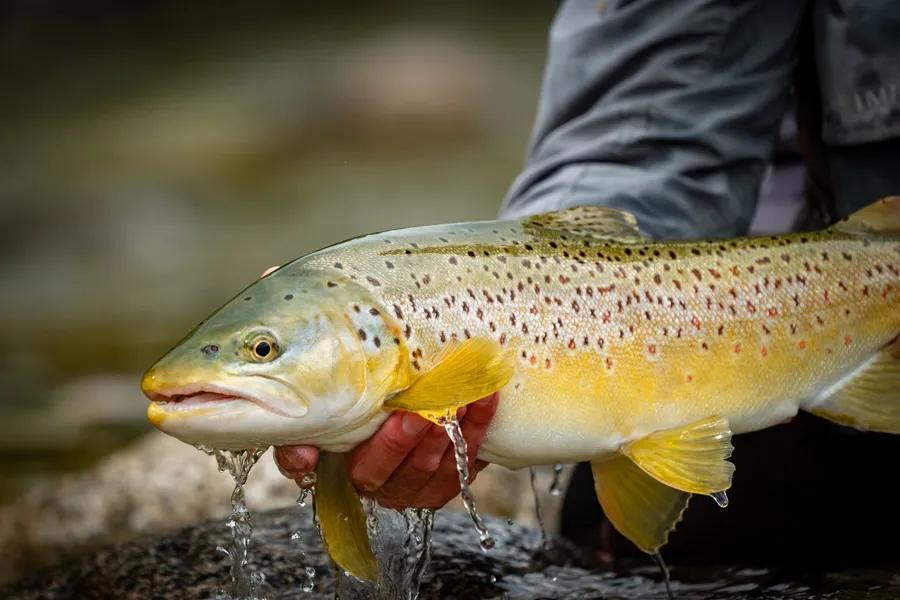
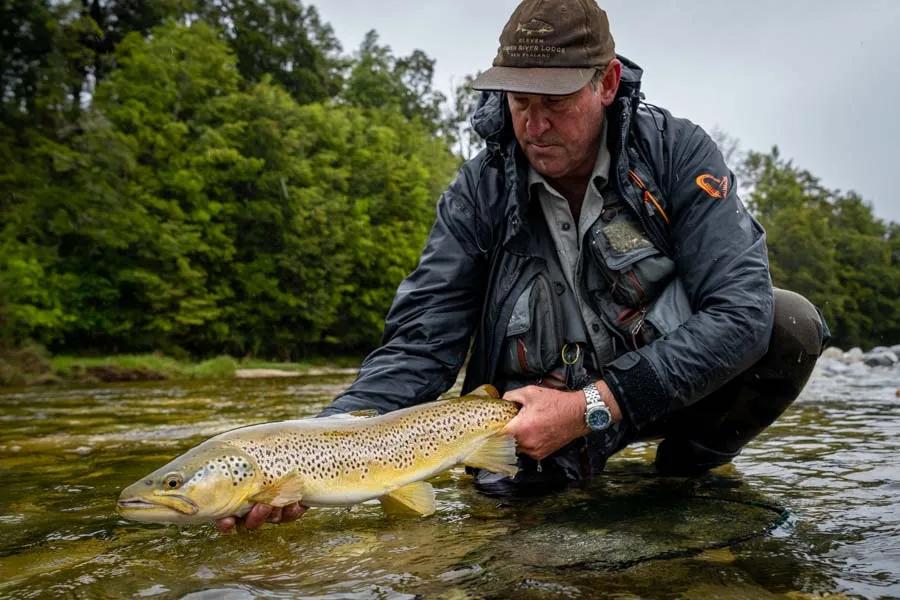
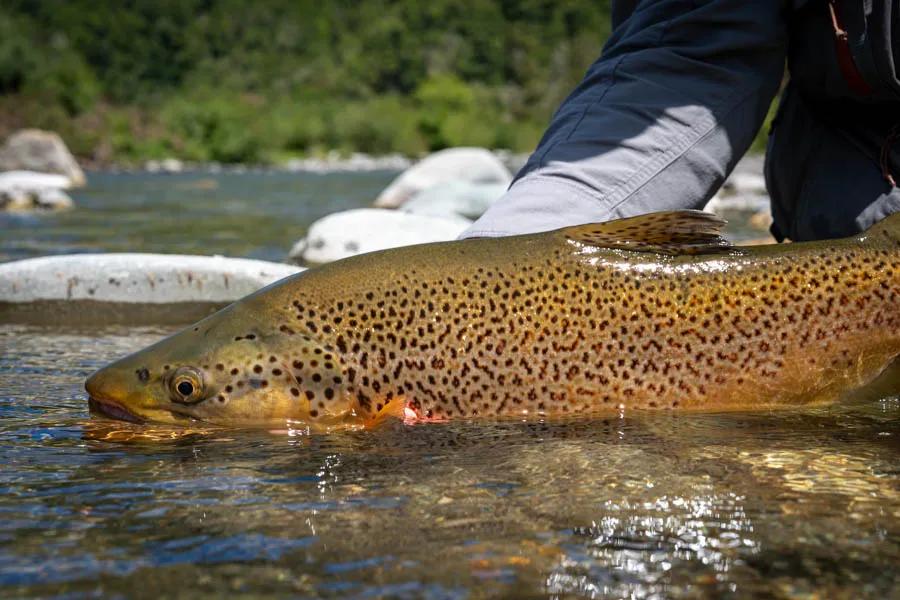
Although it wasn’t completely blown out, the water was rising, and we had a hard time finding any trout. The cloud cover and drizzle made the sight casting slightly more challenging as well. After lots of hiking and methodically searching the water with our eyes, David suddenly yelled, “Stop!” We had nearly walked past a big 26” brown that was finning in shallow currents at the head of the run. I dropped down, and we slowly backed away from the fish. Somehow, we hadn’t spooked the big trout. We rigged up a single small Pheasant Tail without any weight, and on the third cast, we saw the fish move quickly a few inches toward the fly. I took a leap of faith and set the hook and felt the solid weight of the big fish. This heavy-shouldered brown was a gorgeous specimen. It turned out to be the only trout we found all day, but it was well worth the adventure!
Day 4 – Helicopter Fly-out into Kahurangi National Park
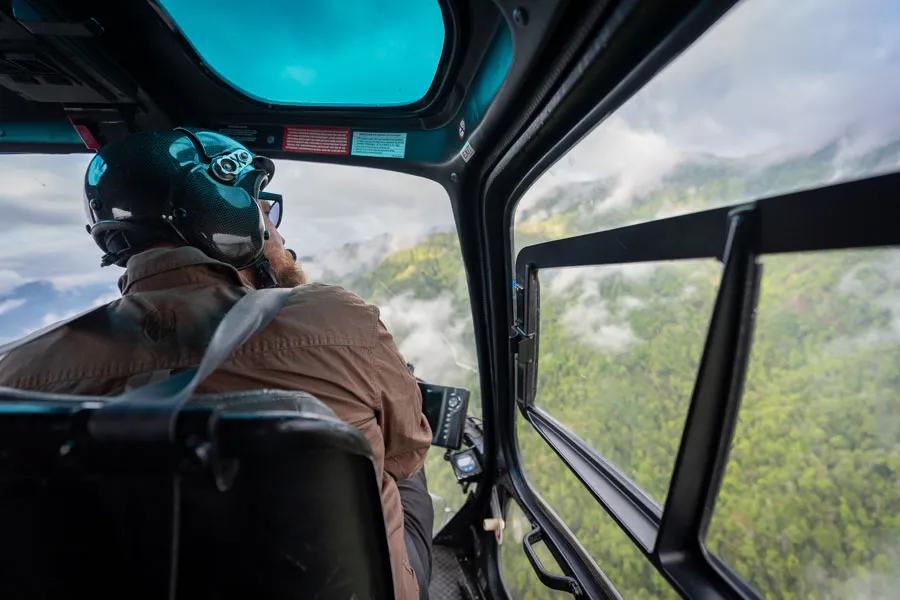
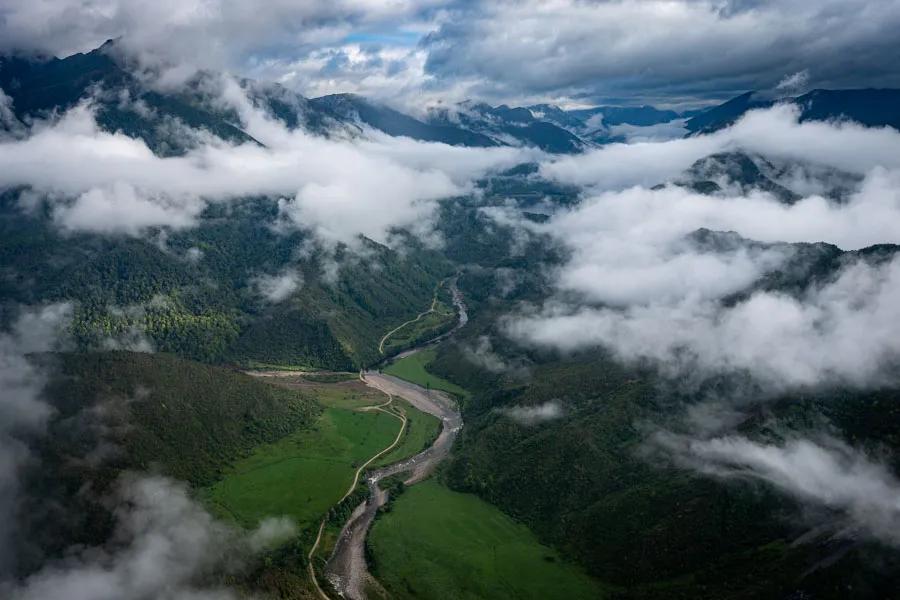
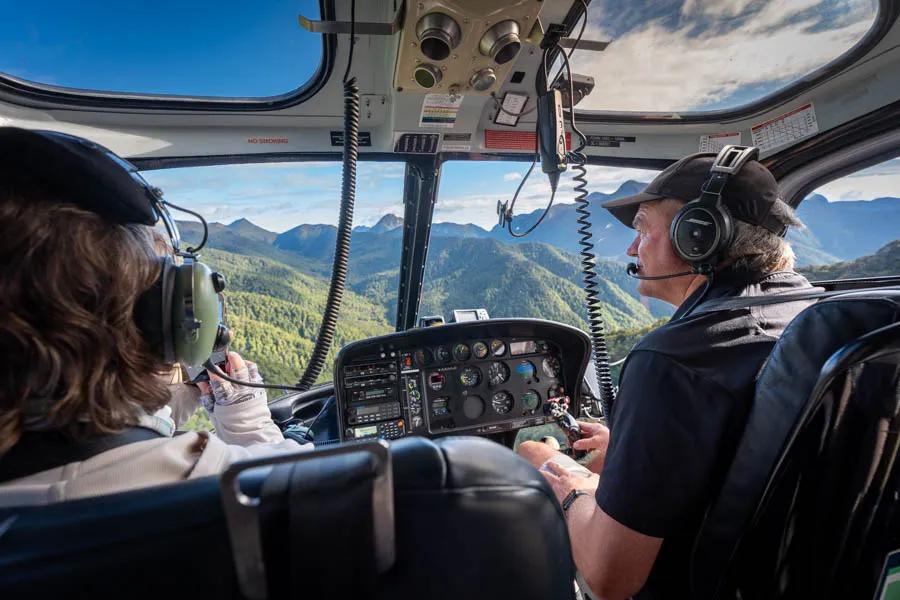
While the rivers on the West Coast had blown out from the rains of the previous day, the fisheries to the North had been protected by the mountains and were still in perfect shape for fly fishing in New Zealand. The weather had cleared except for a morning mist in the valleys. This was a perfect day for flying into the backcountry rivers of Kahurangi National Park. David and I joined guest Fran Baltmiskis and his guide in the heli for an adventure into New Zealand’s second-largest national park. We targeted one of the larger river systems in the park, and our pilot dropped David and me off before continuing on further downstream with Fran and his guide.
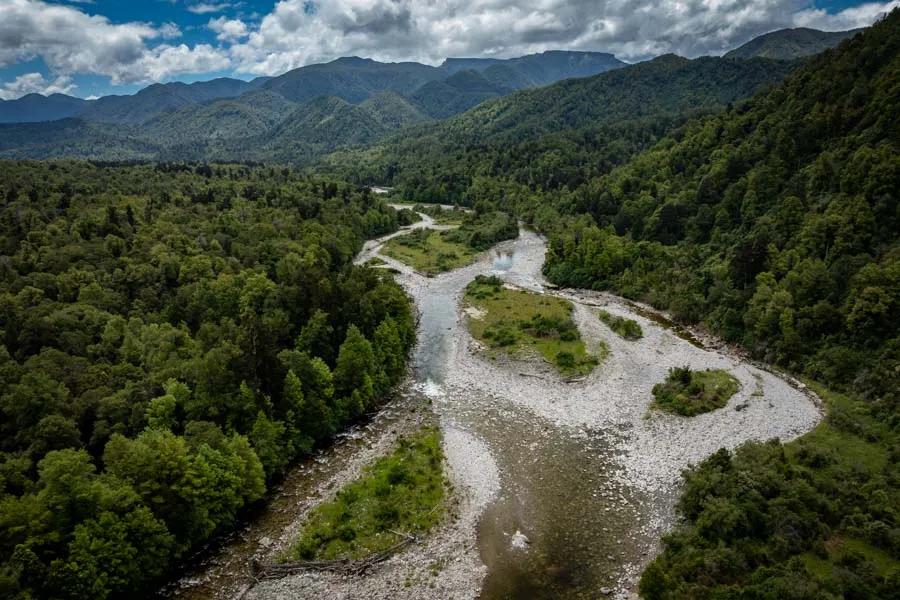
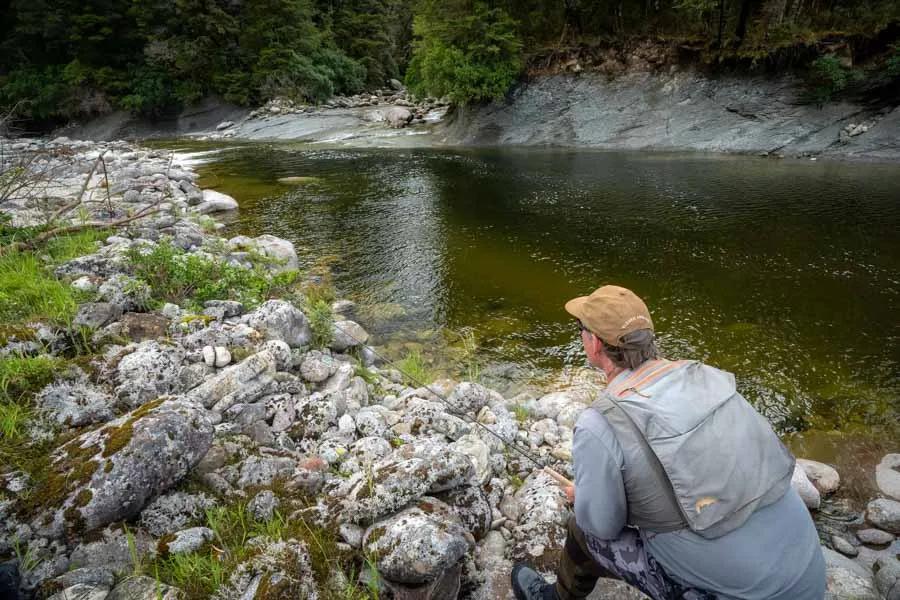
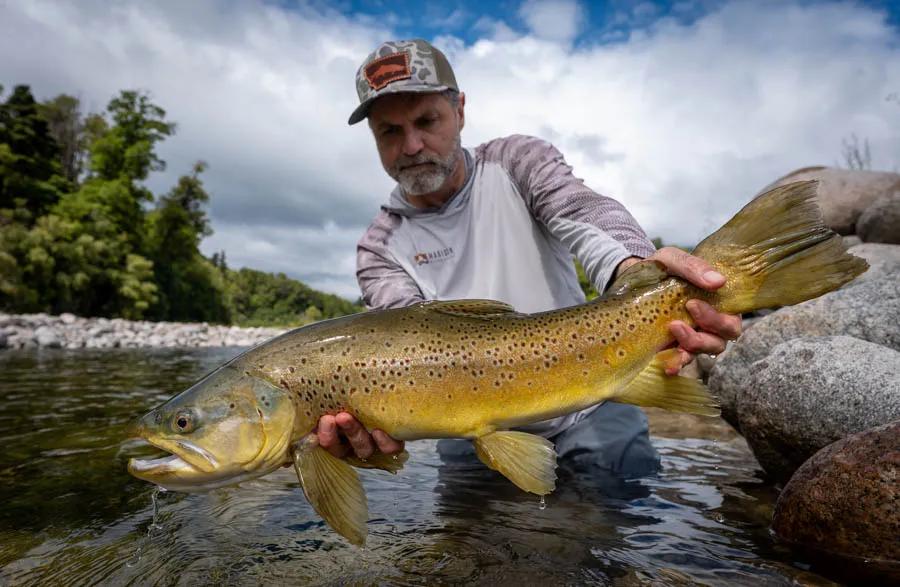
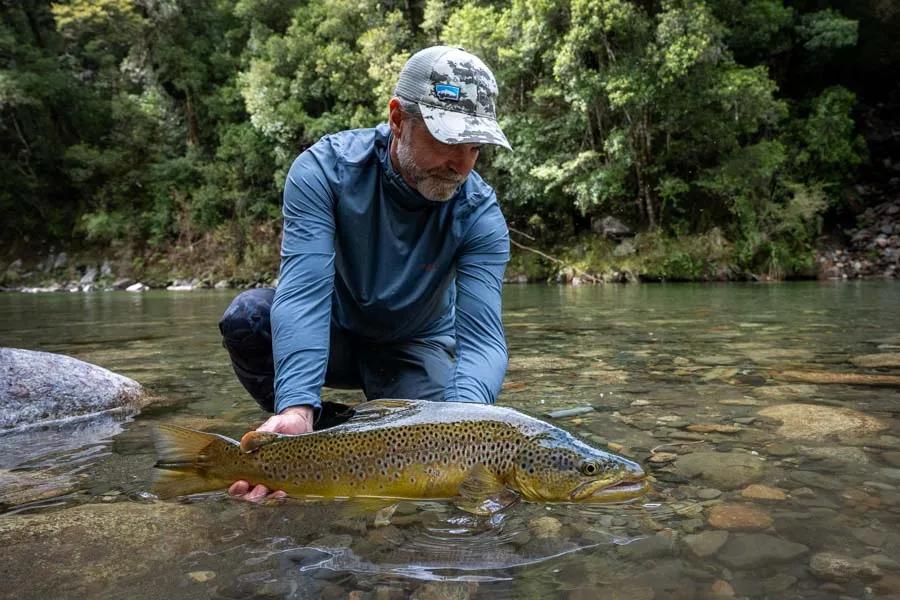
The water was gorgeous, and within minutes, we found a big fish actively feeding. Although we spooked this first trout after the second cast, we were excited to catch more big fish in consecutive runs; all happy and feeding. The morning turned out to be very productive. In unpressured backcountry rivers, trout tend to prefer the very best water and lies and do not feed in or inhabit the rest. We hiked about 200-500 yards between each run, but found at least one fish in nearly every one of the sweet spots. Even though backcountry trout see few flies, these are still wild brown trout in gin-clear waters, and we spooked more than hooked. By New Zealand standards though it was still an exceptional morning, and by lunch we had brought three big browns to the net. The afternoon proved tougher fishing as the sun moved high and the fish became less active. We still managed to hook and land one more nice trout, but after about 2 PM, it seemed like the fish had all but vanished. The opportunity to cast to spend most of the day sight fishing to big browns (most between 18-26”) without seeing as much as another footprint in the sandbars was truly spectacular. Another great day in New Zealand.
Day 5 – The Hunt For Big Fish
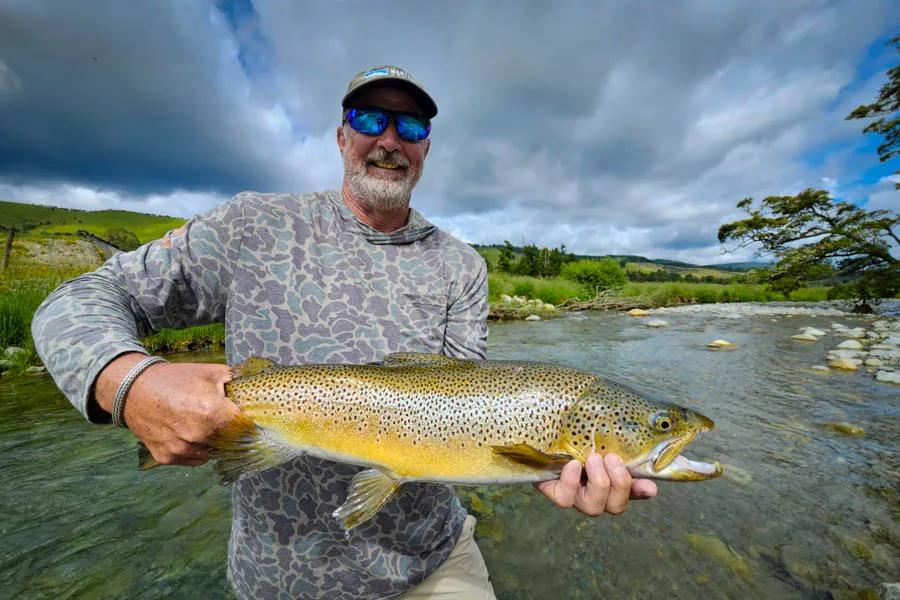
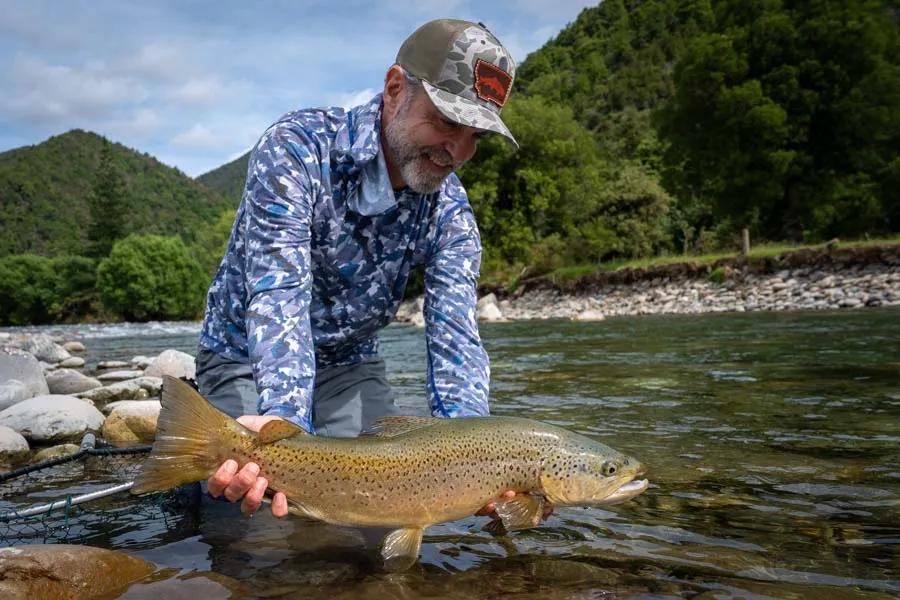
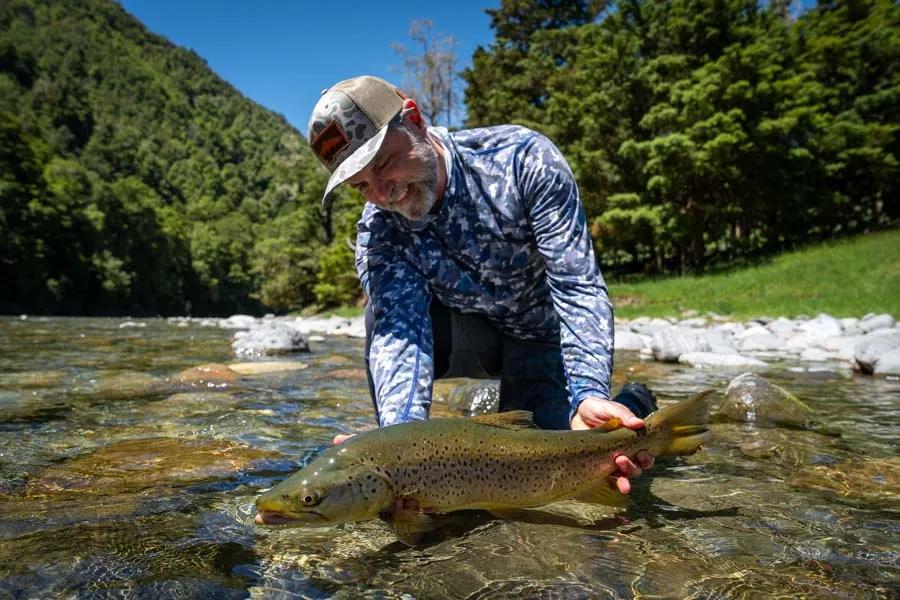
With a few good days under our belts, David and I decided to drive about an hour to one of the local rivers that is well known for some of the massive 10lb+ brown trout that it holds. With the reputation of fly fishing for enormous trout comes relatively high fishing pressure - by New Zealand standards. Although we didn’t see another angler fishing, we did see some footprints, and it looked like some other anglers had been in the reach we targeted earlier in the week. Kiwi's prefer to avoid fishing behind other anglers, and ideally like the water to be rested for at least a day before it is fished again. Shortly after setting up on the first run, we spotted a very large brown that we estimated to be over 25”. The fish was high in the water column and actively feeding. Although we put this fish down after a seemingly well-placed cast with a 16-foot leader, we found more fish in strong feeding lies as the morning progressed. The weather had warmed a bit over the week, and some of the bigger browns had moved into the faster pocket water, which dramatically increased our odds of hookups. This proved to be another spectacular day, and we had good shots at fish before and after lunch. By the end of the day, we had landed three hefty browns – all in the 22-26” range. While we did find one fish over 10lbs, it was in a tough lie and slid out of view like a ghost after the first cast. This fishery is one of my favorites in all of New Zealand, and I felt very fortunate that we found it in great shape with relatively agreeable trout.
Day 6 – The Grand Finale on a Fly-out day to Kahurangi National Park
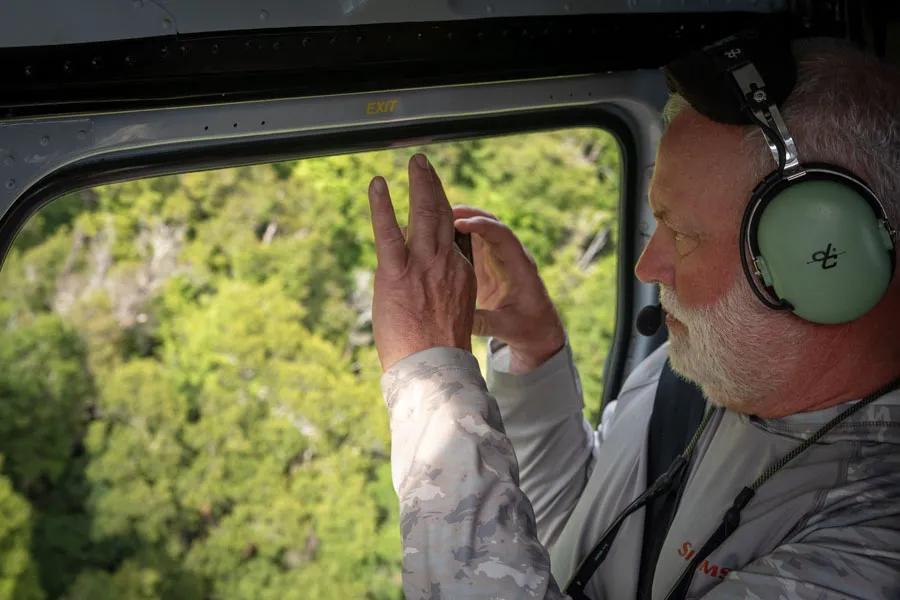
On our final day, we joined Jane and Perry Piccard on a helicopter flight back to Kahurangi. This day we targeted one of the smaller backcountry streams. Although 10lb browns aren’t as common there as a few of the other rivers in the park, David mentioned that it was still well regarded as a big fish stream, with good chances at wild browns in the 5-8lb range. This proved to be another exceptional day. We found several great fish in the morning, but they were tough customers and in very challenging pools with lots of time to inspect flies or see the fly line or leader upon casting. By mid-morning, the water temperatures had risen, and a few of the trout began moving into the faster pocket water and glides where we preferred to target them. When we ended the day and joined the Piccards in the helicopter back to Owen River Lodge, we learned that Perry had landed his best trout of the season (and of anyone on the trip), a gorgeous, dark, wild brown. A great final day to remember,
Trip Summary
Fishing in the South Island of New Zealand holds a special place in my heart. It is a place that I want to return to over and over again. In my opinion, this is the apex of wild trout fishing on a fly rod. I have absolutely fallen in love with everything that the experience demands. The fishing is always hard work, with more failure than success, but when the success finally arrives, it is nothing short of magical. Connecting with huge brown trout with light tippet in clear waters is simply spectacular.
When can I go back?
Join our Hosted Trip in December of 2026!
We already have our return hosted trip dates scheduled for 2026. We love New Zealand in mid December to target great flows and water temperatures. For more details visit our hosted trip itinerary: Click Here for Dec 2026 New Zealand Hosted Trip details.