

New Zealand’s South Island is the final frontier for fly anglers, the proving ground to test your skills against the most impressive trout on the planet. Unrolling that perfect cast and watching a big brown come up to sip your dry fly, it just doesn’t get much better than that. Located a world away from the familiar waters of Montana, the luminous rivers of Aotearoa (the Māori name for New Zealand, meaning “land of the long white cloud”) beg to be fished. Large rainbow and brown trout, some that’ll bottom out your weigh net at more than 10 pounds, are what every angler dreams of. But the reality of catching those fish in New Zealand is something else entirely. A little background on the New Zealand fishery can go a long way to getting you prepared for that ultimate moment.
First things first, New Zealand is made up of two main islands. The North Island trout fishery centers around Lake Taupo. The Tongariro River, with its named pools and iconic swing bridges, flows south from Taupo. The region was brought to global attention by American author and sportsman Zane Grey. His book, entitled “Tales of the Angler’s Eldorado, New Zealand,” was published in 1926 and put New Zealand trout fishing on the international map. The Tongariro is world-renowned for its rainbow trout fishing. A variety of great backcountry and front country fly fishing opportunities exist on the North Island, but when most anglers think of New Zealand, the image that comes to mind is the South Island. The Southern Alps, a rugged range of mountains that bisect the South Island, provide the iconic backdrop for South Island fly fishing. And it’s those mountains that create some of the island’s unique trout fishing conditions.
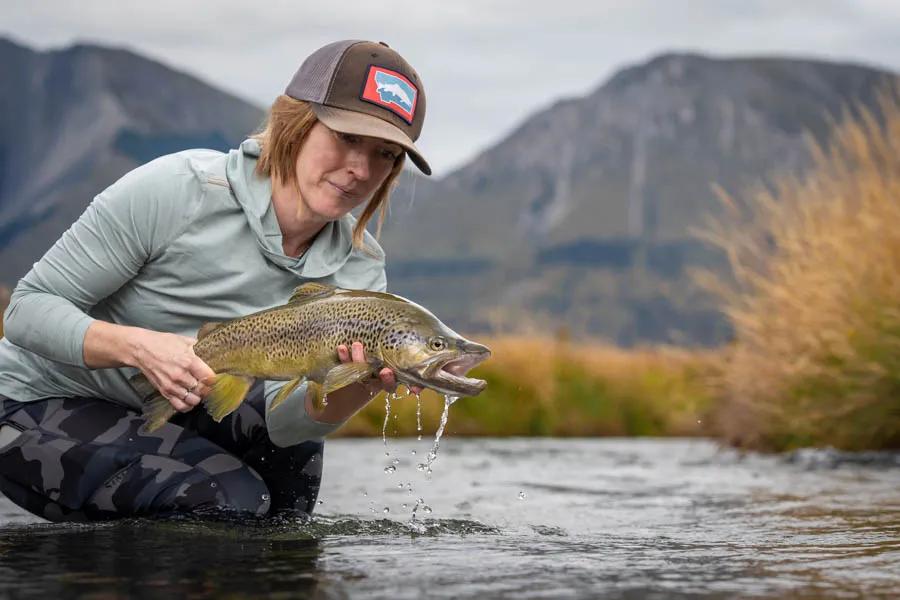
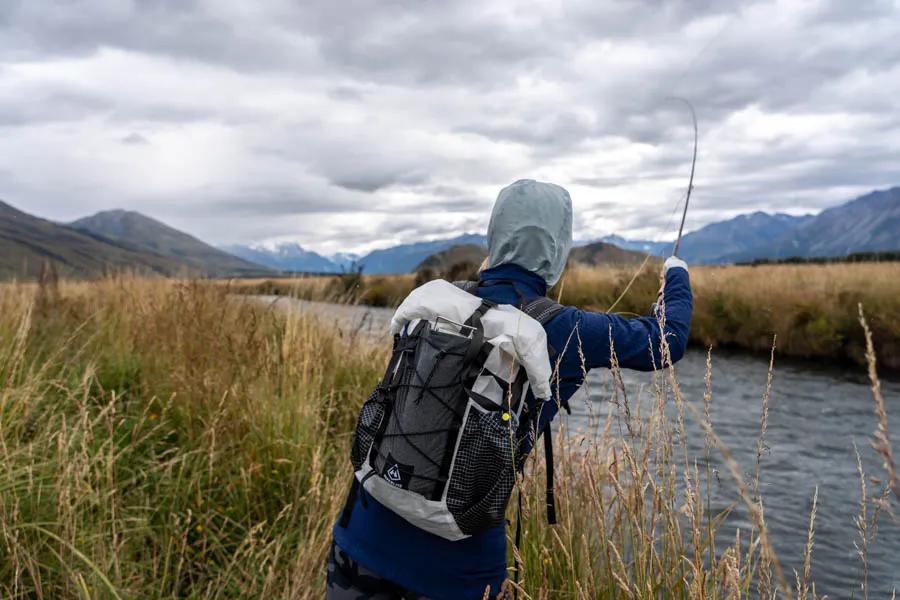
When it comes to fly fishing success in New Zealand, reading the weather is paramount. South Island weather is heavily influenced by the Southern Alps. Weather systems in New Zealand move north from the Antarctic continent and sweep across the Tasman Sea. These storms often bring heavy rains and strong winds, which can shut down fishing opportunities and create dangerous situations on New Zealand’s remote backcountry rivers. The weather here changes rapidly, especially in the mountains, where some of the best fishing is. River levels can rise to a torrent in an afternoon storm, but then fall just as rapidly and provide fine fishing conditions the following day.
Apart from looking at the forecast and being willing to adjust plans, anglers can mitigate the effects of South Island storms by moving around the island to capitalize on the best conditions. Montana Angler partners with Owen River Lodge near Nelson and Cedar Lodge near Wanaka. Both lodges offer guests helicopter access to backcountry waters. The ability to fly to the best waters with the best conditions is the ultimate way to maximize your time and catch that fish of a lifetime. Plus, the views flying over the New Zealand backcountry are hard to beat.
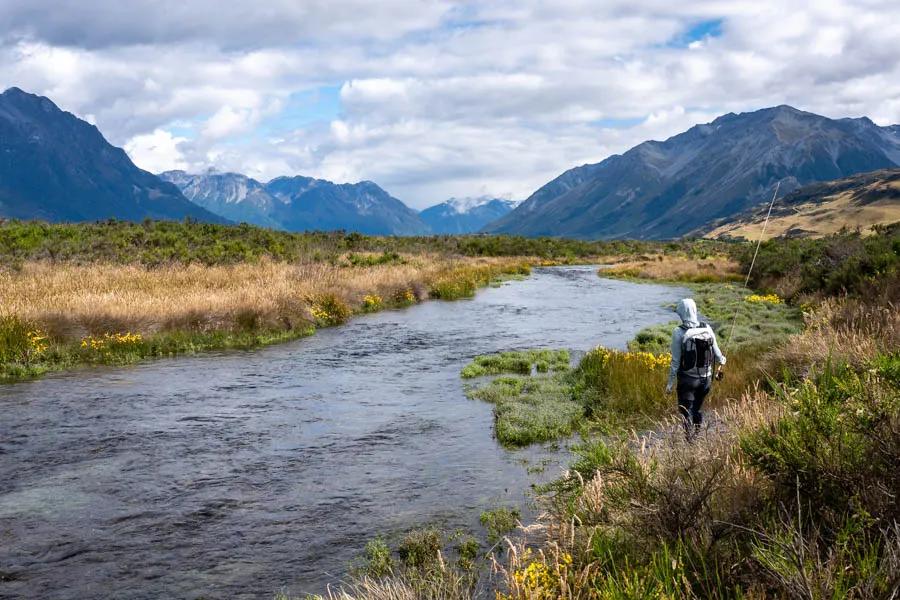
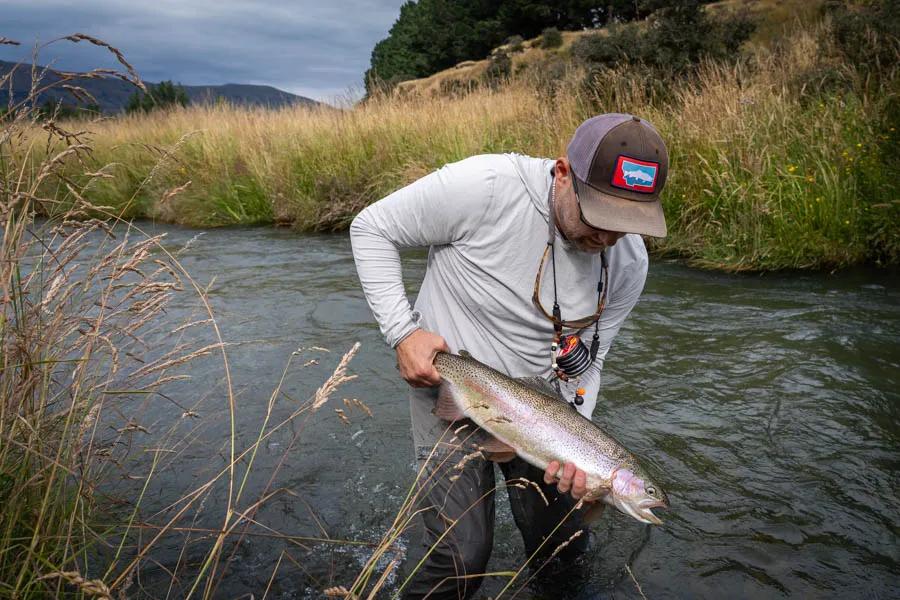
The name of the game in New Zealand is sight fishing, and the reason for it is twofold: fish tend to be spread out, and it’s just a heck of a lot of fun. Whereas Montana’s fly fishing rivers often hold thousands of trout per mile, New Zealand’s rivers are fortunate if they hold 50 fish per kilometer. Casting at likely-looking water will occasionally prove fruitful, but often you’ll be casting into an empty pool. The reason why New Zealand’s rivers support fewer trout than those in Montana is multifaceted, but one of the biggest factor at play is biomass. Unlike Montana rivers, which support some of the world’s most prolific insect hatches, New Zealand’s streams hold relatively few aquatic invertebrates. That’s not to say you won’t see the occasional hatch; it’s just that you won’t see anything remotely as abundant as the Mother’s Day caddis hatch or the annual stonefly emergence.
Because there are fewer aquatic insects, New Zealand’s trout tend to be opportunistic feeders. That’s a good thing for anglers because it means most trout will take a well-presented fly, whether it’s a nymph, dry fly, or terrestrial. The key phrase here is “well-presented.” Sloppy casts or a poor approach will spook fish quickly, so you’ve got to focus on doing everything well with the limited opportunities you’re presented. Covering ground and looking in likely pools is the best way to locate fish. Try to identify shapes and colors that hint at a fish, then watch for movement. If you see something that looks like a fish but remains stationary, chances are it’s a rock or debris in the water. If you see that same shape move, you know you’re on a fish.
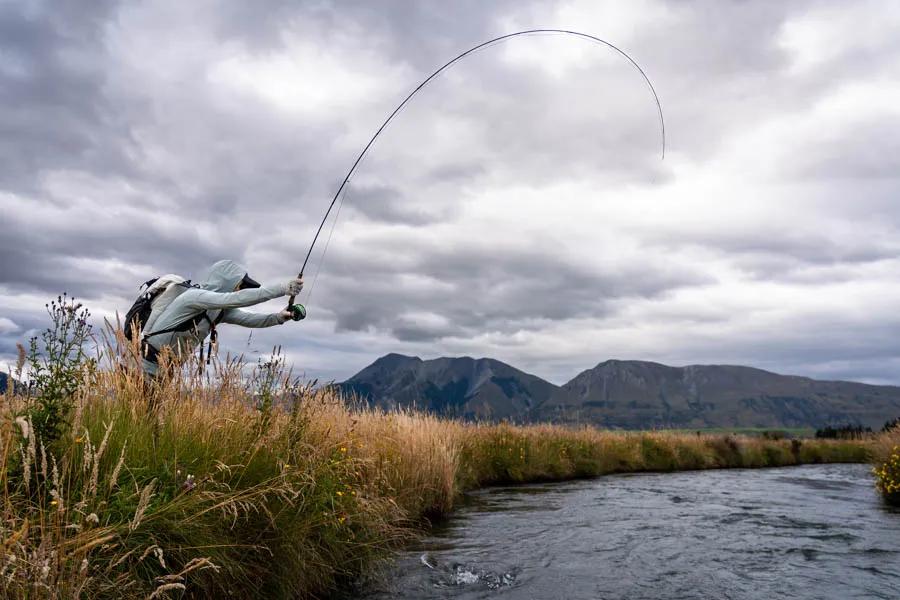
The process of sight fishing in New Zealand can be a bit daunting at first. It is not uncommon to walk several kilometers along a river looking for fish without seeing anything. The truth is that of the famed rivers you’ve likely read about, there may only be a limited stretch of water that holds trout. Think of trying to sight fish for trout on the lower Yellowstone River below Billings, and you’ll get the idea. You need to look in the right places for trout; that’s step one. And even then, fish can be few and far between. Fortunately, identifying good trout water in New Zealand is as easy as picking up a copy of John Kent’s excellent “South Island Trout Fishing Guide.” While brief in its descriptions, Kent covers all the major fisheries on the South Island and many of its smaller waters, too. Kent’s book provides access points and will get you in the ballpark of great fishing. From there, you’ve just got to put in the miles and cover the water to find fish.
While we all hate spooking fish, initially, I think it’s a good idea to just walk a river and keep your eyes peeled for movement when you first arrive in New Zealand. Spooking a fish or two at the get-go will give you an idea of what you’re looking for. Believe me, the trout here are bigger than expected, and having a reference point, even if it means spooking a fish or two, helps to get your mind right. Once you’ve got your visual expectations set, the name of the game is covering water. These are big trout, and if they are present and you’ve got some sunshine you will see them. Move steadily upstream and scan pools and deep runs for fish. It pays to cross at the bottom of pools to check both sides of the river, or fish with a partner so you can sight from opposite banks and fish cooperatively.
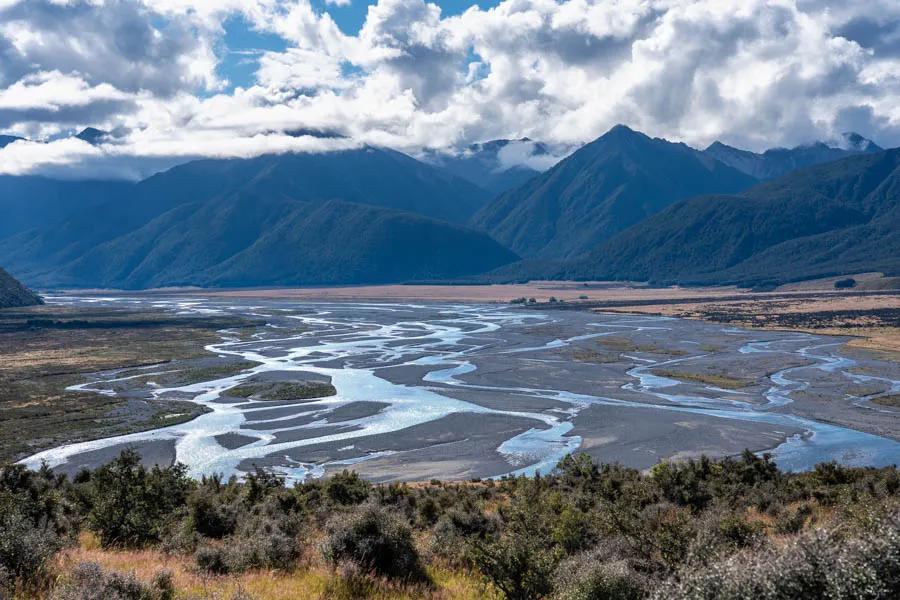
The large, braided rivers of New Zealand’s South Island hold some great fish, but frequent flooding events rearrange the substrate and push trout around. Break the river down and look for sections that have permanent structure. Trout in New Zealand like stability, and if you can identify water with limited influence from flood events, you’ll radically increase your odds of finding trout. It’s often long, deep runs that hold fish. Side channels and spring creeks can be great options as well. In general, there is a lot more hunting for trout here compared to going fly fishing in Montana.
Another important concept related to sight fishing in New Zealand is to understand that trout are apex predators in the rivers and streams. New Zealand broke away from the supercontinent of Gondwana approximately 85 million years ago, before the rise of mammals. New Zealand’s flightless birds, such as the kiwi, weka, and takahe, lost their ability to fly because they had no fear of predation from mammals. Trout weren’t introduced to New Zealand until the late 1860s, so the birds that exist on the islands have not yet adapted to feed on them. Due to the lack of any natural predators, trout in New Zealand exhibit behavior unlike anywhere else on the planet. What that means for the angler is that you’ll occasionally spot trout in the most unlikely locations. Fish will appear holding on the edges of rivers well out of the main current or hovering completely exposed over sandbars. It can take a bit of a mental adjustment to look for fish in these locations, but when you find one, you’ve got a good chance of catching it.
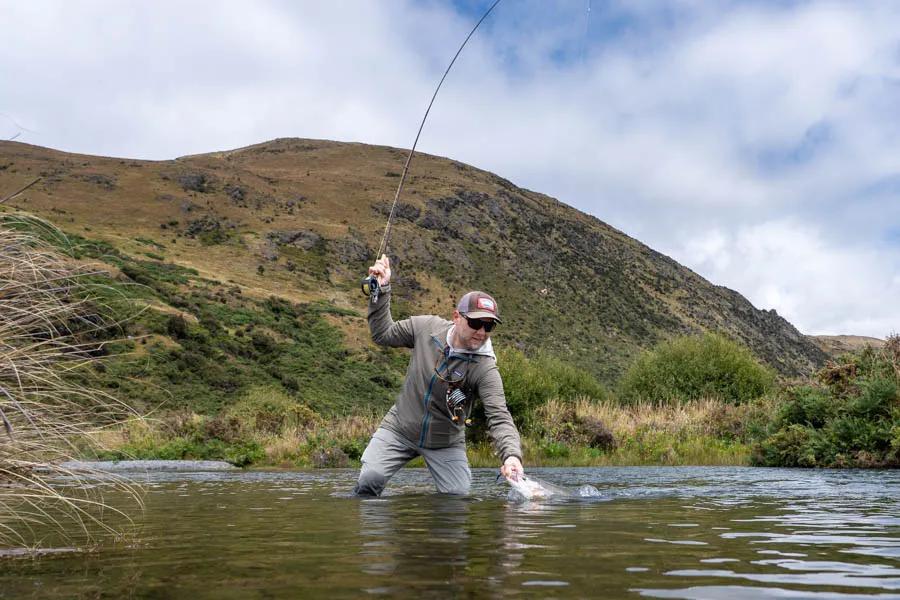
Don’t feel like you need to fish 18-foot leaders and throw the 30-foot casts often portrayed in New Zealand YouTube videos. Fishing within your abilities and using stealth to approach trout for an accurate presentation often proves more successful. When you sight a fish in New Zealand, it’s easy to get excited, but that’s when you’re likely to make mistakes. Instead, slow down. Take a moment to observe the fish’s behavior. Is it swinging in the current, feeding on nymphs? Is it holding in a slick looking for a dry fly? Either way, don’t feel rushed. New Zealand trout tend to stay put unless they are disturbed, so take the time to check your rig and make sure your line, leader, tippet, and fly selection are right for the situation before you cast. Also, assess the situation and devise a plan for what you’re going to do in the event of a hookup. Big fish can really take you for a ride, so be ready to chase a fish downstream or cross the river if needed. If you make a good presentation and get no response from the fish, change flies and try again. Repeated casts with the same fly rarely result in a hook-up. If you’ve put a few good casts over a fish, take some time to regroup, give the fish a moment, and focus on making your next presentation count. If all goes well and you’re lucky enough to set the hook, respond quickly and do your best to control the fight. A landing net with a wide mouth and a deep basket is helpful. The Mclean Angling Weigh Net, available at tackle shops in New Zealand, includes a built-in scale that’s great for weighing your catch. In New Zealand, trout are measured in pounds or kilos, not inches. While we love fly fishing in Montana and that is our home, if there is another place in the world that is ideal for targeting big trout, New Zealand is on that list.
When it all comes together, fly fishing in New Zealand is as good as trout fishing gets anywhere on the planet. Adjusting your approach to the intricacies of the New Zealand fishery will give you the best chance to catch the trophy trout of a lifetime.
Read some of our recent trip reports from our trips to New Zealand:
2025 Owen River Lodge Trip Report
2024 Owen River Lodge and Cedar Lodge Trip Report
2024 Cedar Lodge Trip Report
2017 Cedar Lodge Trip Report