

Magic Waters Patagonia Lodge is located near the city of Coyhaique in the Aysen Region of Chile. After five trips to the area over the last few seasons, I’ve come to think of the trout water in this part of the world much like my home waters near Bozeman, Montana. A diversity of spring creeks, alpine lakes, and rivers makes fishing here varied and enjoyable. Each day presents the angler with a new challenge. When it comes to trout fishing, nothing beats new water, and Chilean fly fishing has a lot to offer. Add in sizable trout, stunning scenery, and a familiar culture based on agriculture and outdoor pursuits, and these trips to Patagonia have come to feel like a homecoming.
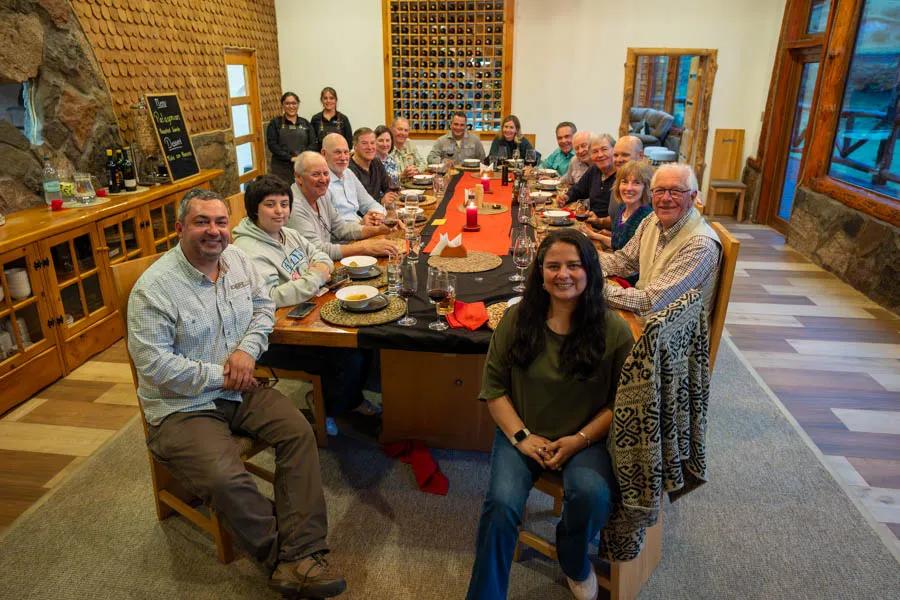
My wife Christine and I hosted our most recent Montana Angler trip to Magic Waters Patagonia Lodge with an eclectic group of anglers from around the world. Marcel Eyckens of Belgium and Simon Porter of Australia joined Randy Seely, Rick Lust, Michael Morris, and Johnny Zummo, who travelled together from Dallas. Christian Moreno and his wife, Elizabeth, Kerry Richards, and Rocky Hamman, and his wife, Diane Thigpen, rounded out the group. It’s safe to say the fishing didn’t disappoint. Marcel found his favorite fishing on the Huemules River, where he was able to spot and cast dry flies to large brown trout. Simon and Kerry spent the week fishing together, finding success on the rivers and lakes. A horseback ride up Río Magote was a highlight for both. Rocky and Diane fished Acro Spring Creek and a variety of lakes, catching great numbers of fish on Laguna Maletas and Lago Atravesado. The boys from Dallas, Randy, Richard, Michael, and Johnny, fished the Río Paloma and capitalized on the abundant damselflies on the lakes to catch some stunning trout. Johnny’s magic tricks and Rick’s tall tales kept dinners at Magic Waters Lodge lively. And I’ll never forget the sight of Randy and Rick, geared up in their raincoats and waders, heading out to fish mice after dark in a torrential rainstorm. You’ve got to want it, and these guys really did.
It was another great fishing trip to Chilean Patagonia. Magic Waters Patagonia Lodge always provides an excellent experience. Here are a few of the waters we targetted and some insight on what to expect when visiting this spectacular trout fishing destination.
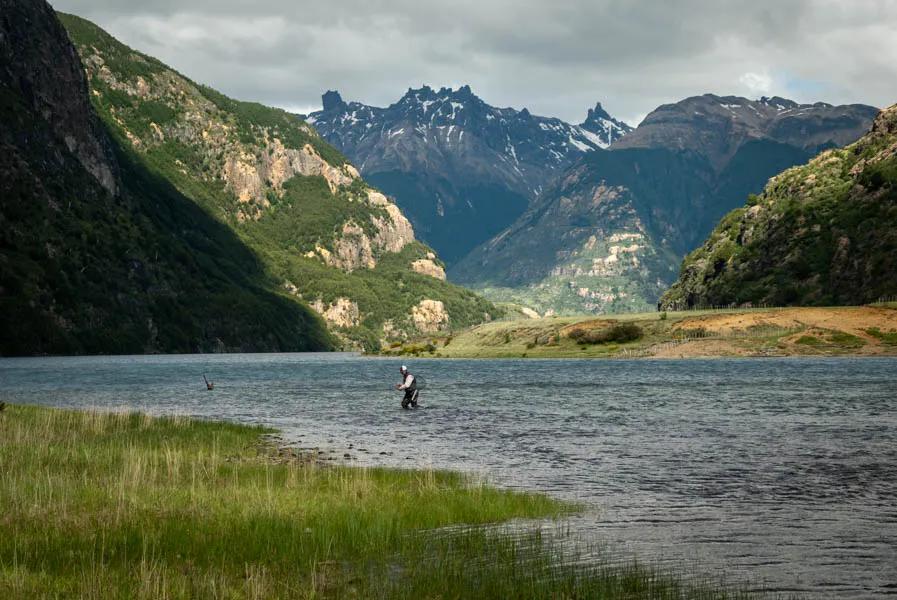
The Plentiful Río Desierto to the Majestic Lago Azul
One thing about Patagonia that took me a while to recognize when I first began fishing there is that many of the famous rivers and lakes are different stretches of the same water. The astounding clarity of many rivers in Patagonia is the result of the filtering that occurs as those rivers pass in and out of alpine lakes. Lago Paloma feeds Lago Azul, which feeds Río Azul. That water flows in Río Desierto, picks up water from Lago Elizalde, forming the lower reaches of the Paloma River, which flows into Lago Caro, which feeds Río Blanco, and on and on all the way out to the sea.
The extraordinary thing about Lago Azul is that you are fishing near the headwaters of all the famous fisheries below. Surrounded by sweeping mountain views, the glacially tinted waters of Lago Azul are not filtered by successive entries and exits to other lakes. The result is an azure, blue hue to the water that is simply breathtaking. Everyone who visits the Aysen Region of Chile should try to spend a day fishing Lago Azul. In addition to the awesome scenery, a healthy population of brown and rainbow trout await the angler. These fish will feed on Fat Alberts and other bushy dry flies presented along the rocky shoreline. Casts under the overhanging trees and in sheltered bays draw strikes. If you’re fortunate to fish a calm day on the lake, be prepared to sight fish holding high in the water and hunting for terrestrials along the shoreline.
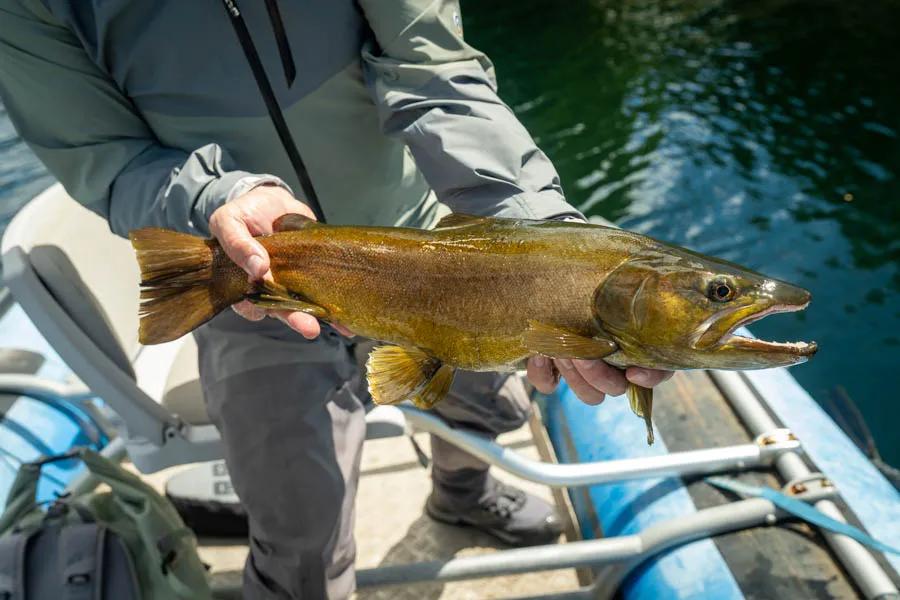
Christine and I hopped in the raft on Río Desierto with Jose. We’d fished the previous season with him for four amazing days on the Río Blanco at River of Dreams Basecamp. We’d had some success with José landing heaps of fish, including one incredible brown trout that taped just over 28 inches. I had no expectations of catching a fish like that on Lago Azul, but I reminded myself that we were in the same watershed.
Unfortunately, any hope we had for a calm day on the lakes vanished quickly. Motoring upriver in the raft on Río Desierto, we were lashed by incredible gusts of wind. When we reached Lago Desierto, sheets of water were lifting off the surface of the lake. We found a few sheltered bays to cast Fat Alberts, but it was clear the fish weren’t having it. Jose worked us up the north shore of the lake and motored into the small channel that connects Lago Desierto to Lago Azul. Within the channel, we found some relief from the wind. Several small islands in the channel provided some good holding water for trout. Jose set Christine and me up with dry-dropper rigs, and we began plying the seams. Before long, we were both into heavy brown trout. We spent the remainder of the morning in the channel waiting for the wind to die down a bit before navigating to a beach by a waterfall on Lago Azul for lunch.
As we enjoyed a warm bowl of soup, we strategized the afternoon’s fishing. Jose had an idea to take us down to the outlet of Lago Desierto where he said we’d find some good water for nymphing. With the wind not letting up, it seemed like our only option. We made our way back to the mouth and managed to hook a few fish in the shallows where the lake turned to river. It was a tough day on the water, but one thing I’ve learned to accept in Patagonia is that weather and wind are a reality here. The less you try to fight it, the better.

Chasing Big Fish on Lakes: Big Dry Flies and Mouse Patterns Rule the Roost
Like just about every other angler I know, when I dreamed of fishing in Patagonia, either in Argentina or Chile, I dreamed of fishing the rivers. Casting big dry flies on luminous rivers to large fish is still something I dream of, but after fly fishing Patagonia several times, I’ve come to dream of the lakes. Every guide in the region will tell you not to sleep on the lake fishing, and it’s not just because of the size of the fish. Lake fishing in Patagonia is dynamic, challenging, and just plain fun. And boy oh boy, are the lakes beautiful. Whether drifting along a rock wall with overhanging tree limbs or casting a mouse pattern into shoreline reeds, the lakes of Patagonia will change your whole perception of stillwater fishing. Be prepared for the unexpected and hold on tight; these fish know how to fight.
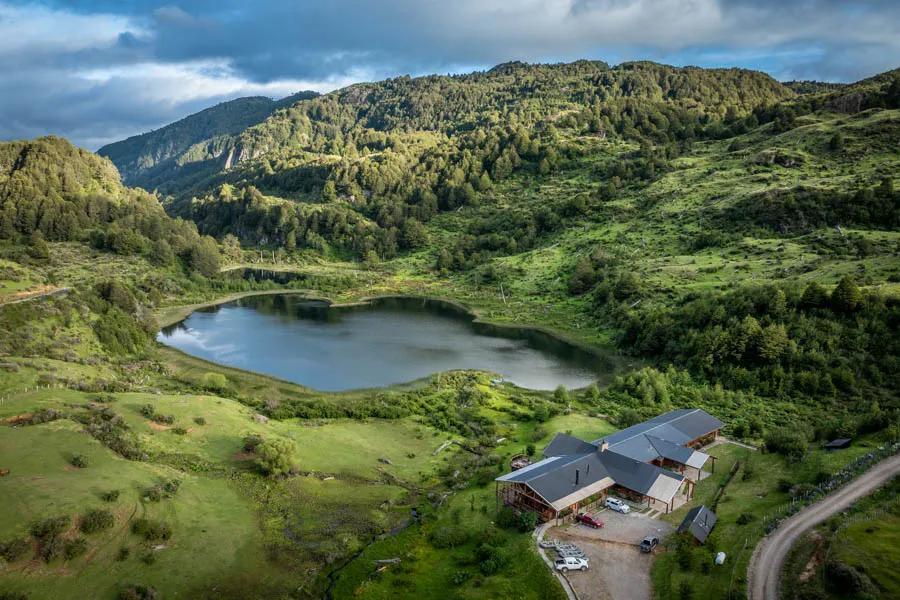
Magic Waters Patagonia Lodge is in an area known as Seis Lagunas, which is a bit of a misnomer as the lodge is surrounded by more than six lakes. There are two lakes virtually within casting range of the lodge — Lago Barroso and Laguna Maletas. When Christine and I woke the second day of the trip and checked the fishing assignments to see that we’d be starting the day on Lago Barroso and then heading to nearby Lago Cordero, we were both stoked. We’d fished mice on Lago Barroso the previous year with head guide Ives and caught some very nice fish. This trip would present us with a different challenge, one we were very eager to experience.
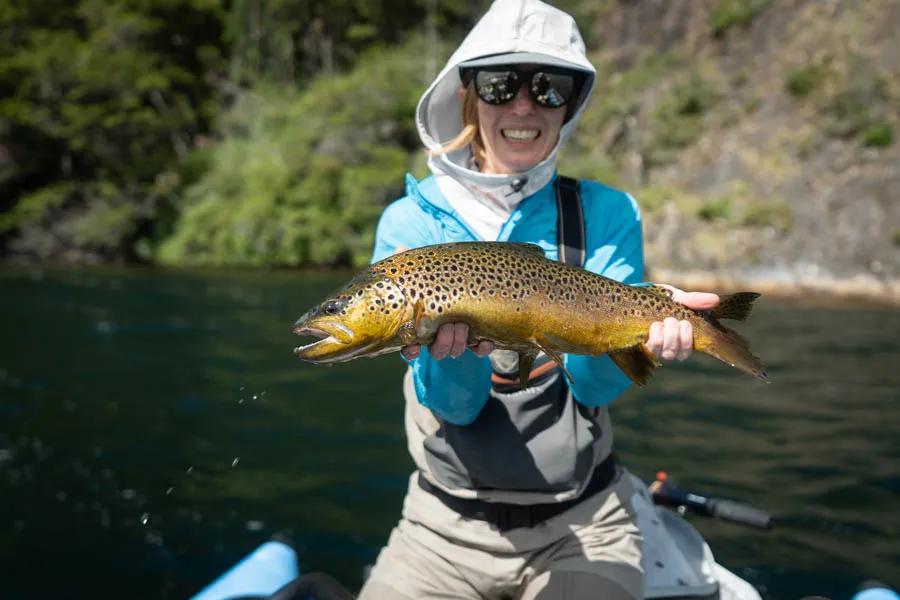
Spring in Patagonia is a beautiful time of year. As soon as you’re picked up by the Magic Waters Lodge staff at the airport in Balmaceda, you’ll see lupine in bloom along the sides of the road. The mountains are clad in the most verdant green grass. A dusting of snow caps the peaks of the Andes. It’s just stunning. And for a few brief weeks, during the end of November and into early December, the damselflies hatch on the lakes around the lodge. Brown trout rise to these big insects with abandon. Except for the Cantaria beetle, which emerges later in the summer, these are the biggest bugs trout in this region of Patagonia see all year. This season, there were a lot of them.
Jaime met us for the day’s fishing in the lobby of the lodge. We rigged our rods with big dry flies with blue foam bodies. The guides call damselflies “helicopteros” and the name fits. These bugs are as big as any of the salmonfly patterns we use on the Yellowstone and Madison rivers. Christine and I walked two minutes from the lodge to our waiting boat. As Jaime rigged the oars, I set up my camera and filmed the damselflies dancing above the reeds on the lakeshore. There were hundreds of them. And fish were rising on the lake.
Damselflies in Abundance
Christine took her spot in the front of the boat. We edged out along the reeds. Jaime wanted us to put our flies into the reeds and then put a bit of movement on them as we retrieved. We both managed to hook and land decent brown trout within the first hour of fishing, but the wind was again wreaking havoc, and Jaime was struggling with the boat. Eventually, we found ourselves along a timbered shoreline. We spotted a nice fish holding in a cove. Jaime back-rowed to keep us concealed from the fish as I prepared for a cast. When I was set, he slid the boat back into the calm water of the inlet. The fish had moved from its original position. It was hunting damselflies in the reeds! This is the stuff that made me fall in love with lake fishing in Patagonia. It took a few seconds to pick him up again, but when I spotted the fish, we all did. I made a single false cast and set my fly in the thick of the reeds. The trout turned and rose with confidence. I set the hook but came up empty.
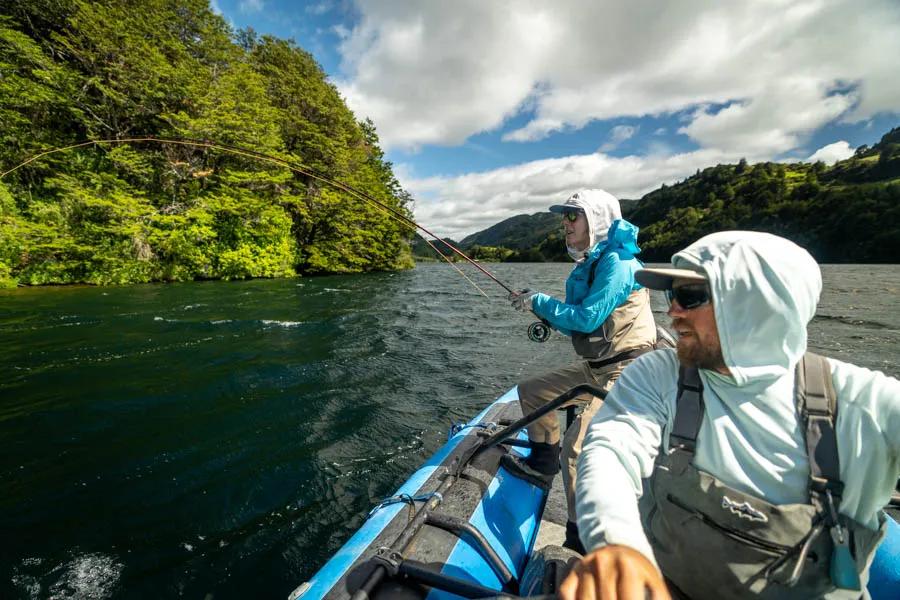
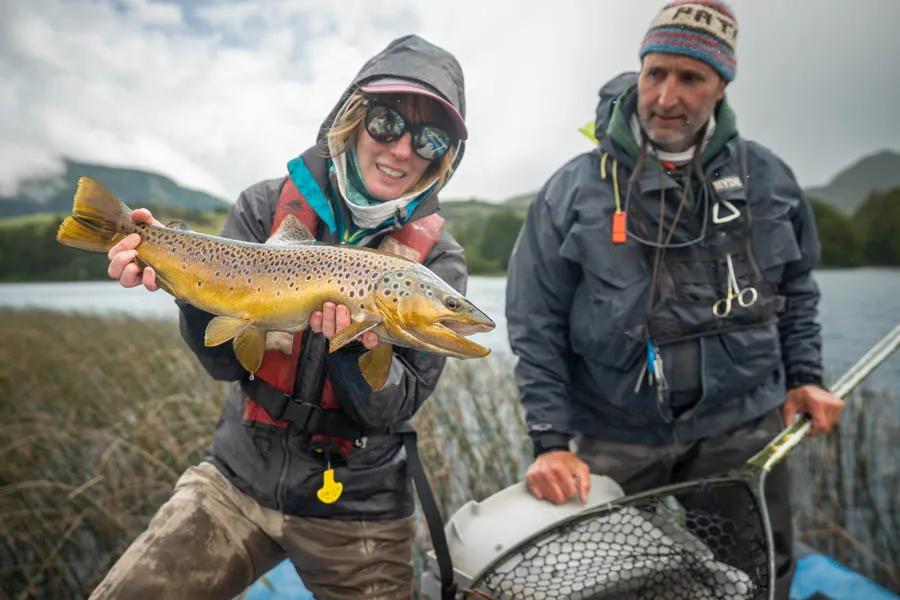
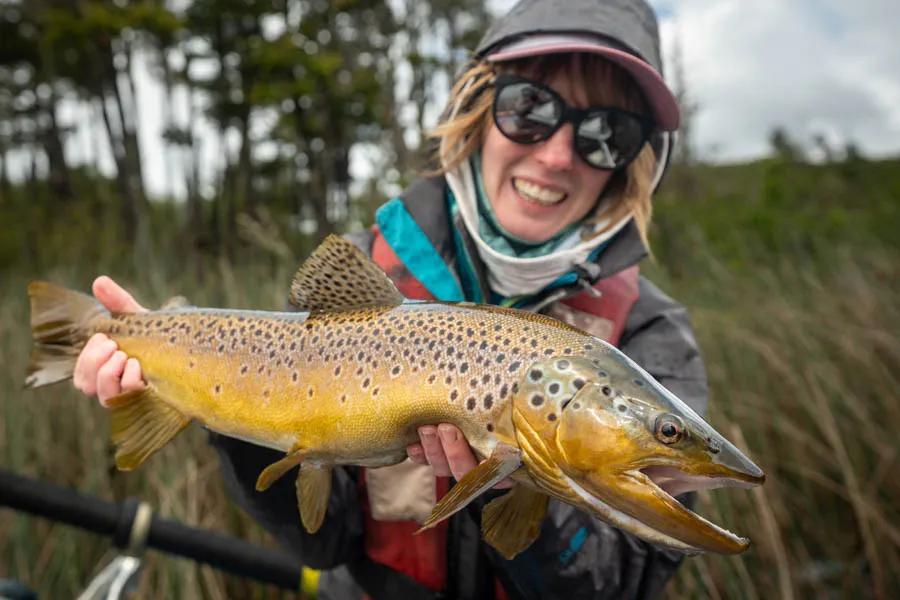
Christine and I picked up a few more sighted brown trout in the reeds before we decided to move across the lake to fish another sheltered bay where Jaime thought we’d have a chance to spot fish. We were able to see them; catching them was another matter. Christine had a shot at a beautiful brown that took the fly as it swam straight at us. We all gasped as we watched its head breach the surface and suck down the fly, but it wasn’t meant to be. Fortunately, Christine was quickly presented with another opportunity, and this time she didn’t miss. A brown trout that was hunting damselflies in the shallows along a rock wall took her fly and fought like hell. It’s really amazing the power of these lake fish, especially when you consider they don’t have the benefit of moving water to enliven the fight. After a five-minute battle, Jaime sank the net under an orange-bellied brown that was pushing 20 inches, full-bodied and bright.
The morning had been good to us on Lago Barroso, but we still had Lago Cordero to contend with in the afternoon. After a nice lunch at the lodge, we took a brief drive to Lago Cordero where the was a boat waiting for us. I managed to catch a fish at the dock before we even put on the water, so our hopes were high for the afternoon’s fishing. The wind returned, but it didn’t matter. We caught fish after fish, browns and rainbows, all in the four-pound range. The guides call Lago Cordero “Zero to Hero” as the fishing can be tough, but if you catch one fish here, it’ll make the day. We were horribly spoiled landing well over a dozen fish, all on damselfly patterns. It was silly. By the time we got back to the lodge we were beaming, but our day wasn’t done.
Mouse Patterns in the Moonlight at Magic Waters Lodge
After dinner, we’d head back out to Lago Barroso with Jaime for a session of evening mouse fishing. For those who have never caught trout on a mouse pattern, make the most of any opportunity to do so. At Magic Waters Patagonia Lodge, you’ve got perhaps the best chance you’ll find at any lodge, anywhere. Christine and I met Jaime in the twilight. We had our rods rigged with fat mouse patterns. We only had about an hour when we could see our flies on the water, but in that time, we drew several strikes, and Christine landed a nice fish. Truthfully, the best mouse fishing occurs after dark, and this night was no different. Casting into the dark evening water, we’d listen for the gulp of a fish and hope the line came tight. We managed three brown trout to the boat and had many more strikes. The promise of a lunker eluded us, but man, mousing is fun. Being out there on the boat at night, casting into the void, feeling that weighty tug, that kind of fishing really puts the “magic” in Magic Waters Lodge.
Fishing Estancia Frontera's Secluded Waters With Exclusive Access
Fishing with Ives is always fun. He prefers fishing on foot, rather than from a boat, which is my preferred way to fish as well. We typically focus on sight fishing opportunities on small- to medium-sized streams. We walk the banks looking for likely spots and fishing to trout we spot and stalk, most often with dry flies. Being on foot lends a feeling of adventure to the fishing day that I really enjoy. Nothing wrong with being in a boat, but it takes a bit of autonomy out of the equation. I like to explore the environment and sneak up on fish to make a short, accurate cast to individual, sighted fish. When it all comes together, there is nothing better.
Christine and I met Ives at his truck after the rest of the group had hit the road. We were going to explore a new lease out by the airport. The property is known as Estancia Frontera. Ives described it as a sprawling ranch that butts up against the Argentine border east of Balmaceda. “I think you are going to like it,” he said with a wry smile.
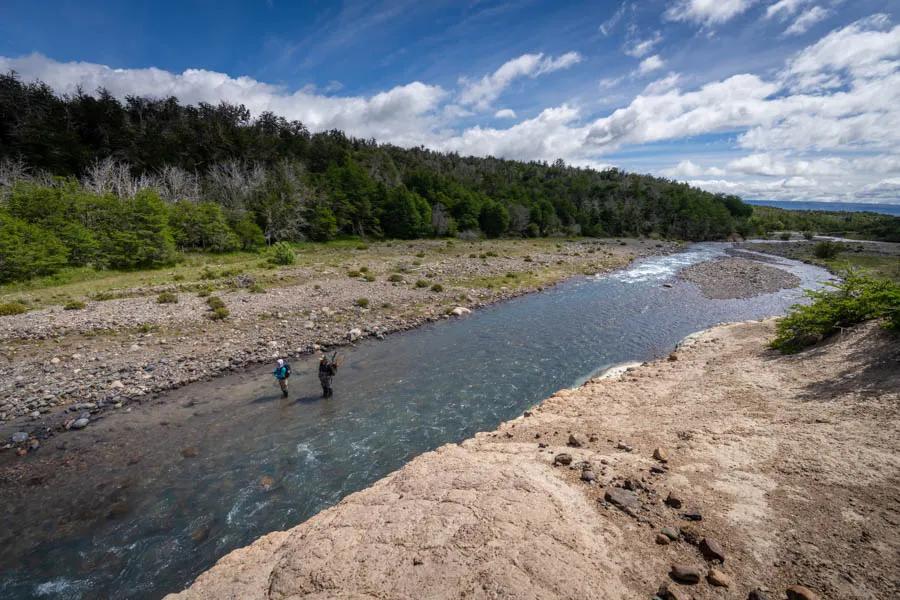
Ives has the lightest touch on the gas-pedal of any of the guides at Magic Waters Lodge. His leisurely pace to the river suits me just fine. We took in the views of the snow-dusted Andes and talked about previous trips and our hopes for the day en route to the estancia. As we turned off the highway onto a gravel road by the airport, the blue-gray waters of Río Oscuro appeared in the riverbed below. We broke away from the river as we passed the boundaries of the airport. The road cut then through pampas and rose toward the mountains. Before long, we reached a gate that opened into pastureland. A faint two-track led to a small canyon, somewhere in the middle reaches of Río Oscuro.
Christine, Ives, and I were equally excited once we set eyes on the water. It was the first visit to this stretch of Río Oscuro for each of us. We were presented with a roiling mountain stream studded with occasional deep pools. Set in the base of a of small canyon lined with ñire, the native beech trees of Patagonia, this is the kind of water I really enjoy. We rigged up a 5-weight rod and began working our way upstream. Our enthusiasm quickly faded as the first few likely pools turned up no trout on surface flies. I tied on a dropper to ply some of the deeper runs and managed to pull out a few small brown trout. Ives and Christine caught another brown on the dropper, but conditions just didn’t seem ideal. Ives thought maybe a flush of snowmelt or rain had caused the creek to flood recently, so we headed back to the truck to navigate to another creek Ives assured us we’d enjoy, the Rio Frontera.
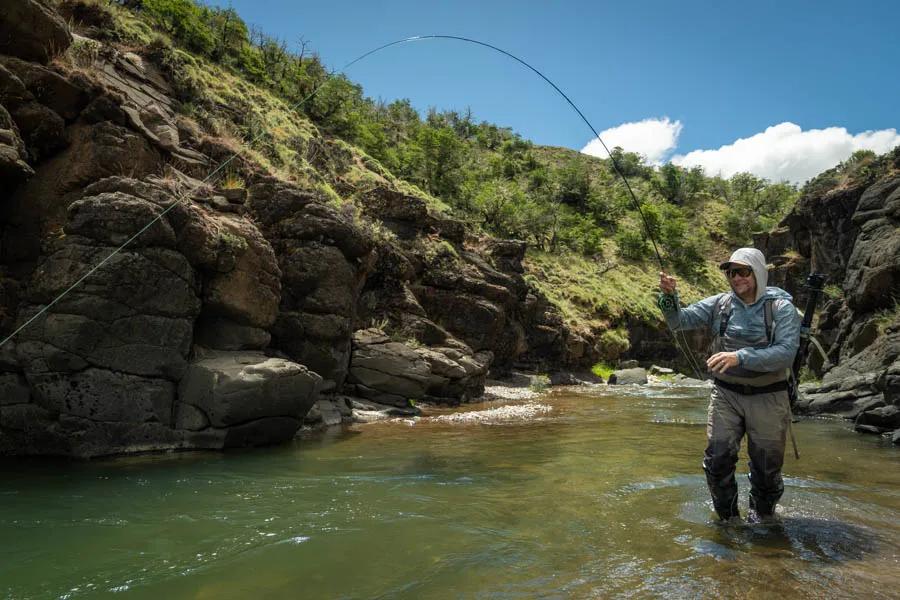
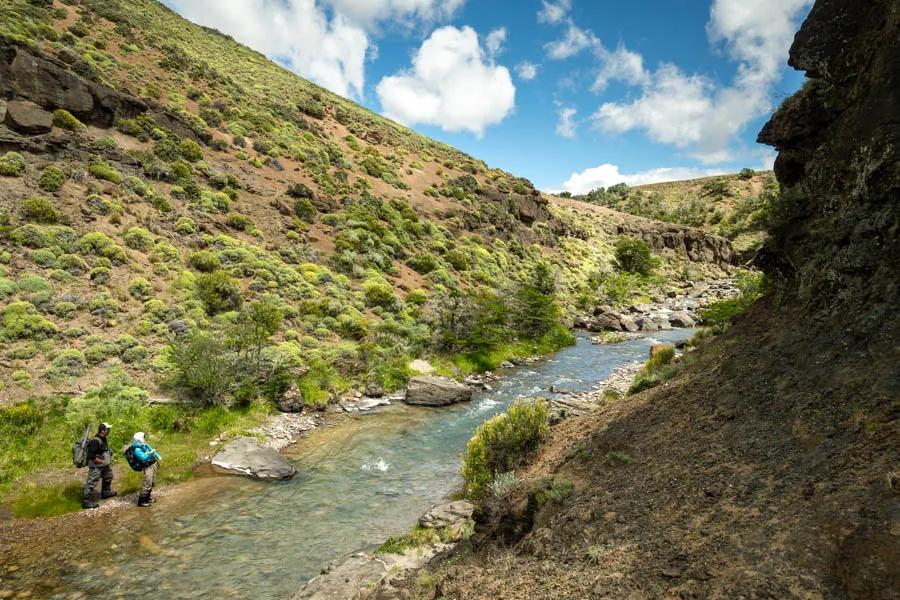
Río Frontera is a small river that forms the border between Chile and Argentina. Located in an arid canyon, the river is boulder-strewn with plenty of pocket water and plunge pools that provide great habitat for brown trout. To reach the river, a steep descent into the canyon is required. The first pool we saw on our descent revealed a nice brown trout holding over gravel in a prime location for a dry fly presentation. Christine and Ives dropped down to the tail of the pool to rig up. I stayed back to help spot and film the action from above. Christine’s first cast drew the trout to the surface. A solid fight concluded with a beautiful brown in the net. For the next two hours, we explored this wonderful stretch of Río Frontera, sighting fishing and catching brown trout up to 15 inches. We had lunch around 1:00 pm. This is the kind of water the three of us could spend all day in, but Ives hinted that there was more to experience on the lower reaches of Río Frontera, so after lunch we packed up our gear and hiked back to the truck.
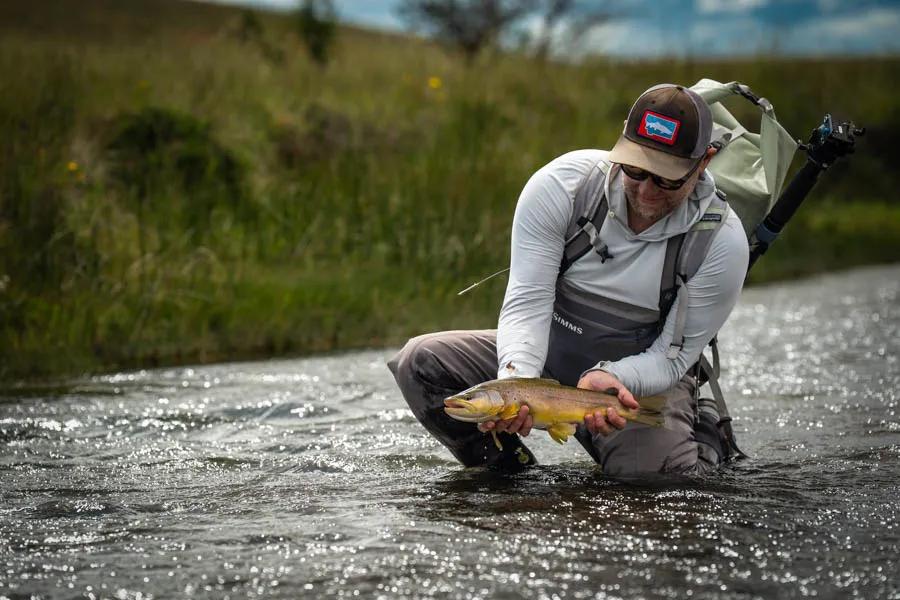
A blistering Patagonia wind greeted us after the strenuous hike out of the canyon. I felt a tinge of pain leaving such beautiful and productive water behind as we hopped in the truck to move onward to another part of the estancia. We crossed through several gates before reaching the river again, this time at a barren, wind-blasted expanse of pampas. Somewhere out in the field before us was Río Frontera, utterly unrecognizable from the upper river we had fished just an hour earlier. This section of the Frontera is completely exposed, with not a tree or boulder in sight. The water weaves through sandy cutbanks that provide holding water for trout. With the wind, casting here was tricky. Heck, just getting the fly on the water was a challenge. It looked like a good spot for bushy dry flies, but they drew no action. We switched to black wholly buggers and began casting into the deeper runs along the cutbacks. It wasn’t long before a big brown trout, larger than anything we’d seen upriver, sharked the fly. The habitat in this stretch of Río Frontera seems to produce bigger fish, trout in the 18- to 20-inch range. In that moment, it occurred to me how awesome a fishery we were experiencing. We were fishing with different tactics with different flies to a different class of fish present in the same waterbody, just a few miles apart. That is one of the things I love most about Patagonia.
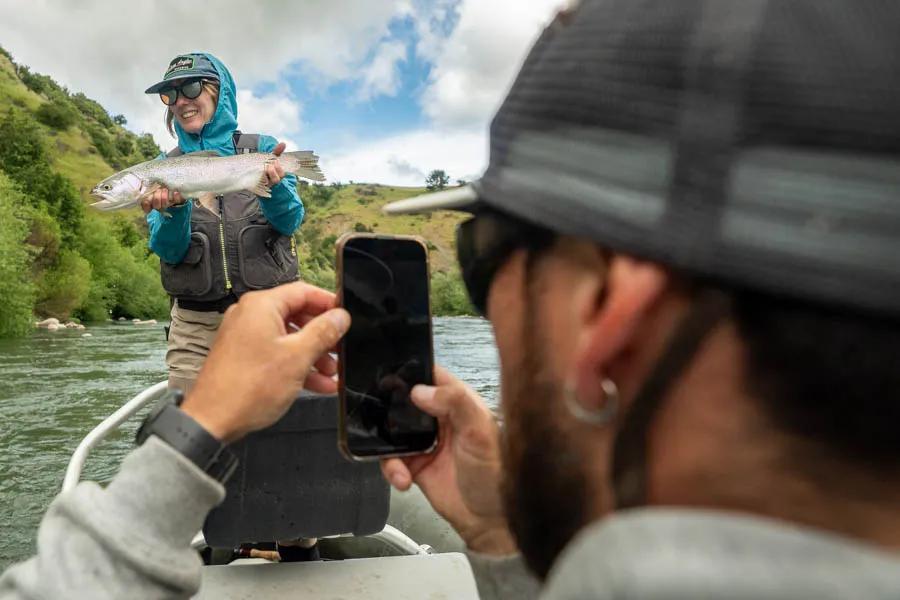
A Run Down Simpson Canyon: Towering Cliffs and Plenty of Trout
Río Simpson is the most famous water in the Aysen Region of Chile. Flowing through the Simpson Valley and the city of Coyhaique, every fly fisherman in Chile knows the Simpson - much like anglers in the U.S. know the Madison River or the Yellowstone River. And it’s iconic for a reason. The rainbow and brown trout in the Simpson afford some of the best fishing anywhere. Hatches produce outstanding dry fly fishing. Streamer fishing can be productive for large trout. The river even sees a substantial run of king salmon that offer great sport in the spring. And the river possesses incredible, scenic beauty. Perhaps no reach of the river is more impressive than the Simpson Canyon stretch, which constricts the river as it flows out of Coyhaique on its way to the Aysen River, and eventually into the Pacific.
There are a few put-ins to float the Simpson Canyon, and I’d floated it twice before, but only once with Christine. On this trip, Jaime introduced us to a new put-in that added several miles of fishing through the town of Coyhaique. I have to say, this section of the river produced some of the finest streamer fishing I’ve experienced anywhere in Patagonia. Typically, we are dry fly fishing, and occasionally nymphing in Patagonia. It’s a rare day that we are throwing big streamers all day long, which is something we love to do in Montana. When Jaime rigged me up with a big white streamer that looked something like a circus peanut, I was excited. I love fishing big streamers, and I love fishing white ones because they are easy to see in the water. That makes for a very visual day of fishing.
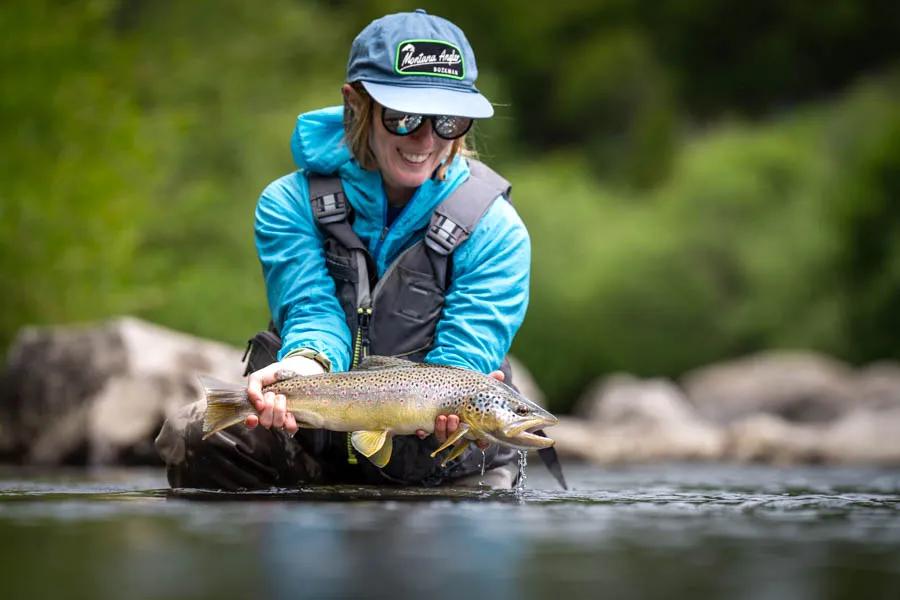
The town water on the Simpson was something of a revelation. I’d fished reaches of the river through Coyhaique on past trips and been a bit disappointed. Perhaps I’d just caught it on off days. Not so here. This stretch of water is fast and bouldery with lots of pockets and plunge pools. Brown and rainbow trout in good numbers were on our flies right off the bat. The action continued for the better part of the morning with Christine and I each landing solid trout pushing the 20-inch mark.
The water in this reach is no joke and requires an experienced oarsman to fish. Jaime did a great job on the oars and really worked to put us in the best position to make casts into the holding water. I don’t know if it was on account of the early season conditions or lack of fishing pressure, but we really put the wood to them. By the end of the float, we’d landed 21 solid fish and turned or hooked and lost countless others. It reminded me of a day on the Big Hole River in Montana when everything came together and the fish were ultra-aggressive. When streamer fishing is this good, it gets a bit addictive. Your head is on a swivel, looking for the next bit of holding water, shifting your weight in the boat to make a cast, stripping quickly to elicit a strike, fighting with all you’ve got to land the trout before you plunge into the next set of rapids.
We ate lunch at one of the downstream put-ins Christine and I had used to access the Simpson Canyon on a previous trip. The fishing slowed down in the afternoon, but that was just fine as the Simpson Canyon is one of the most beautiful floats anywhere. The river proceeds down a canyon as wondrous as I’ve seen anywhere. Towering coihue and lenga trees branch out over the river. Monolithic rock formations rise from the depths of the canyon. Moss-covered walls fed by waterfalls tower hundreds of feet above. The only place I can compare it to is the Smith River Canyon in my home state of Montana. For anyone that’s been fortunate enough to float the Smith, you’ll recognize how special the Simpson Canyon is.
Horseback Ride and Asado on Río Magote: A Traditional Patagonian Experience
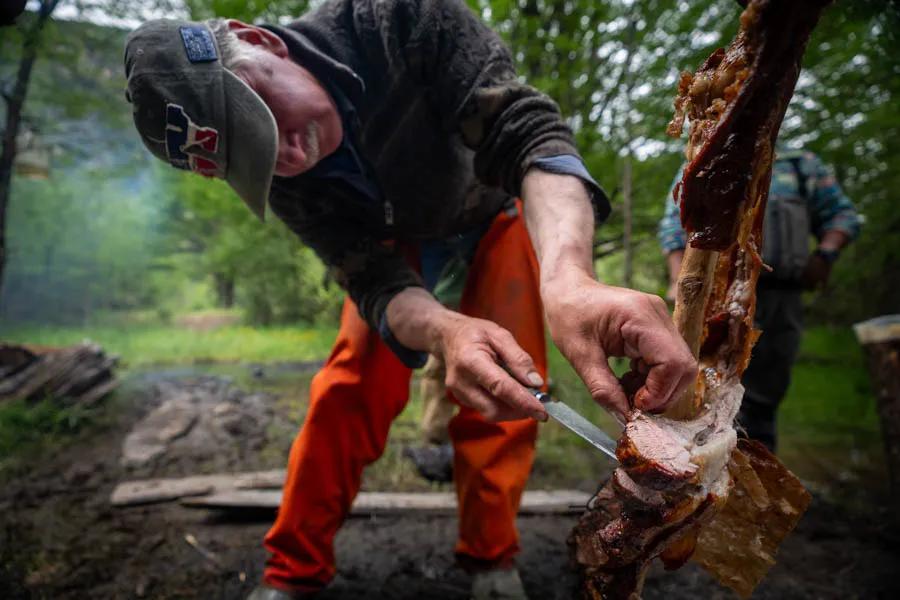
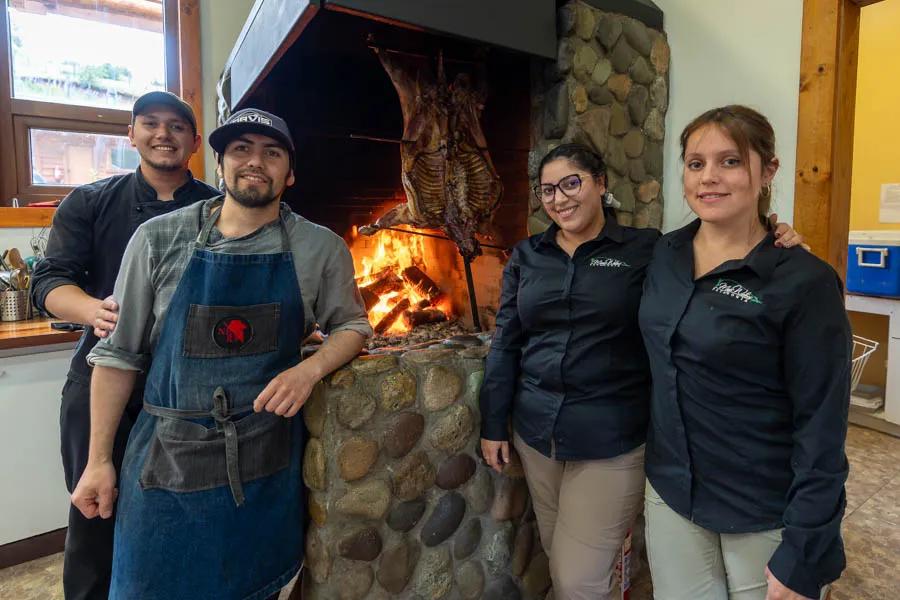
A visit to Patagonia isn’t complete until you’ve experienced an asado. Though there are distinctions, asado can broadly be understood as the Patagonian version of American barbecue. It’s widely celebrated throughout the countries of Chile and Argentina, and excellent asado can be found from the smallest towns to the biggest cities. Asado puts an emphasis on slow cooking large roasts of meat staked over an open wood fire. The event is as much a social gathering as it is a meal. Lamb, beef, pork, and chicken are cooked with salt until succulent by an asador, aka grill master, who manages the parilla grill for hours as the meat cooks. The meat is served with red wine, Chimichurri sauce, and bread. Nowhere is asado more exceptional than out in the woods along a river in Patagonia, especially when after a great day of fly fishing.
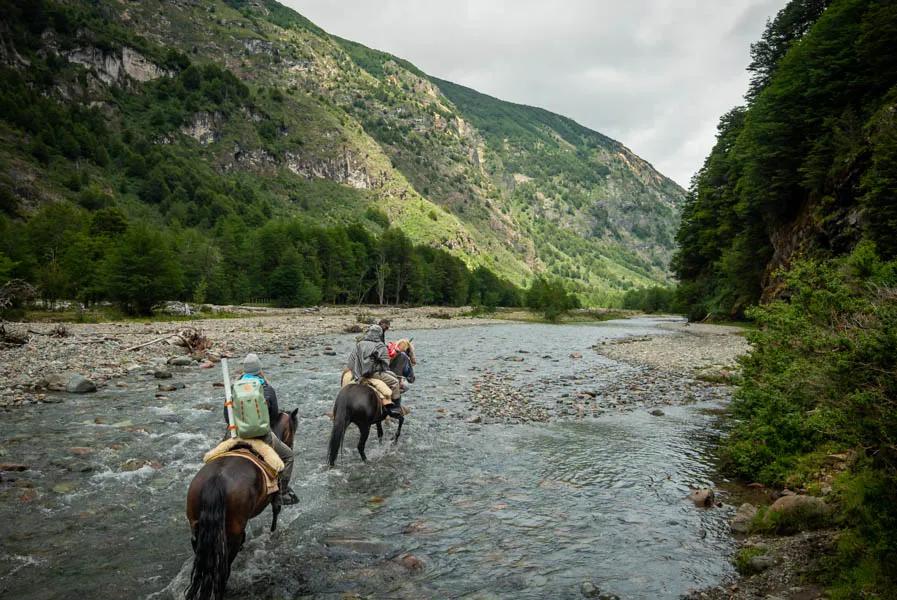
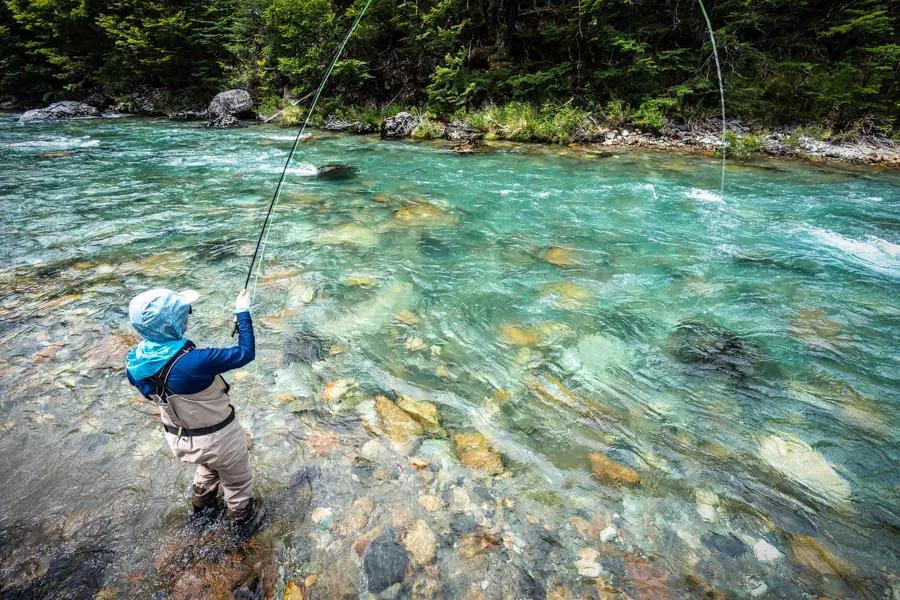
Magic Waters Lodge offers a horseback trip up the Magote River to experience an asado. Our journey began at the confluence of the Río Magote and Río Desierto, where we were met by a pair of gauchos and their horses from the nearby Paloma Valley. Simon, Kerry, Christian, and Elizabeth joined me and Christine for the adventure. We mounted up and set off into the forest. To be on horseback in Patagonia is a special experience. Kerry and Simon, who hadn’t ridden in well over a decade, were both thrilled to be back on horseback again. The trail up the Magote is pretty tame, so the adventure is suitable for most guests. There are a few creek crossings as the trail leads along the Magote, revealing tempting pocket water and azure pools.

After an hour or so of riding, we gathered in a clearing where Christine and I would begin our fishing day with Ives. Christian and Elizabeth rode on with Kerry and Simon to fish further upstream. The Magote River flooded several times in the spring of 2025, and the river showed the effects of the flooding. Large trees were down in the riverbed, and the banks were newly exposed. Fortunately, the fishing doesn’t seem to have suffered one bit. The water on the Magote possesses the luminous blue hue present in nearby Lago Azul. The river has a shingle bed and boulder-strewn edges that hold fish. Owing to the water’s color and character, Río Magote is reminiscent of some New Zealand trout streams flowing out of the Southern Alps. As such, Christine, Ives, and I started the day working to spot fish in the runs. We had success in short order. Most of the fish we found were healthy brown trout in the 12- to 14-inch range that provided great sport with dry flies. We waded across the river in the tail of a big pool. On the far side, we found an interesting bit of water flowing along a bush-clad bank. It was almost like a small stream flowing next to the bigger river, and it was a joy to fish. We spotted and stalked a few fish that were a real joy to catch...the Rio Magote is truly a magic water near Magic Waters Lodge.
Before we knew it, it was 3:00 pm, and time to hike upstream for the asado. We crossed the Magote River again and hiked through the beechwood forest until we came across Christian and Elizabeth with their guide, Tomas. They were getting ready to fish the most beautiful pool we’d seen on the river, a deep azure run below a moss-cloaked boulder with towering coihue and lenga trees reaching out over the water. Christine and Ives stopped to chat with Christian and Elizabeth, and I headed upstream to find a good spot to photograph the scene from. After Christian had fished the pool, we walked together a few hundred yards up the trail to find our asado waiting for us. The gauchos had built a fire pit near the river and had a lamb roasting. The scents of wood smoke, forest, and roasting meat filled the air. We sat with glasses of red wine and talked about what a magical trip we’d experienced, and how great the moment was.
After a spell, we all went over to have a look at the lamb. One of the gauchos handed me his knife, and I cut off a delicious piece of lamb. Juicy with fat and flavored with wood smoke and salt, the taste was divine. The decision was made that the lamb was ready. We all sat together around a communal table with our plates and wondered how on earth anything could be better than this.
Great Group, Great Hosts
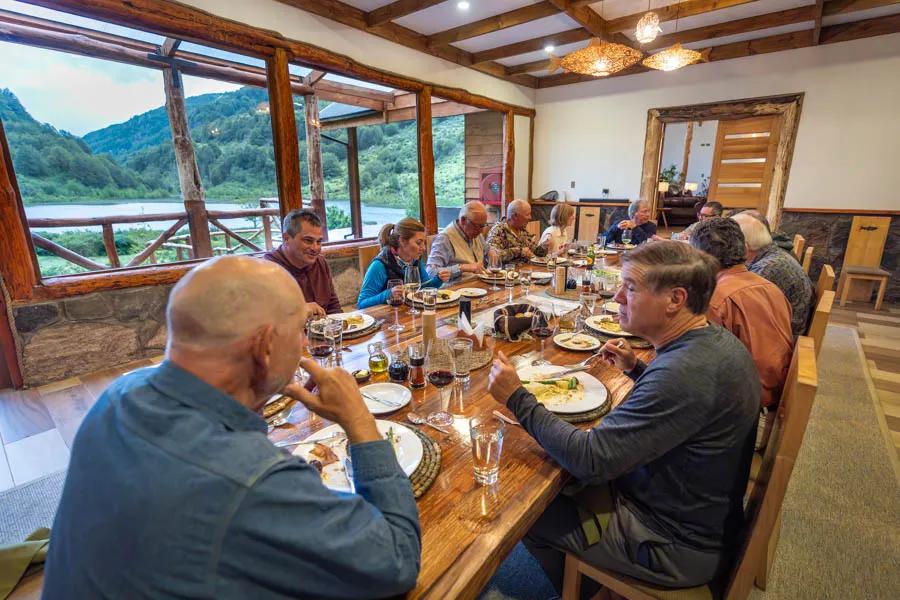
One of the great things about a return trip to the same fishing lodge is being able to reconnect with familiar faces. Magic Waters Lodge owners, Eduardo and Consuelo Barrueto, have been hosting Montana Angler guests for more than a decade. We were greeted with the kindest smiles and the warmest hugs. It was as though not a day had passed since our last trip. That kind of hospitality has a way of putting the fishing on the back burner, but that’s a virtual impossibility at Magic Waters. From the fishing shop to the fly-tying bench and decor, everything about Magic Waters Lodge is geared toward angling. Even the stonework in the dining room is in the shape of a trout. It really gets you excited to fish.
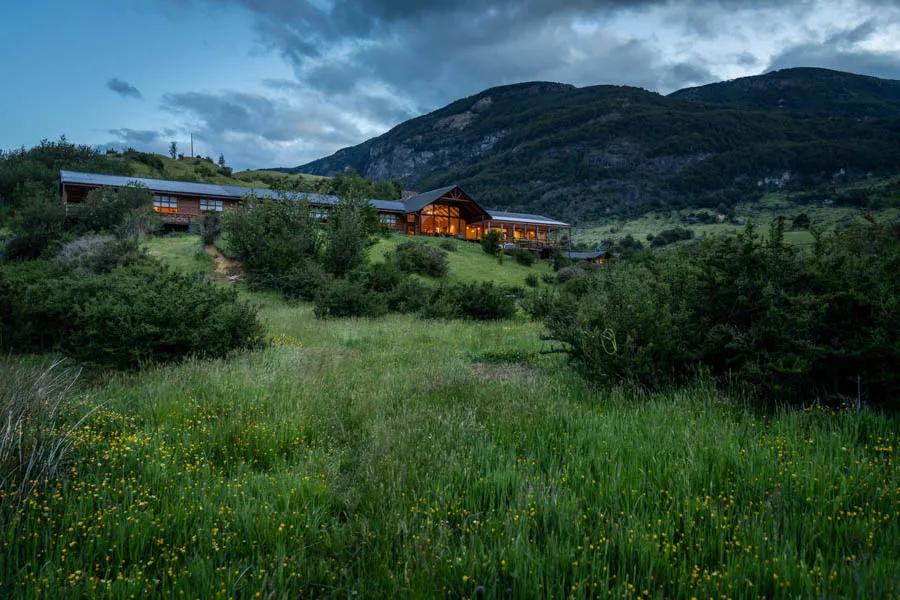
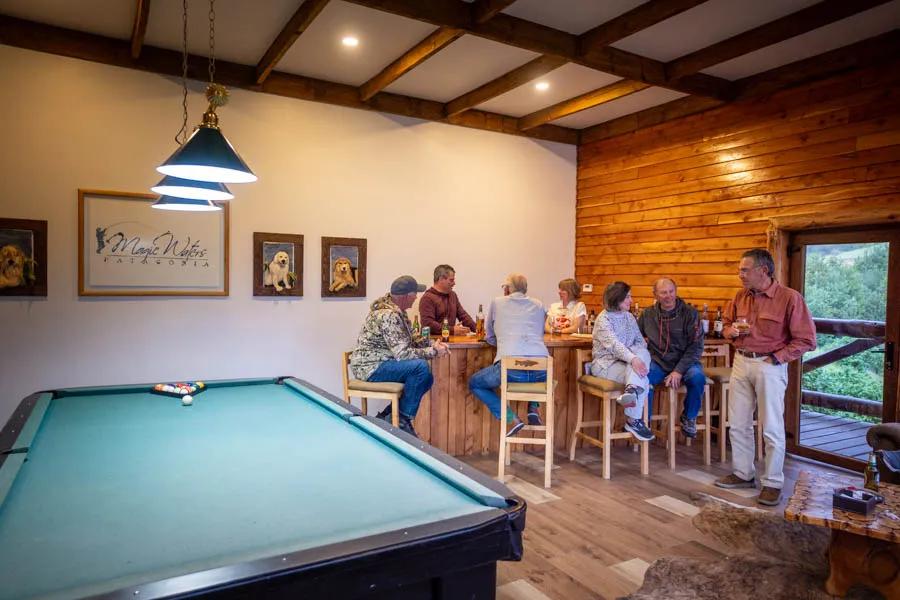
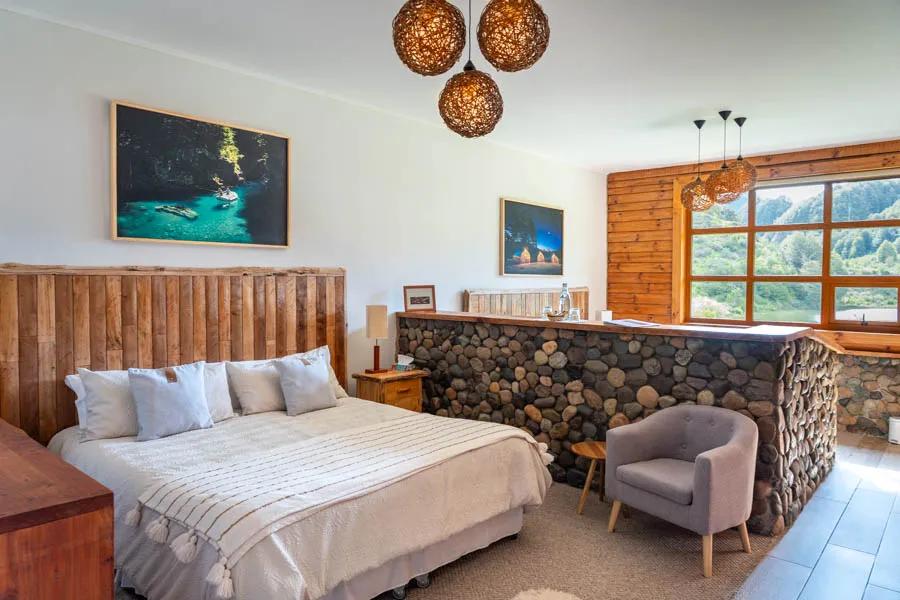
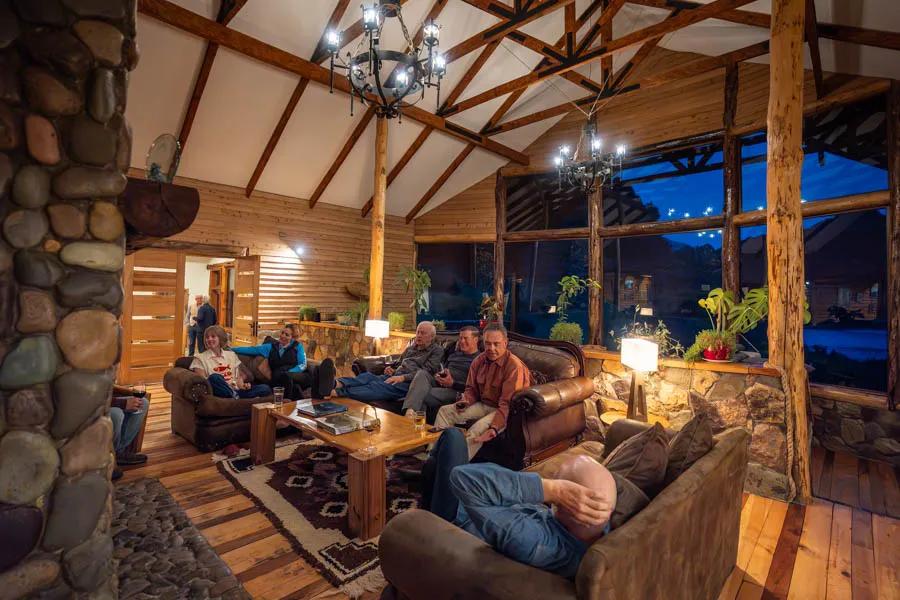
Magic Waters Patagonia Lodge features spacious rooms and common areas that are perfect for relaxing in after a day on the water. Each bedroom features two king-sized beds and grand window views of Laguna Maletas. You can literally sit in bed and watch trout rise on the lake. Should the spirit move you, there are always trout within casting distance. The Great Room at Magic Waters Lodge has a large fireplace that is well fed by the attentive staff. It’s the perfect place to warm up after a cool day on the river. Pisco sours are the cocktail of choice in Chile, and the staff will offer you one upon your arrival at the lodge and after each day after fishing. If you want something else, drinks are made to order, or you can help yourself at the amply stocked bar. Eduardo and Consuelo have also recently renovated the lodge to include a comfortable lounge area and pool table. A hot tub on the deck is a great way to warm up after fishing.
From the spectacular damselfly fishing on the lakes to the streamer success we found on the Río Simpson, Magic Waters Lodge was once again a magical experience. For anyone excited about fly fishing in Patagonia, the Coyhaique area offers enough diversity for several lifetimes of angling. Toss in a memorable asado, great accommodations, hosts, fly fishing guides, and scenery that is out of this world, and it’s no wonder why anglers from all over the world come here. All in all, this trip to Magic Waters Lodge was a great journey with great people. And really, what more can you ask for than that?
For those interested in joining us in 2027 we will be making a return visit in early January. Click here to review our 2027 hosted trip itinerary and details.