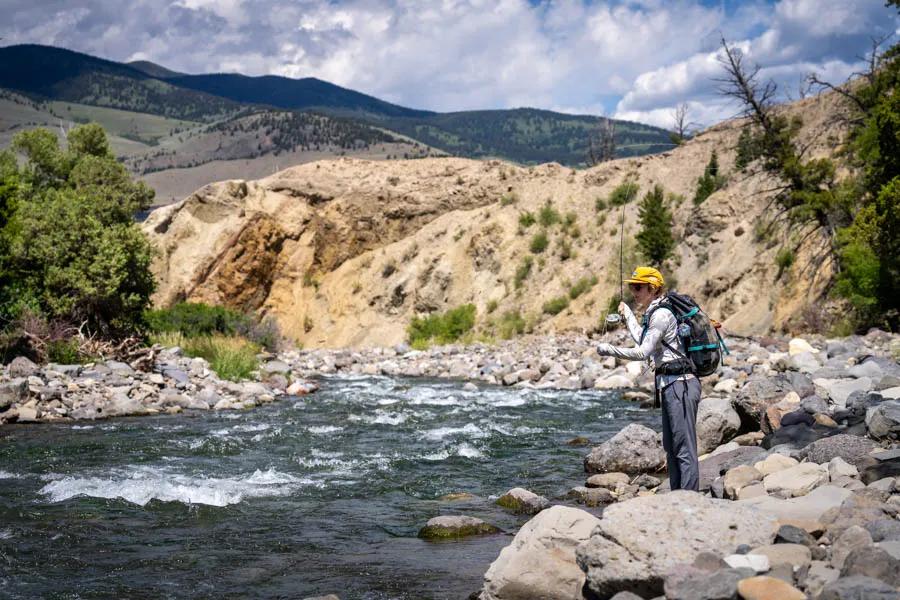

When Labor Day hits the calendar, it is the unofficial start of the fall angling season in Yellowstone National Park. As the nights grow longer and the days shorter, anglers who want to go fly fishing in Yellowstone National Park are eager for the change from warm summer days to crisp mornings and golden sunsets. The fall fishing season in Yellowstone provides anglers with a variety of waters to fish and even greater opportunities of ways to fish them. Whether you enjoy fishing a large river like the Madison River or an intimate small creek like Slough Creek, going on a fly-fishing trip in Yellowstone in the fall is a unique contrast to the more popular and well-known summer season. Here are some great places to go fly fishing in Yellowstone National Park that can answer that question of Where to Go Fly Fishing in Yellowstone National Park.
Madison River
One of Yellowstone Park’s largest rivers, the Madison River is viewed by millions of visitors each year as it meanders along the West Entrance Road. While the Montana stretch of the Madison River near Madison River Lodge is swift, rocky, and peppered with huge boulders, the section of the Yellowstone River in Yellowstone National Park reach resembles a big spring creek. Aquatic grasses wave in the current, and much of the riverbed is sand or small pebbles. Elk and bison are frequently spotted along the grassy banks, and the river is home to one of the very few resident pairs of Trumpeter Swans in the entire park. As the river cools in September, the resident fish become active again, and the migratory fish from the lake begin to push in. The number of large fish increases as the fall progresses. October is considered the best time to target these fish. Target the migratory trout by nymphing or swinging a streamer. A top choice for a nymph rig is a stonefly with a small mayfly, such as a pheasant tail, as the dropper. For a streamer, look towards steelhead patterns such as intruders for inspiration. The fly is presented by casting across the current at a slight downstream angle. The line is held tight, and the fly is allowed to swing through the run. Take a step down and repeat until the entire run is covered thoroughly. Remember that these fish are accustomed to a lake environment, so seek out deeper, slower water for best results. While these tactics will take resident trout as well, excellent hatches of Blue Winged Olives come off during fall, especially on cloudy days. This can be a nice change of pace if the migratory trout are being fickle (as migratory fish often are) or you tire of casting heavy streamer or nymph rigs. The BWO’s are usually a #18 during fall, so carry a good selection of both dries and emergers.
Gibbon River
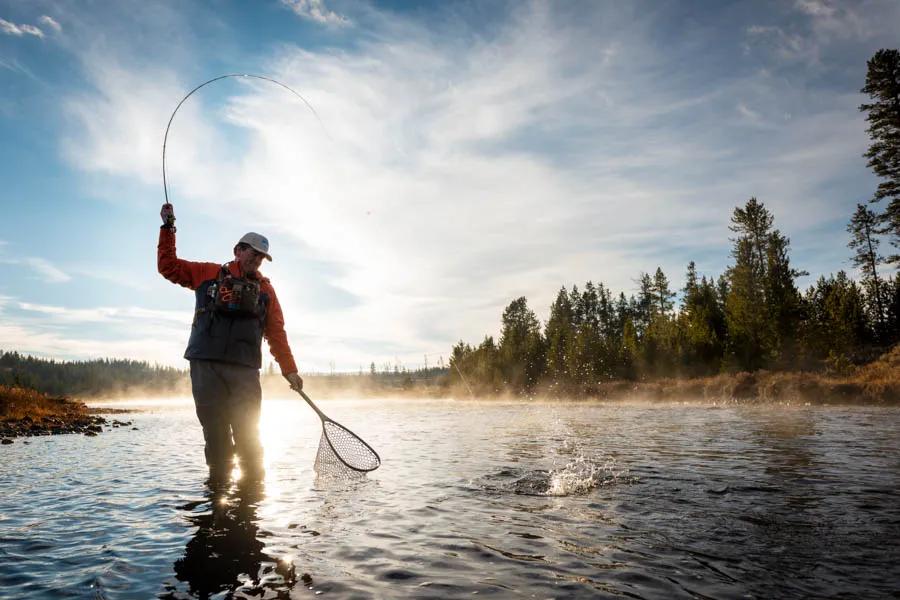
The best fishing in the fall on the Gibbon River is in the section below Gibbon Falls. In the fall, large trout can migrate from Hebgen Lake and make the Gibbon River in Yellowstone National Park a legit option for fly fishing. While the fish are far less numerous than in the Madison River, the crowds pursuing these brutes are far smaller as well. Nymphing or streamer fishing is best during the fall, and a stonefly nymph trailed by a baetis nymph is a great way to catch some nice fish when fly fishing in the fall. Streamer patterns vary, as you are trying to elicit an aggressive response from the fish more so than matching any specific baitfish. The Gibbon River lacks the many long, deep holes, so the hiding spots for the large fish tend to be more subtle and harder to spot. Just remember that these fish are used to a lake environment and do not want to fight the current any more than they have to. While the section below Gibbon Falls gets most of the attention, the Gibbon River is a major source of the world-famous Madison River and plenty of good sections. In the fall of 2017, the park service began a program to replace non-native species with westslope cutthroat above the Virginia Cascades. The Gibbon River rises in Grebe Lake, and several major waterfalls along its course divide the fishery and isolate distinct fish populations. Much of the best water when fly-fishing the Gibbon River is easily accessed from the road, although hike-in options exist, especially after the park service re-routed the Grand Loop Road out of Gibbon Canyon in 2009.
Firehole River
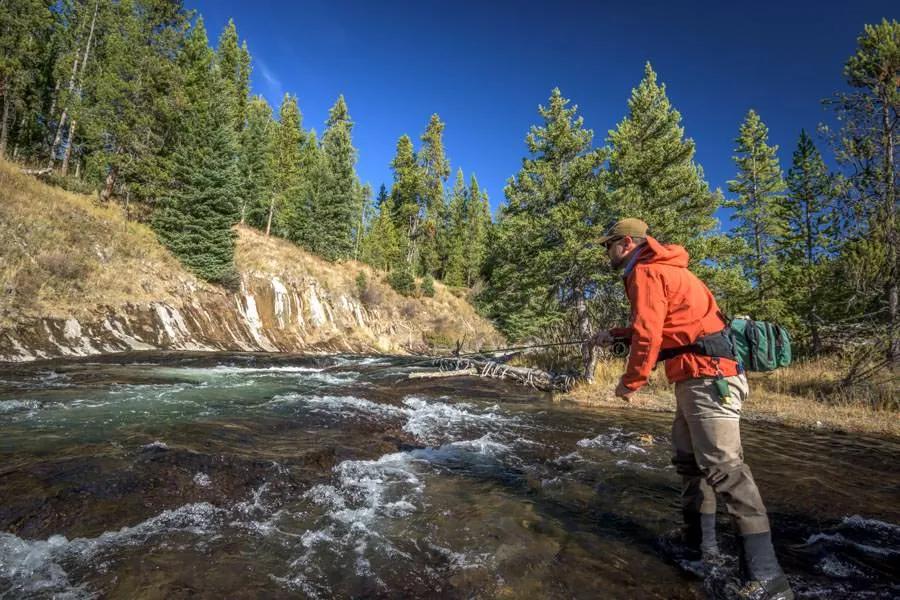
Fishing the Firehole River in Yellowstone National Park is quite possibly one of the most unique experiences in all of fly fishing. With abundant accessibility, it stands out among many of the world's great fly fishing rivers. The Firehole River is quite possibly the most unique trout river in the world. It flows through three of the largest and most active geyser basins in the world, including iconic thermal features such as Old Faithful and Grand Prismatic Spring. The outflow from these features flows directly into the river, and you will have to dodge mud pots and hot springs as you walk along the banks. Wildlife is plentiful in the area, with frequent sightings of elk, bison, and bear. The Firehole River's robust population of aquatic insects and wild trout helps also helps make it a bucket-list fly-fishing destination. One of the biggest draws of the Firehole River is the dry fly fishing. Because of the incredible diversity of insect life in the river from Biscuit Basin to Firehole Falls, actively rising fish are a common sight. The caddis will get going again with cool weather in September and gradually give way to Blue-Winged Olives and midges as nasty, snowy weather hits in October. In the fall, the water is lower, and the fish are more educated, so be prepared to fish smaller and lighter than you did in the spring. In spring and fall, be prepared to fish all of these hatches on any given day. Given the elevated water temperatures in the river, all it takes is a change in temperature or cloud cover to change the predominant bug on the water.
Lamar River
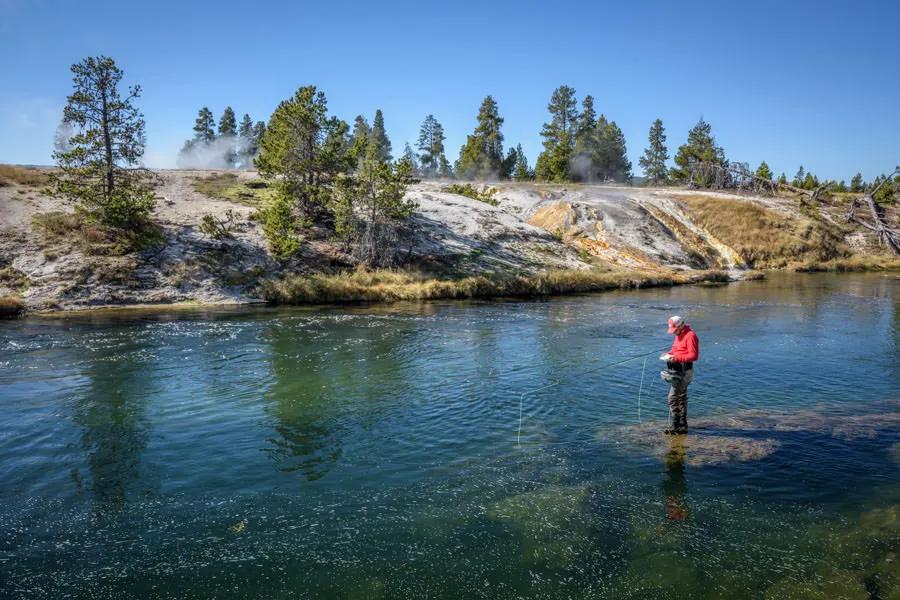
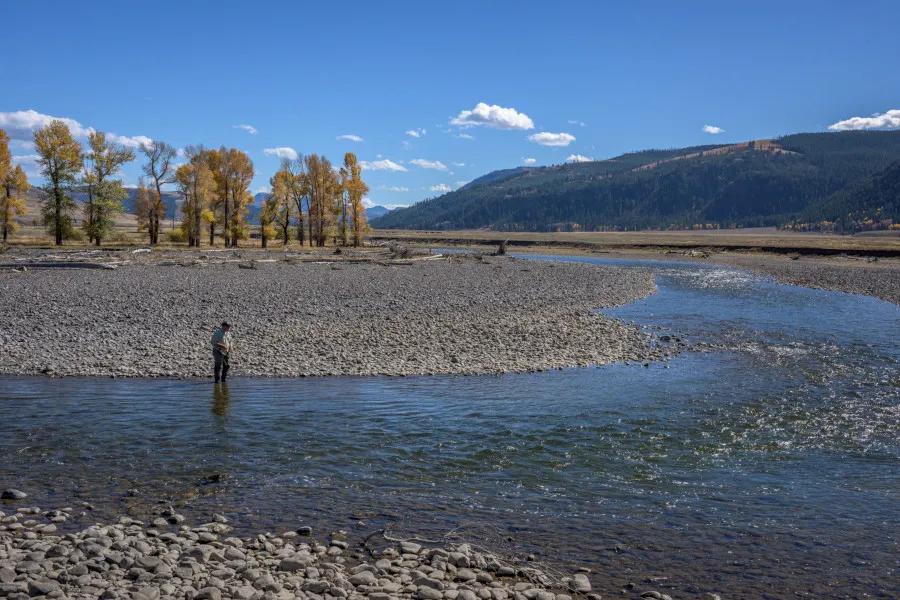
Fly fishing in the northeast corner of Yellowstone National Park in the fall is defined by low rivers, roaming bison, and cutthroats feeding consistently to bulk up for winter. The Lamar River is the namesake of one of the most beautiful areas of Yellowstone National Park, the Lamar Valley. Though the river flows for over 40 miles in all, it is this 7-mile stretch that has made the Lamar famous in fly fishing circles. Though Rainbow Trout have encroached over the years, the river remains a stronghold for the native Yellowstone cutthroats. The Lamar River begins high in the Absaroka Mountains and traverses 30 miles of serious wilderness before reaching the road at its confluence with Soda Butte Creek. Below the Lamar Valley is another 8 miles of mostly canyon water before the Lamar spills into the Yellowstone River. While the Lamar Valley is of the most interest to anglers, there is plenty to explore for the adventurous type. While the Lamar River flows for nearly 40 miles, the best section to fish in the fall is in the Lamar Valley. One of the quirks of this section of river is that the fish move around and do not always hold in the same, or obvious, spots. There are magnificent-looking pools with no fish, while just a few yards upstream, fish are practically rising on top of each other along a shallow bank upstream. Try to approach the river with an open mind, and don’t get too caught up in trying to fish the Lamar River exactly like you would other rivers. Keep your eyes open, cover water, and always be on the lookout for roaming bison!
Small Creeks and Rivers
Yellowstone National Park is home to the headwaters of the Snake, Madison, and Yellowstone Rivers. There are a variety of smaller creeks and rivers that can provide some exciting fly fishing in the fall season. Because Yellowstone National Park also has a network of trails, ample paved roads with numerous pullouts, going fly fishing in Yellowstone National Park serves up some of the most accessible small creeks and rivers in the western United States and possibly the world. From the fast-flowing pocket water and canyon of the Gardner River near Mammoth Hot Springs and the town of Gardiner, to the gorgeous pools of the Bechler River in Yellowstone National Park's Cascade Corner. For anglers wanting to chase native Yellowstone cutthroat trout on small waters, Soda Butte Creek and Slough Creek near the northeast entrance near Cooke City and Silver Gate, Montana, offer some exceptional walk-and-wade Do-It-Yourself fly fishing.