

Yellowstone National Park is the only place on the planet where native trout swim in waters also created by the flowing water from geysers. There are many amazing places where anglers can pursue great fly fishing. There are massive brown trout in Patagonia; tigerfish in southern Africa; bonefish, permit, and tarpon in several Caribbean locations; and steelhead and salmon in Alaska. These are all spectacular destinations and deserve a go, but the aura, mystique, and seemingly endless opportunities to fly fish in Yellowstone National Park move it very close to the top of the list. Here is our guide to the Best Month to go Fly Fishing in Yellowstone National Park. From the famous Firehole and Gibbon Rivers--the source of the Madison River; the native cutthroat fisheries of the northeast corner; the reestablished Yellowstone cutthroat fishery of Yellowstone Lake; and many more nooks and crannies in the world's first national park.
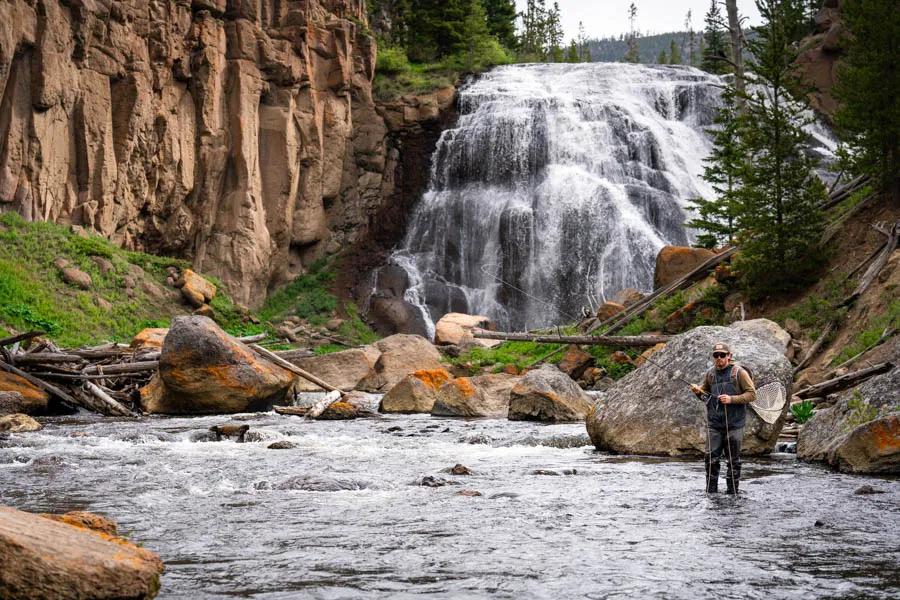
May and June: The Best Months for Fly Fishing Near West Yellowstone
On most waters in Yellowstone National Park, the fishing season opens the last week in May. There are a few exceptions--most notably Yellowstone Lake, the Yellowstone River below the Lake, and a few other smaller waters; additionally, the Madison River for a few miles upstream of West Yellowstone is open year-round, as well as the Gardner River near Mammoth Hot Springs. With West Yellowstone, Montana, being the largest gateway to Yellowstone National Park, knowing when and where to fish near there is important for having a great fly fishing trip near Yellowstone National Park. The months of May, June, and again in late September, and all of October are the best months to fish near West Yellowstone.
The Firehole River
For the first few weeks after opening day, the river will sometimes be high and tea colored; rarely is the river too muddy to fish. Consistent dry fly fishing can happen right away, but after high snow years can take a week or 10 days to really get cranking. Afternoon fishing slows down in late June as water temperatures rise and shuts down completely sometime in early July. Water temperatures of over 80 degrees are possible, and the river should not be fished over about 72 degrees. Fishing begins again with the first cold snap in September and continues to be strong through the closure of Yellowstone Park the first weekend in November.
The Madison River
The Madison River from Madison Junction to Riverside Drive
This section of the river is productive in both spring and fall. Riverside Drive is located about 5 miles inside the park from West Yellowstone and is adjacent to an enormous riffle where the river flows only a few inches deep. Below this point, the population of resident trout is very sparse, making it a poor choice in the spring. The best fishing here occurs immediately after the season opens, usually during the first week of June. The fishing holds on for about a month before water temperatures become too warm. The main attraction during June is hatches of Pale Morning Duns during the day and caddis in the evenings, and a few sporadic salmonflies hatch in the canyon section immediately below Firehole Cascades. As the river cools in late September, resident fish become active again, and the migratory fish from the lake begin to push in. October is considered the best time to target these fish. Target the migratory trout by nymphing or swinging a streamer. Remember that these fish are accustomed to a lake environment, so seek out deeper, slower water for best results.

The Madison River from Riverside Drive to Park Boundary
As discussed above, this stretch contains few resident fish, so wait until late September or October to fish the Madison River just outside of West Yellowstone. The good news is that trout from Hebgen Lake reach this water first, so fishing begins sooner and the fish have seen less pressure. The most well-known are the Barnes Pools, which rank among the most famous fishing holes in the entire park. Don’t expect solitude here. Local etiquette dictates that you fish these runs from top to bottom, allowing other anglers to work in and do the same. While this type of fishing isn’t for everyone, it is a unique experience, and some awfully large trout lurk in the depths. Choose a nymph or streamer rig as discussed above, but don’t be afraid to experiment with flies; these fish see plenty of them so try to think outside the box.
The Gibbon River
One of the major sources of the world-famous Madison River, the Gibbon River is a good fishery in its own right. Originally fishless above Gibbon Falls, stocking in the early 1900’s gives the angler the chance to target browns, rainbows, brook trout, and even grayling in a few spots. In the fall of 2017, the park service began a program to replace non-native species with Westslope cutthroat trout above the Virginia Cascades. The Gibbon River rises in Grebe Lake, and several major waterfalls along its course divide the fishery and isolate distinct fish populations. Much of the best water when fly-fishing the Gibbon River is easily accessed from the road, although hike-in options exist, especially after the park service re-routed the Grand Loop Road out of Gibbon Canyon in 2009. It’s tough to give a general overview of fishing on the Gibbon River, as the prime seasons, tactics, and expected quarry vary wildly on different sections of the river. The good news is that the Gibbon offers something for anglers of every skill level, from rank beginner to seasoned veteran.
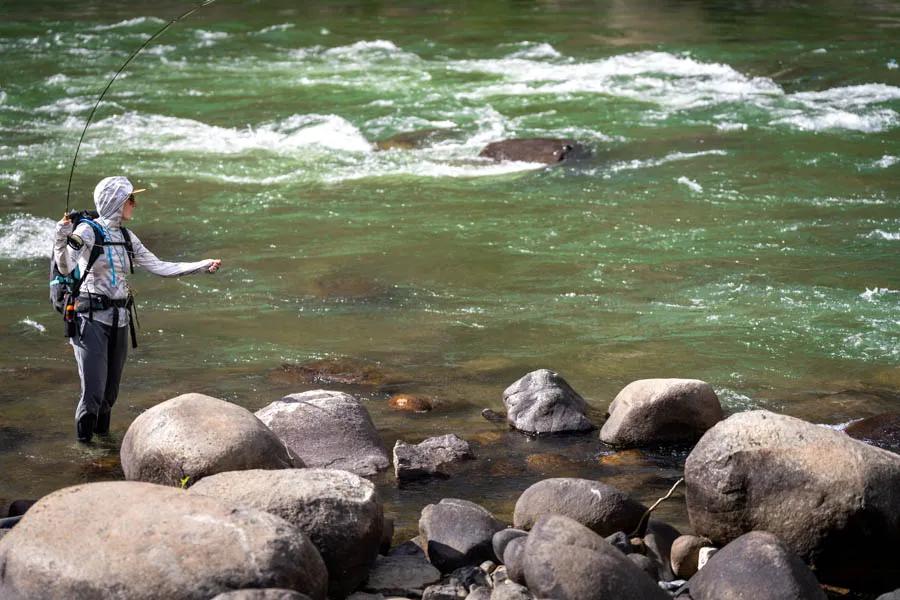
July: The Best Month for Fishing Big Dry Flies
If June is the month to fish the Madison and Gibbon Rivers near West Yellowstone, July is the month to chase the numerous hatches of salmonflies and golden stoneflies on the Yellowstone River and the Lamar River. The Yellowstone River begins above Yellowstone Lake, but truly becomes the crown jewel of Yellowstone National Park's best fishing waters once it leaves Yellowstone Lake and then tumbles over the Lower Falls in the Grand Canyon of the Yellowstone. In most years, the Yellowstone River in Yellowstone National Park becomes fishable in early July and gets better and better as each day ticks away.
The Yellowstone River above Yellowstone Lake in the Thoroughfare Region
The headwaters of the Yellowstone River are upstream of the massive Yellowstone Lake in the Thoroughfare region. This is a true wilderness area that requires a 34-mile hike or a long boat ride across the lake to access. Most anglers who visit the Thoroughfare make it a multi-day wilderness camping experience. The trout numbers in the Thoroughfare region dropped dramatically after the introduction of lake trout in Yellowstone Lake. In recent years, trout numbers have rebounded, and although they are not back up to their pre-lake trout levels, the best fishing is during mid and late July.
The Yellowstone River from Yellowstone Lake to Upper Falls
This reach of the river used to be one of the most popular and productive stretches of trout water in the entire world, but the illegal introduction of Lake Trout changed all that. Still, opportunities exist for skilled anglers who like to spot and stalk their quarry. Given the large size of the river and relatively small fish population, this is a tough place to fish blind. The river here opens on July 15th and fishes best right out of the gates; don’t bother after the first week or so of August, as most of the fish will have returned to the lake. There is no population of resident fish here, so after the spawning fish return to Yellowstone Lake, there are better places to fish.
The Yellowstone River in the Grand Canyon of the Yellowstone
The Grand Canyon of the Yellowstone is the section of the river from the falls down to the bridge just east of Roosevelt Junction along the Northeast Entrance Road. This section of the river contains resident fish only and has not been impacted by the situation in Yellowstone Lake. Fish populations are healthy and plentiful. Fishing in the Grand Canyon kicks off during the first week of July when the water has dropped sufficiently, and salmonflies and Golden stoneflies hatch, and the plentiful numbers of Yellowstone cutthroat trout gobble up large dry flies eagerly. One interesting aspect of this fishery is how much the water drops throughout the summer. In early July, the water is high, and the fish are shoved up against the banks. At this time, wading is not really even necessary, as you would be walking on top of the fish.
The Yellowstone River in the Black Canyon of the Yellowstone
The Black Canyon is the stretch of water from the bridge along the Northeast Entrance Road, just east of Roosevelt Junction, down to the park boundary just north of Gardiner, Montana. Fishing-wise, this section of the river is nearly identical to the Grand Canyon described above. This section is only accessible with an overnight or multi-day backpacking trip. The same hatches occur here, and the same fly selections and techniques apply. One thing to keep in mind when planning a trip in the Black Canyon is that the Lamar River, which enters just below the road bridge mentioned above, is the largest sediment producer in the Yellowstone River drainage. Summer thunderstorms along the Lamar will muddy the Yellowstone for hundreds of miles downstream. You will want to be aware of current conditions before you commit to a hike into the canyon.
The Lamar River in the Lamar Valley
The Lamar Valley is one of the most beautiful fly fishing valleys in the world. Sprinkle in herds of roaming bison, and even if you don't catch any of the native Yellowstone cutthroat in the Lamar Valley, it is worth fishing the Lamar River in Yellowstone National Park. By mid-July, the Lamar River has dropped and cleared enough that its trout are looking up for large chunks of food--hoppers, ants, beetles, and large mayflies like Drakes can hatch in abundance on the Lamar River. One of the quirks of this section of the river is that the fish move around and do not always hold in the same, or obvious, spots. It is not uncommon to be skunked in magnificent-looking pools only to find fish practically rising on top of each other along a shallow bank upstream. Try to approach the river with an open mind, and don’t get too caught up in trying to fish the Lamar River exactly like you would other rivers.
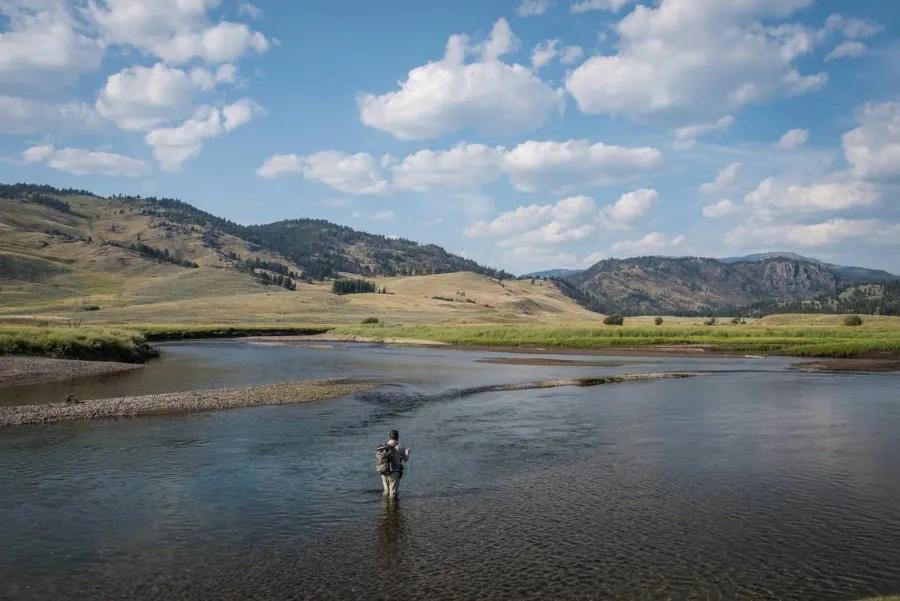
August: The Best Month for Backcountry Fly Fishing
Because many of the best waters in Yellowstone National Park are in some of the highest elevation areas in Montana, Wyoming, and Idaho, the best backcountry rivers do not often become fishable until late July or even early August. Slough Creek is the most famous of all the backcountry rivers in Yellowstone National Park, but the Bechler River in the southwest corner can also fish quite well and sections of Pebble Creek, the Yellowstone River, the Lamar River, and Hellroaring Creek can all feature some amazing backcountry fly fishing.
Slough Creek in August
Slough Creek is divided into four meadows, named, from top to bottom: Third, Second, First, and Lower. The top portion of the Lower Meadow is roadside, but everything else requires hiking. From the road access below the Slough Creek Campground, it is about a 2-mile hike down to the confluence with the Lamar River. From the trailhead at the campground, it is 2.5 miles to the First Meadow, 4 miles to the Second, and 6 miles to the Third. The 1st, 2nd, and 3rd meadows have good populations of native Yellowstone cutthroat trout. The main difference in each meadow is the amount of fishing pressure, which lessens somewhat as you get farther from the road. The First Meadow is an easy day trip, while the Second is only feasible for the very fit, experienced hiker. The Third Meadow requires an overnight stay. That said, chances are you will still have competition from other anglers in the 3rd Meadow. The Lower Meadow is a different beast altogether. A significant tributary, the Buffalo Fork, enters between the First and Lower Meadow, greatly increasing the size of Slough Creek. Rainbow trout and cuttbow hybrid are common in the Lower Meadow as well, with the top-end fish falling in the 22”-25” range. The river here is not only larger, but deeper and slower as well. Heavy fishing pressure ups the ante in the Lower Meadow, and even expert anglers work hard to catch a fish here.
Other Backcountry options in August
The best fishing on the Bechler River is in steep canyon country, with some of the most stunning waterfalls imaginable. The river contains small trout, but fishing is not the main attraction here, especially since a multi-day backpacking trip is required. The river here becomes fishable during early-mid July, but August is the best month because there are fewer mosquitoes and the fish key on hoppers, ants, and beetles, because the river is not known for prolific hatches.
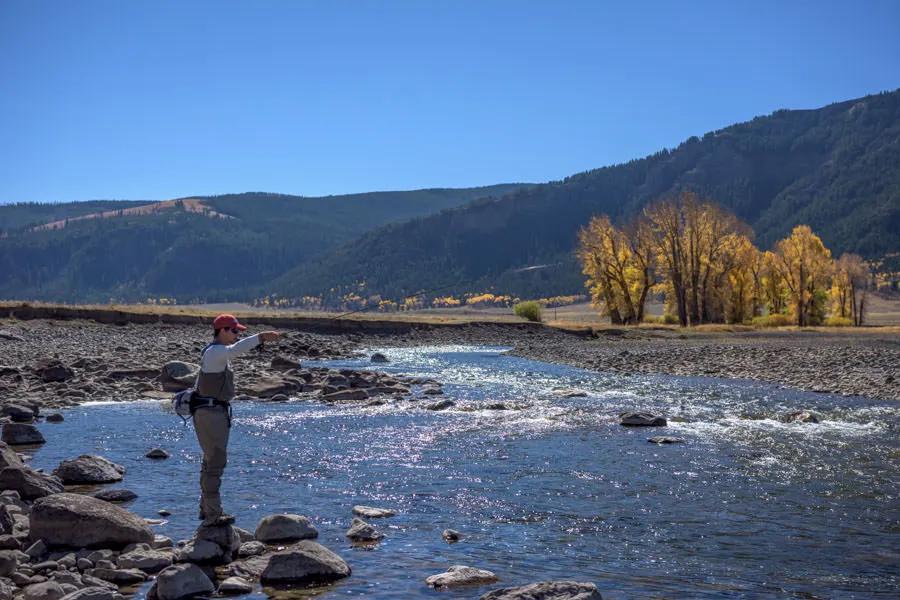
September: The Best Month for All Around Goodness
The transition from summer to fall in Yellowstone National Park occurs earlier than on any other great fly fishing rivers in Montana. Because the average elevation of Yellowstone National Park is well above 7,000 feet, daytime high temperatures in Yellowstone National Park are often much cooler than those in lower elevation areas. But more important than daytime high temperatures are how cold the temperatures drop at night. Because of these cooler nights, nearly all of the waters in Yellowstone National Park are good options to fish during September. The Madison, Gibbon, and Firehole Rivers can produce some great hatches of Blue Winged Olives as well as some consistent streamer fishing. The Madison River above Hebgen Lake has some early fall spawning fish migrating upstream. The Yellowstone River, Lamar River, Slough Creek, and smaller tributary streams are all low and ideally suited for walk-and-wade angling. The fishing with terrestrials can also linger well into September on many of the streams in the northeast corner of Yellowstone National Park.
Soda Butte Creek's September Drake Hatches
September is a great month for fly fishing for native cutthroat trout with dry flies in Yellowstone National Park. And, Slough Creek is one of the most unique small creeks on which to fish dry flies. There are two major meadows on Soda Butte Creek that resemble the famous meadows of the Lamar and Slough Creek. One is located at the stream's confluence with Pebble Creek. The other is located immediately upstream of Soda Butte’s confluence with the Lamar. These meadows contain large fish, ranging from 12” to over 20”. They also see the bulk of the fishing pressure, leading to finicky trout at times. In between these two meadows, there are two very steep canyon sections that can be difficult to negotiate. Since the road runs so close to the stream, it is easy to drive around and find the type of water that you are looking for.
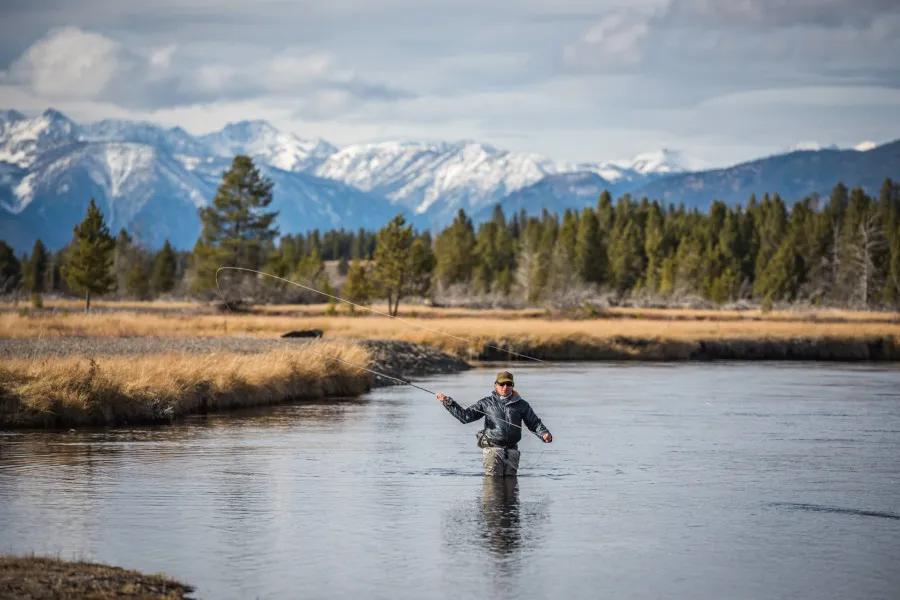
October: The Best Month for Large Fish
Fly fishing in Yellowstone National Park features some of the most unique places to go fly fishing in the world. From the spectacular canyons of the Yellowstone River, the meandering Lamar River in the Lamar Valley, to the backcountry fly fishing on Slough Creek, Yellowstone National Park is truly a place of angling wonder. But, the best month to find big trout--those over 20-inches--is clearly October. And, the best place to do so is to fly fish the Madison River inside Yellowstone National Park near West Yellowstone, and the second best place is the Lewis River near Lewis and Shoshone Lakes.
During the fall, water temperatures on the Madison River upstream of Hebgen Lake are once again cool, and large trout enter the river. Each year, anglers hook up with some monster trout in this section. Nymphing egg patterns trailed by a baetis nymph is a great technique in the fall. Many fly anglers targeting trophy browns also religiously swing large streamers across holding runs, hoping to connect with a monster. October weather is varied—from days of bright sunshine and highs in the 70s to blizzards and highs in the teens. The law of averages abides, and the average daily high temperature hovers around 60 degrees F. There is slightly more precipitation in October than in September, with an average of 1.1”, and the possibility of snow increases substantially, with a 1.9” on average. Quality fishing opportunities can occur in these variable weather conditions, but in October, often the lousiest weather produces the best fishing.
On the Lewis River, fishing in “The Channel” is best reserved for late fall, just before the close of the Yellowstone Park fishing season. There are a few resident fish here, so wait until the browns and lake trout make their spawning run. It is a 3-mile hike to reach the mouth of the channel and Lewis Lake, and an additional 4 miles up the channel to Shoshone Lake.