

Planning a fly fishing trip in Montana should be as much a part of the fun as going fishing in Montana. With a variety of rivers like the Madison, Yellowstone, Gallatin, and more, choosing when and where to fish some of Montana's best fly fishing rivers, creeks, and lakes might seem a little intimidating for anglers new to fly fishing in Montana. Local anglers and veteran Montana fly fishing guides all have their favorite weeks of the fishing season that they are sure to get out and fish Montana's fly fishing rivers. From famous hatches like the salmonfly hatch on the Madison to off-the-radar options, chronologically by month, here are 7 of the Best Weeks to Fly Fish in Montana.
Last Week of April
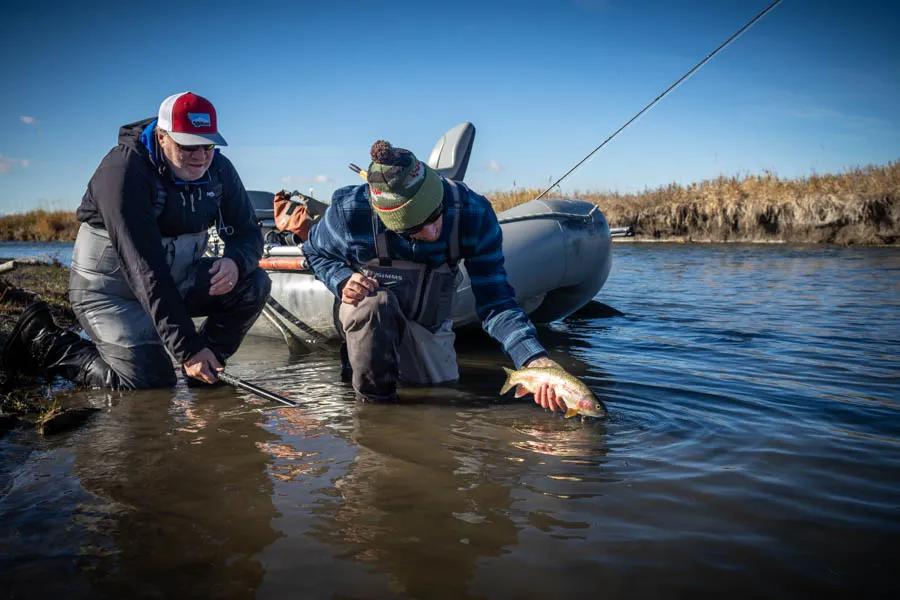
Snow, sunshine, rain, sleet, Skwalas, Blue Winged Olives, Caddis, Snowmelt runoff, and more. Yep. All of these are possible during the last week of April. And ask any veteran Montana fly fishing guide, and they will say that all is possible on the same day. For many longtime Bozeman-area and southwest Montana anglers, the last week of April is indeed a sleeper week for fly fishing in Montana. Summer-time tourists aren't traveling yet, snowmelt runoff is most likely still a few weeks away, and water temperatures in most of Montana's rivers and creeks are rising on a daily basis. Nearly all fly shops are open and ready to help you with information, but not all Montana fishing lodges are up and running yet--a sure sign that the last week of April is pushing the envelope for all of the fishing options on the table. Most fishing success occurs with tandem nymph rigs or dragging or slowly stripping streamers. Dry fly anglers will have specific windows of surface action if conditions allow.
The success of a fly fishing trip during the last week of April depends on flexibility and knowledge. Basing out of an area like Bozeman, Livingston, or Ennis serves up rivers like the Yellowstone, Paradise Valley Spring Creeks, private ranch lakes, and the Madison--both Upper and Lower. Local Montana fly fishing guides look forward to the last week of April each season because hatches can be thick, but the crowds are not. But, if you are planning a fly fishing trip to Montana in late April pack your best wading and foul weather gear along with your best attitude, because the last week of April can be great fishing in the worst possible weather--this is not the time for easy-living in flip-flops and tropical cocktails. This is the week for anglers who enjoy the adventure as much, or more than, the spoils.
Second Week of May
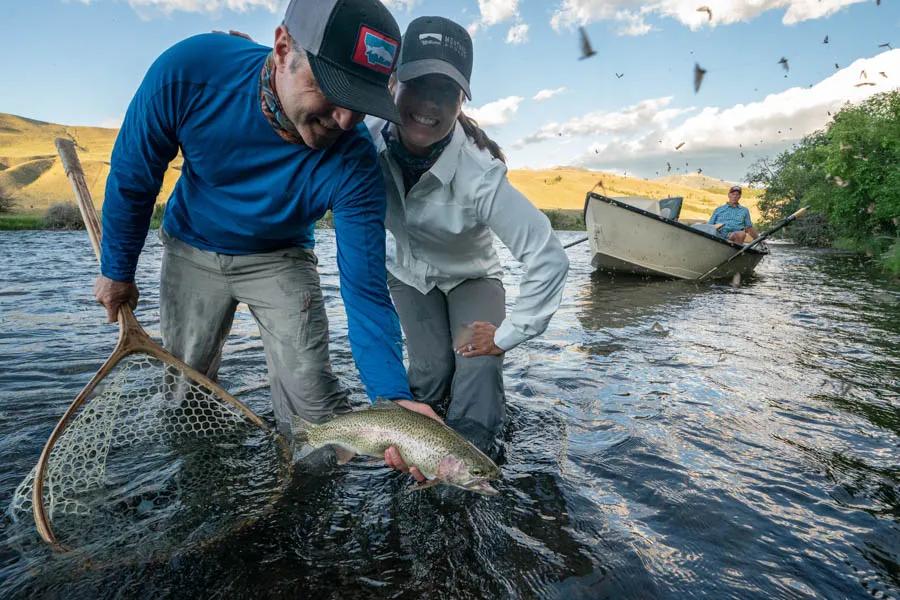
Experienced anglers in Montana know this is the week of two things: Mother's Day caddis on the Madison, and possibly, the Yellowstone. It is also the week that salmonflies are possible on the Smith River--a multi-day river camping and fishing trip. Potential sums up the second week of May when fly fishing in Montana. But even if the Mother's Day caddis hatch and salmonflies on the Smith River do not pan out, tailwaters and spring creeks like the Missouri River and Armstrong's or DePuy's are often consistent and clear, providing anglers plenty of opportunity to find feeding trout. The weather during the second week of May can vary from sunny and pleasant to rainy or snowy, and it can even change throughout the day. With water temperatures climbing steadily from late April into May, our freestone and tailwater rivers can come into form by mid-May. But, if we get several days of substantially higher than average temperatures--usually in the mid-70s degrees F--snowmelt runoff can commence. Even if snowmelt runoff begins by the second week of May, in most years, only the Yellowstone River is out of play; therefore, the Madison, Missouri, Spring Creeks, lakes, and a few other rivers are all on the menu.
The star of the show during the second week of May is the Mother's Day caddis hatch. This can occur on many rivers in Montana in mid-May. The sheer number of bugs that take to the air during the peak of the hatch is astounding. The oscillating clouds of bugs over the water can be mesmerizing, but the splashy rises of trout will quickly snap you out of it. Timing is everything with this hatch, and we need several variables to come together at once for productive fishing on our local waters. The heaviest hatches take place as the water temperature begins to creep above 50 degrees, which typically happens sometime around the first week of May. This is pushing right up on the start of runoff, so the water clarity will be the determining factor as to how good the fishing is during the hatch.
Montana's Smith River is also a very good option in mid-May. When the river is rising fast and gaining hundreds of cubic feet per second of added discharge from one day to the next, trout are forced to adjust their feeding lies and they become harder to find. However, because Smith River trout feed in muddy water, persistent anglers can still find fish. After a warming event or rising in flows, as streamflows drop and stabilize, fishing quickly improves as Smith River trout adapt well to changing conditions. In May stonefly nymphs are very active. Fish a stonefly nymph as part of a two-fly weighted subsurface nymph rig or as the dropper on a dry fly-dropper nymph rig.
Last Week of June
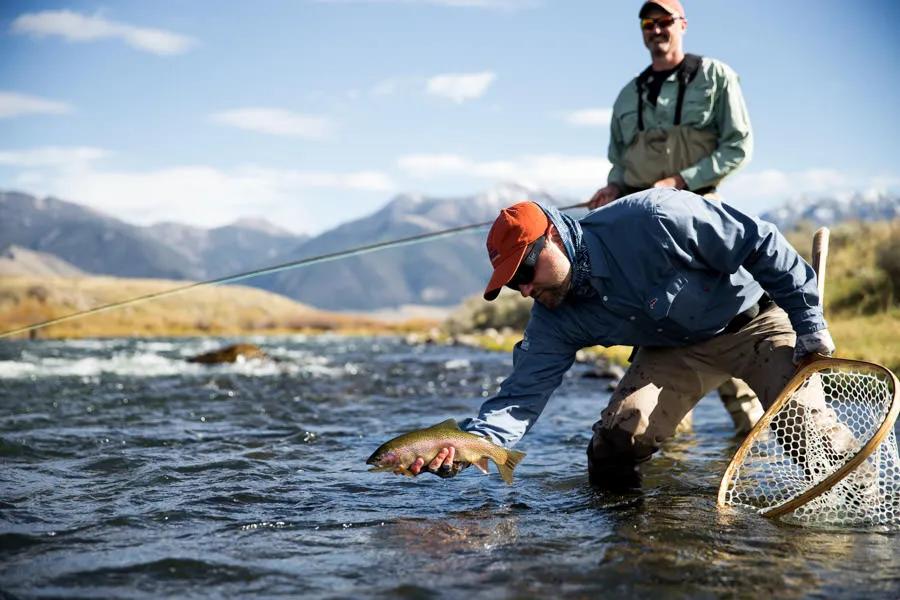
This is the week that has earned Montana's legendary reputation as one of the world's great fly fishing destinations. Year in and year out, the last week of June sees the greatest number of hatches, the widest variety of available rivers to fish, and weather that is as consistent as it gets any time of year. From prolific hatches of PMDs on the Missouri River and Paradise Valley Spring Creeks to chasing damselflies on private ranch lakes or floating small freestone rivers like the Boulder or Stillwater Rivers, fly fishing in Montana during the last week of June is possibly the quintessential fly fishing experience--casting flies to trout under a broad, blue Montana big sky with mountains visible in nearly all directions. With the exception of the Yellowstone River--and in some years the Yellowstone River is buzzing with hatches of salmonflies the last week of June--it is likely that any flowing river, creek, or stream in Montana during the last week of June is worth casting a fly into.
Nearly every year, the last week of June is the week when the fish are dumb and hungry, and you can cast big flies. This is a very popular time because the weather is good, the fishing is consistent, and big trout are still easy to fool. Rivers are humming with plenty of activity, angling-centric towns like Bozeman, Montana are active and exciting. Availability at fishing lodges tends to go faster than others as a result. This is a better time for float fishing because of the amount of water in the rivers, although some wading opportunities still exist, like the walk and wade section of the Madison River, private spring creeks, etc. This is also the time of year to try chasing the giant salmon fly hatch if you want to spend a day or two swinging for the fences and be one of the lucky few that get to watch a 28" brown eat a size 6 dry fly.
During the last week of June dry fly anglers are going to find the widest array of available hatches to fish. On a productive river like the Madison River, the salmonfly hatch is the crown jewel of the Madison River’s late June hatches. On many other rivers, including the Madison, after salmonflies, golden stoneflies, and Yellow Sally stoneflies hatch, creating even more large dry fly fishing opportunities. Like the Madison, the Missouri is also famous for its hatches of Pale Morning Duns. It sounds simple to stay, but the best place to find trout in Montana during the last week of June is pretty much anywhere that stoneflies, PMDs, or caddis are hatching--and this is most often on any river in Montana!
Second Week of July
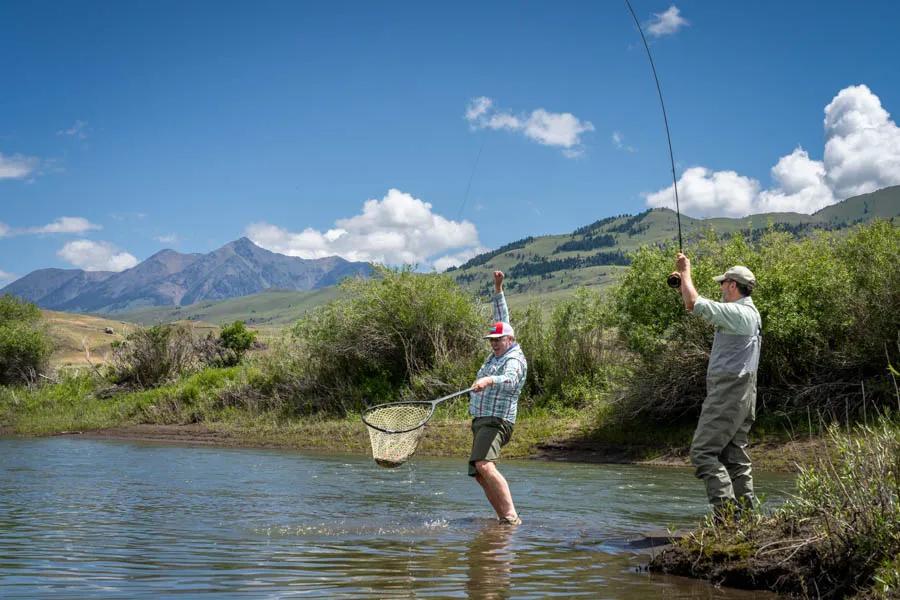
While May and June might be the best months to fish tailwaters and spring creeks, the middle of July is the time to explore smaller waters, backcountry rivers, Yellowstone National Park, and the mighty Yellowstone River. Hatches of golden stoneflies, Yellow Sally stoneflies, caddis, and PMDs are still thick on most rivers in mid-July. For anglers desiring a unique backcountry experience, the second week of July is ideal for a wilderness fly fishing expedition into the Bob Marshall Wilderness. If a multi-day camping and fishing trip is just too many days of fishing and camping--is that possible?--then exploring the wilds of Yellowstone National Park is an option for the second week of July. For a float fishing trip in Montana, the second week of July means the Yellowstone River rises to the top of many anglers' lists.
The Yellowstone River in Montana is the longest, free-flowing river in the lower 48. Beginning in Yellowstone National Park, the Yellowstone River is the favorite of many of the veteran guides in the Bozeman, Montana fly fishing area. The second week of July is considered the ideal week to fish the Yellowstone River. A day spent fly fishing the Yellowstone River in mid-July is most often spent float fishing with the peaks of several mountain ranges in the distance. Trout in July on the Yellowstone have a variety of hatches on which to feed, so there is rarely a slow day. Because the days are long, an understanding of choosing the best time to fish is important. The lowlight hours of early morning and evening are often best for targeting large fish with streamers or dry flies. Later in the month when grasshoppers begin to show up in streamside grasses, midday and late afternoon are ideal for prospecting with a terrestrial.
PMD hatches typically begin mid-morning and can last a few hours. Dry fly anglers can find some surface action even in the bright sun of midday and afternoon. During July, PMD, caddis, and stonefly nymphs are usually active around the clock, but for fishing nymphs for PMDs the best hours for nymphing are often the morning hours as the hatch is beginning and then during the hatch itself. Because most rivers in Montana see an abundance of aquatic insect life, trout inhabit many places, but are most often found along the banks, in riffles, shelfs, the heads of runs, and the tail outs of runs. During the second week of July these habitats all offer the primary needs for trout: available food source, cover from predators, cover from strong currents, and flowing water for oxygen. During the second week of July, the trout tend to be hungry and happy and in the right spots.
Last Week of August
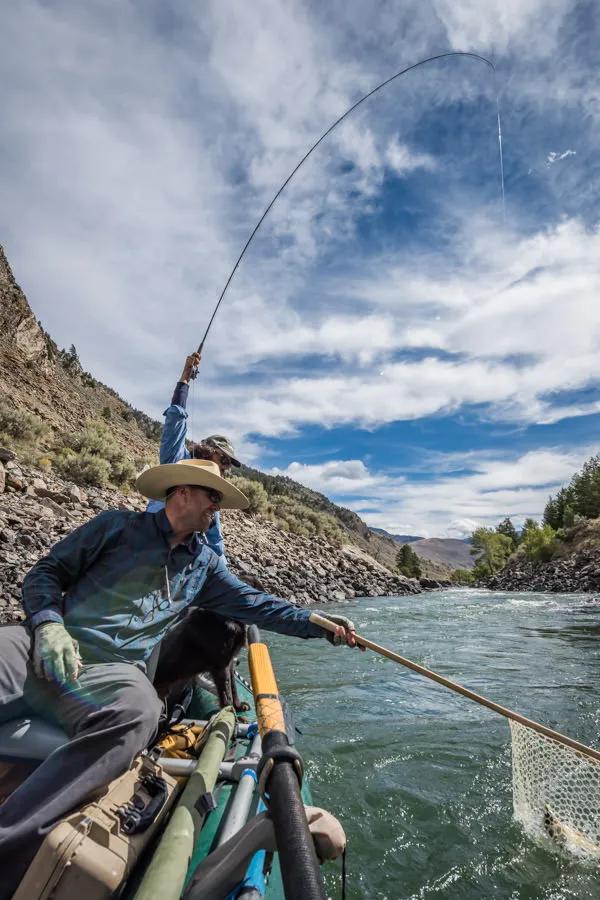
If any weeks of the year are considered sleeper weeks when local anglers and veteran fly fishing guides like to fish, but perhaps the word isn't fully out about the good opportunities that exist, the last week of August is one of those. August in Montana is often described as the month to target fish with terrestrials. By mid-August, many of the summer's primary hatches have subsided, and trout need to be a little more opportunistic in their feeding habits. Streamflows are often low, so walking-and-wading anglers find it easy to get around and have plenty of water to fish. Floating anglers will find streamflows low, but often still with plenty of water to float just about any stretch on any river in southwest Montana.
The unique part of fly fishing in Montana in the last week of August is how different things can feel compared to a month earlier. During the last week of August, it is not uncommon for the mornings to begin to have the tinge of fall in them, as the hours of daylight in the last week of August compared to the last week in July are enough to be noticeable. In fact, there is almost one full hour of darkness the last week of August compared to the last week of July. This means the long, hot days of late summer are slowly going away by the last week of August. Add that to the abundance of terrestrials on the water and the need for trout to be opportunistic feeders, and going fly fishing in Montana during the last week of August can be surprisingly good.
A typical day of fly fishing during the last week of August often begins before sunrise. Because the bright sun and warmer temperatures of August are the norm, the best times to fish are from daybreak to early in the afternoon. If an abundance of terrestrials are out and about and landing in the water, and trout continue to feed, there can be exceptions and trout can feed throughout the afternoon. The highlight of fly fishing during the last week of August isn’t really a hatch; it is grasshoppers, ants, spruce moths, beetles, spiders, crickets, and any other land-dwelling insect that may inadvertently find its way into the river could end up as trout food and those anglers willing to fish during this sleeper week can find some surprisingly good fishing.
Last Week of September
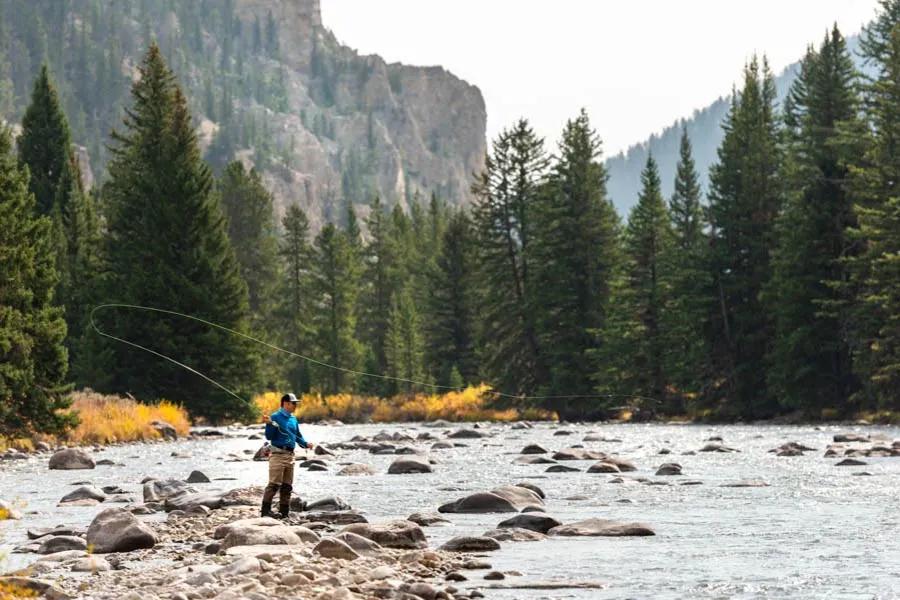
By the last week of September, fall has finally come to Montana. The rivers are backdropped with vibrant colors of changing leaves, and many of the mountains are snowcapped. Long-time anglers have been coming to Montana to fish during the last week of September for years, and for some, even decades. This is the week to target the Blue Winged Olive hatch, and possibly get a jump on the fall streamer bite. Much like the variance of early August versus late August, early September often feels like summer, while late September is surely fall in Montana with frosty mornings, warm days, and cold nights. A later start is preferred as nights in late September are longer and cooler than early in the month. Hatches of Blue Winged Olives can occur, but usually do not begin until mid- or late-morning. Anglers seeking large brown trout may consider an early morning start, dragging or slowly stripping large streamers, but with the cool water temperatures of the last week of September, the early bird rarely gets the worm.
By the last week of September and the onset of fall, brown trout begin to prepare for their spawn and become more aggressive, actively seeking out prey while also protecting their territory. Anglers committed to fishing streamers can find some of the largest brown trout of the year during this week on the Madison, Yellowstone, and Missouri River. Anglers desiring consistently good walk-and-wade fishing will find the hatches of Blue Winged Olives can be quite prolific on one of the Paradise Valley Spring Creeks, either Armstrong's or DePuy's. If summer lingers deep into September, it is also possible that anglers can still fish terrestrials in the warmest part of the afternoon.
During the last week of September in Montana, we often experience our first major cold front of the season. These cold days almost always produce big fish, even during the weather change. Blue Winged Olives can hatch in abundance when the weather changes from pleasant and sunny to cold, rainy or snowy. During these weather changes can also be a great time to strip streamers or toss big ugly nymphs that imitate large food sources. Even if the possibility of foul weather exists, the fly fishing in Montana during the last week of September can be as consistent as the last week of June--just be prepared with good gear, a good attitude, and plenty of local knowledge so you are in the right place at the right time.
Second Week of October
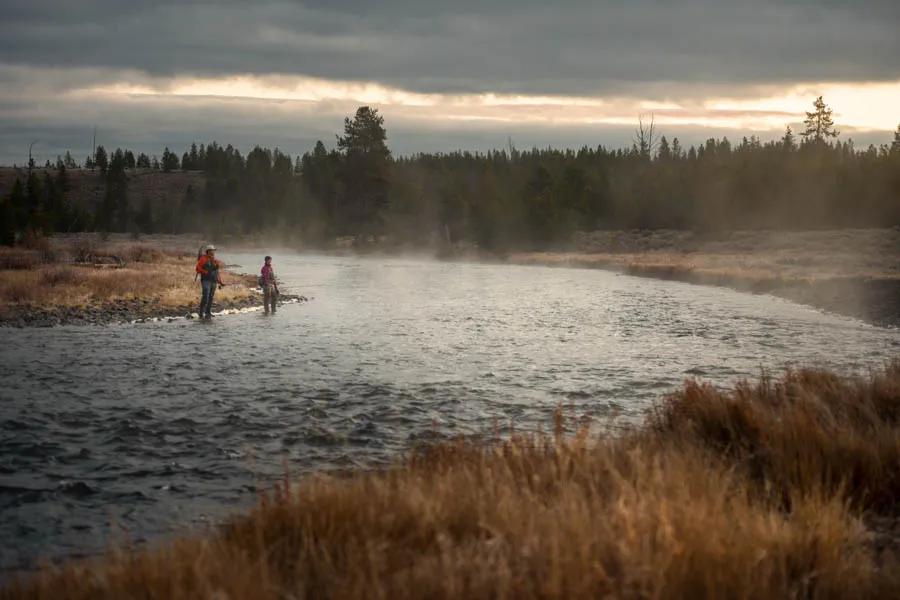
October in Montana is the heart of the fall fishing season. It is also the heart of the popular prime time for chasing brown trout with streamers. But, before streamer fishing gets all the glory, fly fishing in Montana in the second week of October means dry fly anglers, walk-and-wade anglers, and adventuresome anglers will find fisheries still in great shape to finish out the angling calendar. But, anglers be aware that fly fishing during the second week in October can also find cold, snow, wind, rain, and some sunshine. This collective roll of the dice is one of the appeals of fly fishing in Montana during the second week of October. This is the month of Blue Winged Olives, big trout chasing streamers, and a slight possibility of October caddis. The long, sunny days of summer are gone. Busy boat ramps and numbers-hungry anglers are also most likely absent, making the second week of October a time for anglers who appreciate fishing a river back-dropped by fall colors and fresh snow on mountain peaks and the possibility of large trout.
For many anglers, the last week of October and the regular occurrence of fall-like weather mean a commitment to fishing streamers for aggressive brown trout. October is exactly that—ideally primed for targeting large trout with large flies…and Montana fly fishing rivers often give up their bounty to those anglers committed to fishing large streamers. The second week of October is the time streamer addicts benefit from a “large-flies-means-large-fish” mentality. Yellow, brown, black, and olive streamers are the color choices for October trophy-sized trout. Most large fish are caught while dead-drifting a large streamer below a strike indicator or dragging a large streamer off the bank. Many anglers will also trail a smaller nymph, such as a size 16 or 18 mayfly nymph, creating a two-fly rig designed to entice a big brown trout or catch a selective rainbow or brown trout. So if you plan to fly fish in Montana during the second week of October, pack your double haul and your predatory instincts.
The second week of October has a loyal following of anglers. The browns start getting aggressive as they prepare to spawn in early November. As a result, large fish that have been either too smart or too hidden the rest of the summer suddenly become less wary and more aggressive. A lot of big fish also run out of reservoirs and into rivers like the Madison and Upper Missouri Rivers, allowing a few lucky anglers to tangle with 10-15lb. browns each fall. Fly fishing the Yellowstone River also produces massive browns during the fall run. The rivers are nearly empty because lots of locals are chasing hoofed critters in the hills, and the tourists have gone home for the summer. If you haven't fished in Montana in the second week of October, you should consider it, as long as you like adventure.