

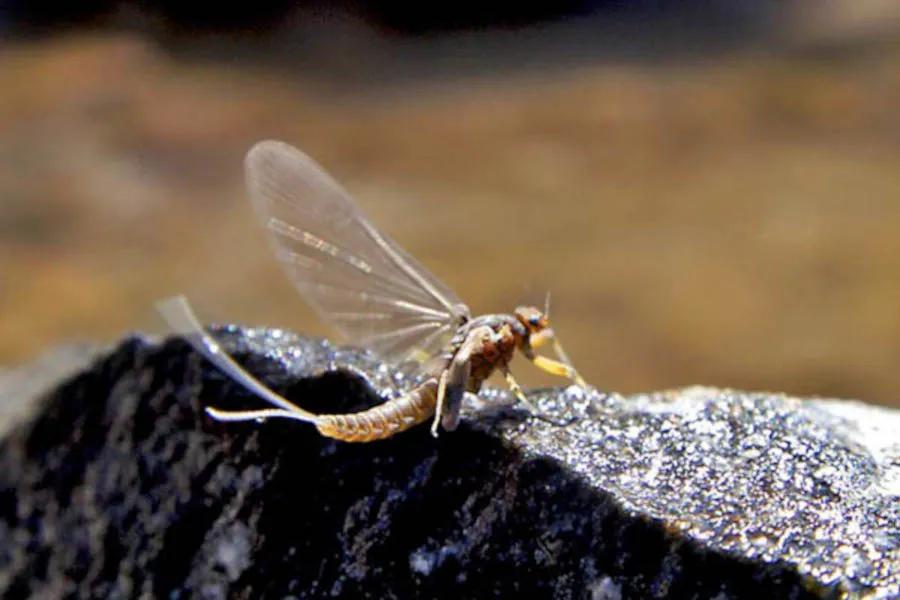
The annual occurrence of the Western March Brown mayfly is a hatch that is widely anticipated in Montana every spring. This hatch is reliable and steady, starting in April and lasting until spring runoff muddies the rivers. Cloudy days during March, April, and May can trigger the most prolific hatches. While these mayflies can hatch in March, April, and early May see their largest emergences on many of our Montana fly fishing rivers. During these cloudy days, the Western March Browns seem to emerge in higher numbers. Cloud cover also lends to excellent extended periods of dry fly fishing. This is because the freshly emerged duns take longer to dry their wings on these types of days. The duns tend to drift helplessly on the water for long periods of time before their wings dry enough to fly off to streamside vegetation.
Overview
The history of the Western March Brown hatch reaches all the way back to Europe on the chalk streams of the United Kingdom. In Europe, its namesake is congruent with the calendar emerging during the month of March. The Western March Brown emerges in April and into May on most Montana rivers. On other western rivers in warmer climates or lower altitudes, the Western March Brown can be seen in late March. The Western March Brown provides great action during this time of year because of the strength of the emergence, their size, and the hungry rainbow trout that are feeding post-spawn. The Western March Brown has a one-year life cycle with almost the entirety of their life spent as a nymph. They have a brief adult life cycle, like all mayflies, and emerge during the afternoon in greatest strength on warmer, cloudy April days. The nymphs are of the crawling behavior category and are dark, almost black on their dorsal side and a tannish brown on their ventral side.
Western March Brown Behavior and Life Cycle
Since the Western March Brown nymph is not a strong swimmer, they tend to emerge in water that is slower. As they crawl and migrate to slower water from faster water just prior to emergence, they tend to lose their footing and tumble in the current, making an easy meal for trout. Nymphing during this time can be very effective. Try fishing a dark bead head hare’s ear, Prince nymph, or a guide’s choice nymph in a size 12 or 14 in run-outs below riffles. When the nymph reaches slower water, they shed their exoskeleton on the bottom of the river before emergence. The emerger drifts slowly to the surface as a fully intact winged adult. Fishing a soft hackled winged emerger wet or as a dropper or 2-3 feet below and an indicator in back eddies, walking speed water or current seams can yield great results.
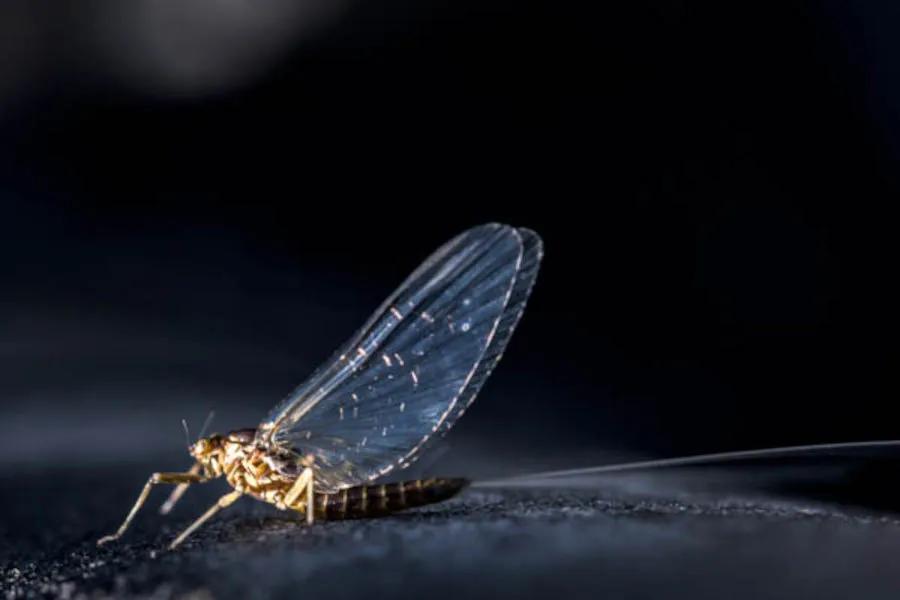
Once they get to the surface, the adult duns take a long time to dry out before they can fly. This is great news for fly anglers because this hatch can last a long time, with great dry fly fishing sometimes lasting up to two hours. As mentioned before, Western March Brown’s absolutely love cloudy days. Rainy and snowy days are even better. While they will emerge on clear days, the cloudy days trigger a stronger hatch. After emergence, the Western March Brown will shed their exoskeleton a second time on streamside vegetation or rocks, producing the sexually mature spinner. Here, they exchange their digestive system for a reproductive system and do not eat during this short period of their life cycle, just before they expire. Males and females mate in the air above the water or on streamside rocks or vegetation. Soon after mating, the females find their way to the water, depositing their fertilized eggs and expire. These Western March Brown spinner falls also produce great fishing, so be sure to have some size 12-14 spent wing Western March Browns in your fly box for trout that are focused on the spinner.
Western March Brown Tips and Fishing Tactics
Fishing dark colored nymphs with a soft hackle collar that imitate the Western March Brown nymph in a size 12-14 in late March until runoff in early May can provide good action. The nymph can be fished below a strike indicator or as a dropper. As stated before, nymphing below riffles in slower run outs can produce good results.
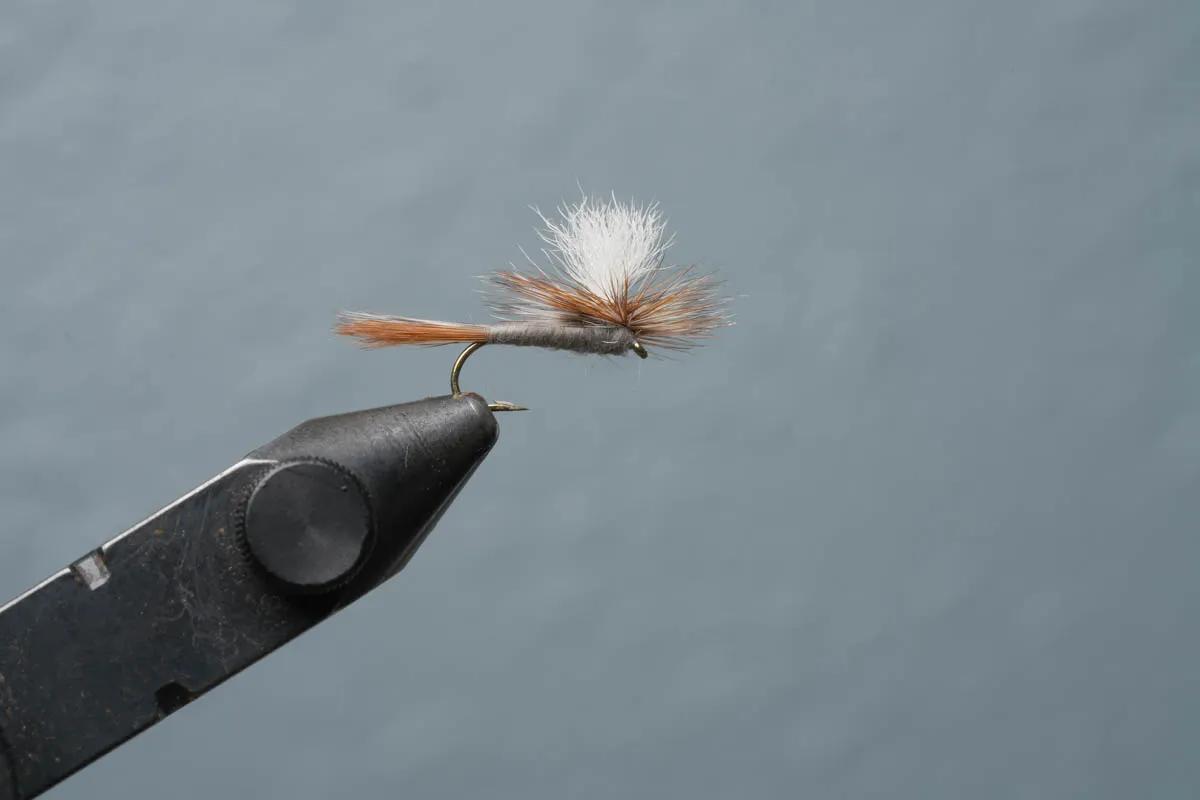
When adult duns are on the water’s surface, focus on size 12 -14 cripples, sparkle duns, parachute Adams, and parachute hare’s ear flies. Western March Brown’s tend to hatch during the warmest part of the day, around 1 pm. Be sure to have some size 12-14 spinners that have a tannish brown underside for when the Western March Brown spinners fall to the water to finish their life cycle. On the Paradise Valley spring creeks, the Western March Brown hatch may happen a little earlier because of the warmer spring creek water temperatures. So be sure to have some Western March Brown patterns with you for these spring creeks if you plan to go fly fishing in Montana during the spring months of March, April, or May.
Often, the Western March Brown emergence will coincide with the spring Blue-Winged Olive hatch, skwala stonefly hatch, and Mother’s Day Caddis hatch. Fish tend to key in on the Western March Brown from the onset of their emergence because of their size and their abundance. A favorite tactic during the Mother’s Day caddis hatch is to fish a parachute hare’s ear. The reason is that often this caddis hatch can be a blanket hatch with countless caddis on the water. Western March Browns are usually still in play during the Mother’s Day caddis hatch, and fishing a fly that is a little bigger and a little different from the caddis will often produce good results. The Western March Brown patterns are also easy to see among the many thousands of caddis that may be on the water. During the skwala hatch, be on the lookout for Western March Brown’s, especially on cloudy days when the skwala stoneflies are less active.
Where to Find Western March Browns
Most of Montana’s Western rivers have Western March Browns and are one of the first significant hatches of the year. The Madison, Missouri, and Yellowstone rivers are among local favorites. They are also found on the Smith, Gallatin, and Boulder rivers. Popular rivers west of the Continental Divide include the Bitterroot, Clark’s Fork, and Rock Creek. They are also found in other western states, but could occur a little earlier in the spring because of the warmer climate.
Popular Flies
Size 12-14 flies in the following patterns tend to work the best. Nymph patterns include Pheasant tail nymphs, dark colored hare’s ear nymphs, Prince nymphs, and various other mayfly nymphs. Nymph patterns with a soft hackle collar seem to produce great results. For the emerger, a hare’s ear soft hackle with a wing is deadly when fished in slower water where the nymphs congregate before they emerge. The wing is important because the Western March Brown ascends through the water column as an intact adult. For the dun or adult phase of the life cycle, try a parachute hare’s ear, parachute Adams, Stranahan brindle parachute, sparkle dun, Quigley cripple, or parachute Pheasant tail. A spent wing hare’s ear or spent Pheasant tail pattern works well for the spinner fall.
In Conclusion
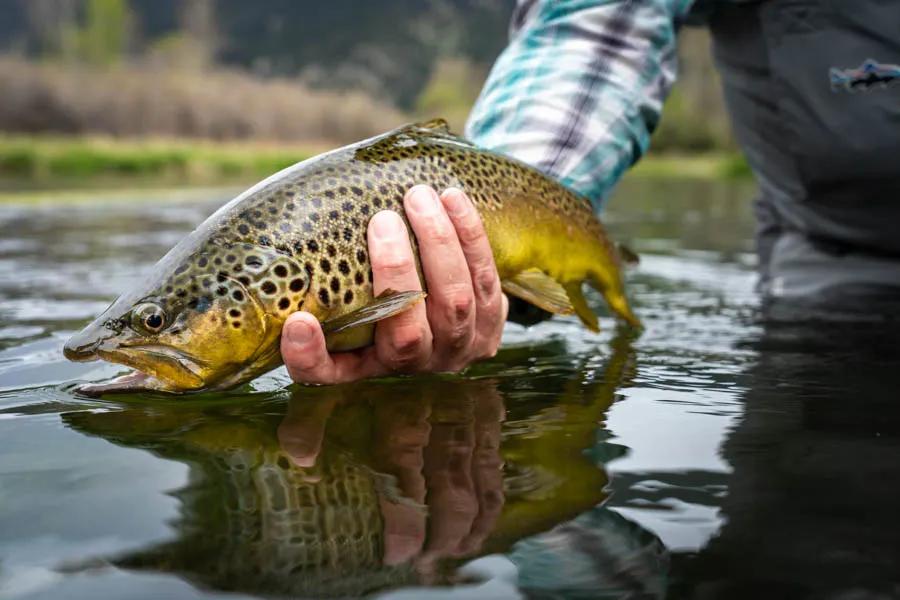
The Western March Brown hatch should be on every fly fisher’s radar when going fly fishing in Montana. It comes at a time when anglers are chomping at the bit to put winter behind them and roll into warmer-weather fishing. It is a reliable hatch and brings trout to the surface to feed on this large, easy-to-see mayfly. It is important to keep an eye on stream flows when planning a spring fishing trip in Montana. An early warm spell can muddy some freestone rivers like the Yellowstone or Gallatin, leaving these waters unfishable for a few days. The tailwater rivers, like the Madison, Missouri, and Paradise Valley Spring Creeks, aren't usually affected by early warm weather. After these warm spells, the temperatures will often cool down soon after, and the rivers will drop and clear, bringing the fishing back into shape. Western rivers at this time of year are often less crowded, giving anglers more water to fish and fish that are less pressured than in the summer months. So circle the last couple of weeks of April on your calendar and get to the river for some great fishing with Western March Browns.