

The most experienced fly fishing guides have spent years on the water. For a fly fishing guide who can catch trout in any condition and on a variety of fly fishing rivers, they've often been there and done that. To catch fish consistently, and to catch big fish consistently, certain skills come into play. Here is a list of six "guide secrets" to catch more fish.
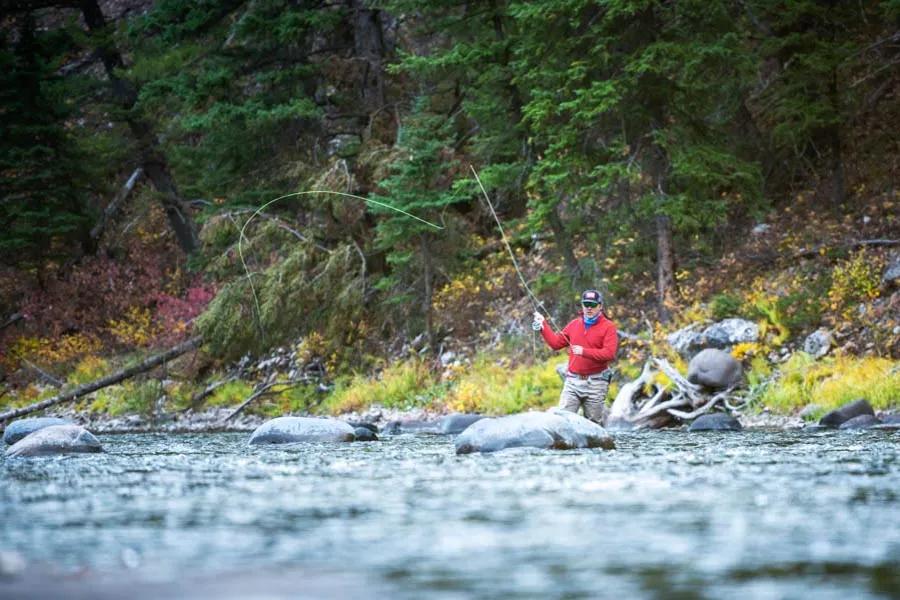
False Cast Less. Catch More Fish.
Most guides hate to see good water float by while their clients are making false casts. Many anglers get into a rhythm when casting and often make many more false casts than needed between their presentations to the trout. False casts should only be made when a dry fly needs to be aired out or the effective length of the cast needs to be changed. Often, a simple up and down cast is all that is needed to reposition the flies. By consciously focusing on reducing your false casting as much as possible, your flies will spend a higher percentage of the day in the “trout zone” and result in more hook-ups. The equation is simple: the less time your fly spends in the air, the more time it spends on the water...which means more, and bigger trout.
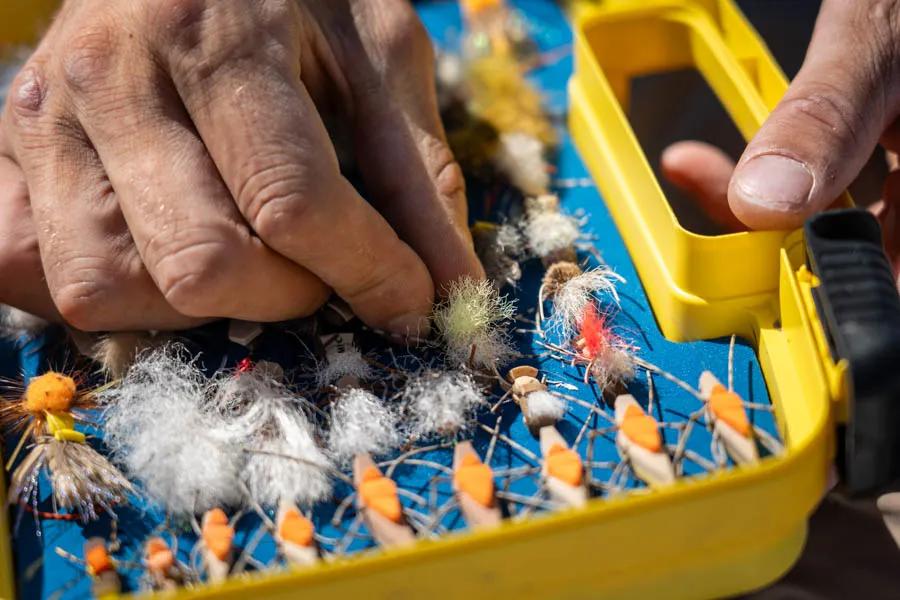
Choose Legs
Think of several flies that work well for catching trout--even for catching large trout anywhere in the world--, and we bet they include life-like legs. There are a variety of materials for legs in flies, so the material is secondary to choosing a fly that has lifelike legs. Whether you are nymphing with Pat's Rubberlegs or prospecting with a Moorish Hopper, the legs are what make these patterns so successful. If you are planning to fish two flies, then consider the leg material--very thin and supple legs can tangle easily if they are part of a two-fly rig. So if you are using a fly that has supple legs, consider fishing it without a second fly or using it as the second fly.
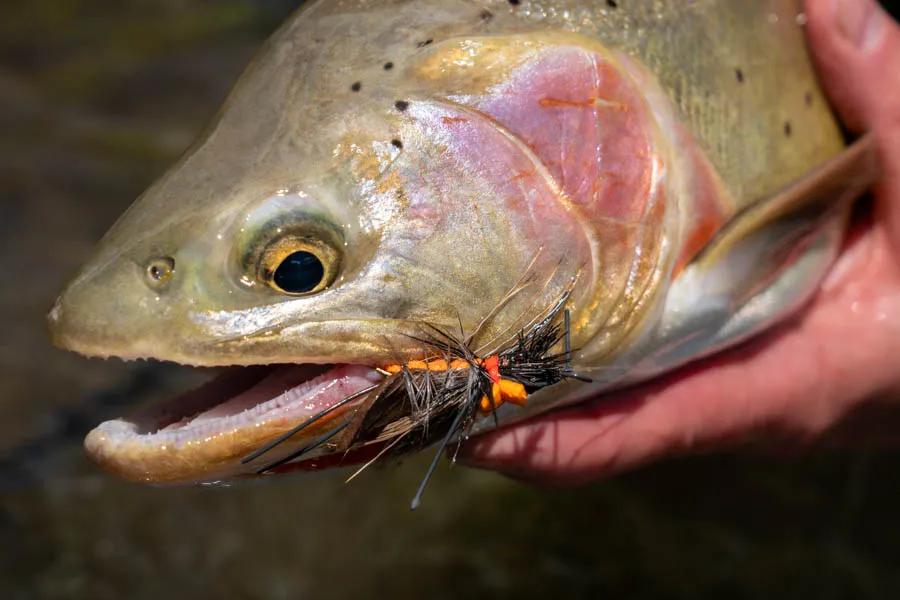
Use Foam Dry Flies Whenever Possible
We still fish a lot of great traditional patterns like the stimulator and royal wulff when fishing attractor dry flies and fur ants or Dave’s hoppers for terrestrials, and when fishing large salmonflies, but many of our guides have come to rely more and more on foam patterns when guiding. The beauty of foam patterns is that they never sink! By the end of the day, this results in your flies spending more time on the water and less time in the air. Even a high-floating hair wing attractor like a parachute Madame X can eventually get waterlogged or pulled underwater on a strong mend. When a foam hopper gets pulled under while mending, it just floats back to the surface, allowing the drift to continue without a new cast. Foam flies simply spend more time on the water, resulting in more trout in the net by the end of the day.
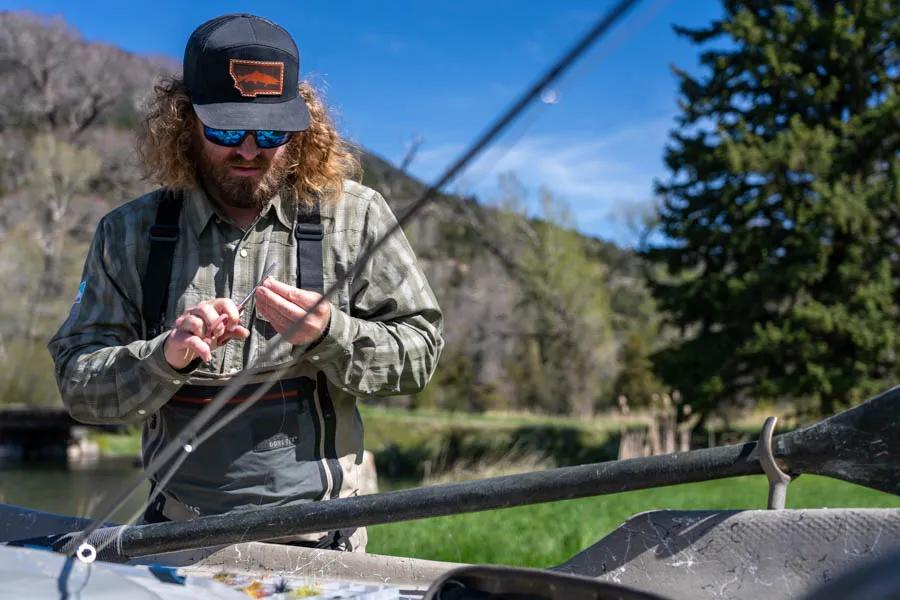
Use Liquid Floatant Even With CDC
To catch more fish, it is important to use chemistry to your advantage. For anglers who fish dry flies on a regular basis, CDC is a vital component of any fly. CDC stands for cul de canard. They are small feathers on a duck. When wet, these feathers hold small amounts of hair, allowing for a very unique action for a fly. However, they can become saturated quite quickly. To keep the CDC on a fly behaving as naturally as possible, many experienced Montana fly fishing guides now pre-treat their CDC just before fishing. The best way to do this is to use a liquid floatant such as High and Dry or FlyAgra. Dip the fly into the liquid and shake or cast it dry. Next, before getting it wet, it is crucial to dry the fly with a quality dessicant. This may seem counterintuitive to dry the fly after wetting it with liquid floatant, but this two-step method works very well to keep a CDC fly floating well.
Use Less Weight When Fishing Nymphs
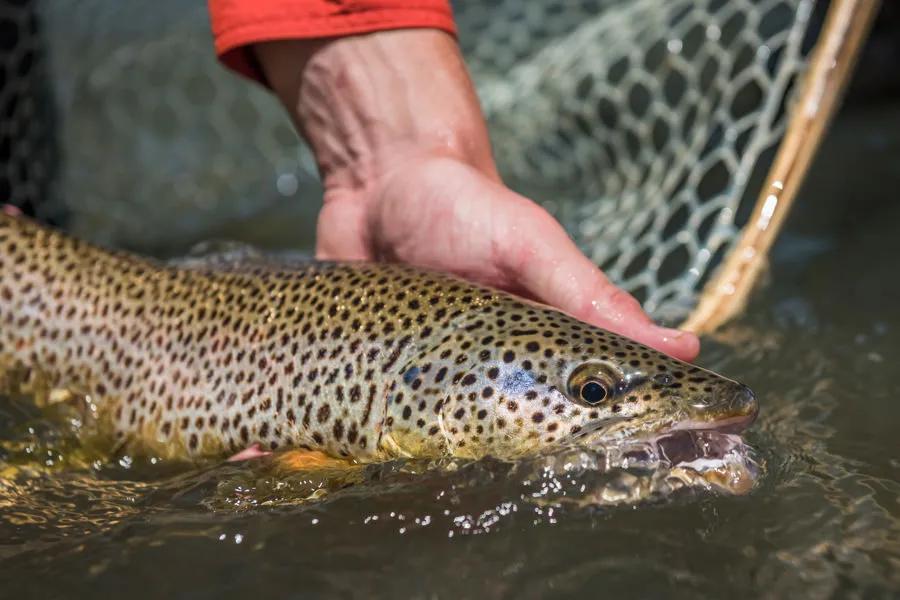
During most of the late spring, summer, and early fall, the metabolism of trout is in high gear, and they are willing to move a bit for your subsurface presentations. Many anglers make the mistake of fishing too much weight on their nymph rigs with the idea that they need to be scraping the bottom with their flies. Nymphs do not always need to be right on the bottom since trout will frequently move up in the water column to intercept them. If your flies spend less time on the bottom, they also get snagged less, resulting in more fishing time. Removing some weight also results in fewer tangles while casting, which also effectively increases the amount of time that you are actually “fishing” during the course of a day. Finally, strikes are easier to detect since you are spending less time trying to decipher the difference between a tick on the bottom and a take. When you are constantly bumping bottom, you either false set, which ends a drift, or assume that some takes are rocks and don’t set the hook at all.
Raise Your Rod Height
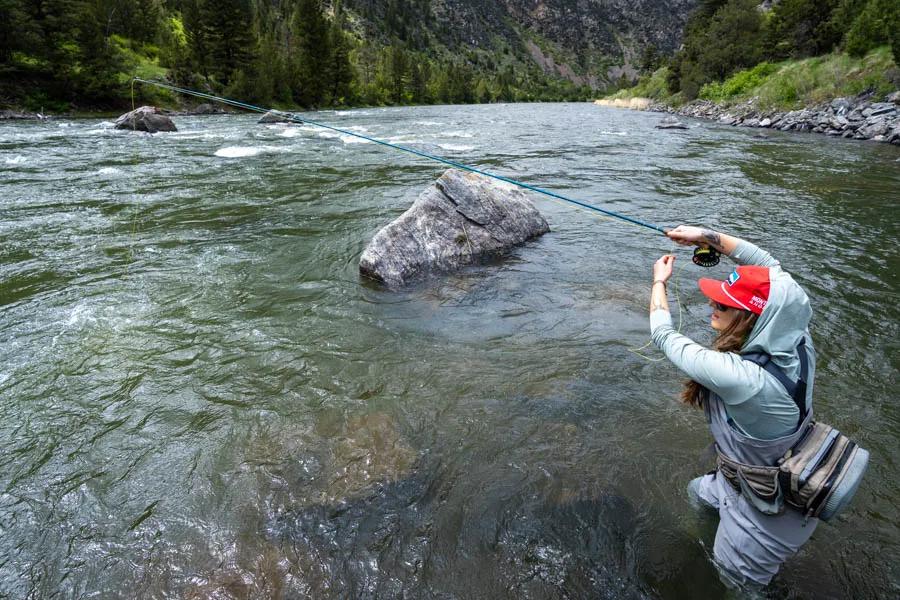
Once your flies are on the water, try lifting your rod hand and extending it towards the flies. The rod should be almost parallel to the water (tilting the rod up can pull the flies toward you unless it is a very short cast). By lifting the rod higher off the water and extending your arm, you will be reducing the amount of line on the water that is susceptible to drag and get a better presentation during your drift. A higher rod position also makes mending easier, and this subtle difference is often what makes Montana fly fishing guides seem to catch more fish than anyone else. This easy modification to the rod geometry will result in a more natural presentation and hopefully draw a few more strikes from willing trout.
Fly fishing is a game of managing expectations. Of course, we all want to catch more trout, but trout are wild animals and have dynamic feeding habits that constantly change. Many fly fishing guides have spent years trying a variety of techniques; these six tips can help you catch more fish. Whether you keep them a secret for yourself is up to you!
Check out More Educational Videos from Montana Angler.