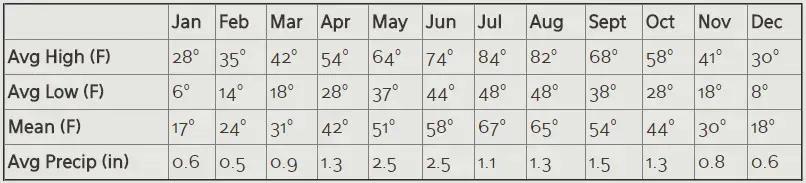

If you spend enough time around veteran fly fishing guides in Montana, the weather and its impact are going to come up in conversation. From stories about bluebird days and twitching grasshopper patterns to fishing through the rain on a great day of streamer fishing, the weather dictates fly fishing more than any other factor. Visions of casting dry flies under a clear blue sky may be what you want, but on any given day, you may experience overcast and drizzle, a snow flurry, or that well-known big blue sky. In most years, March, April, and May, and again in October and November, are the months with the greatest variance in daily conditions; and June through September are the most consistent. By early March, our guides are on the water more than they are not. And, by early November, most of our Montana fly fishing guides have wrapped up their seasons. Montana fly fishing weather is highly variable, with a wide range of temperatures and climatic conditions. Here is our guide to Montana's weather during the angling season.
March
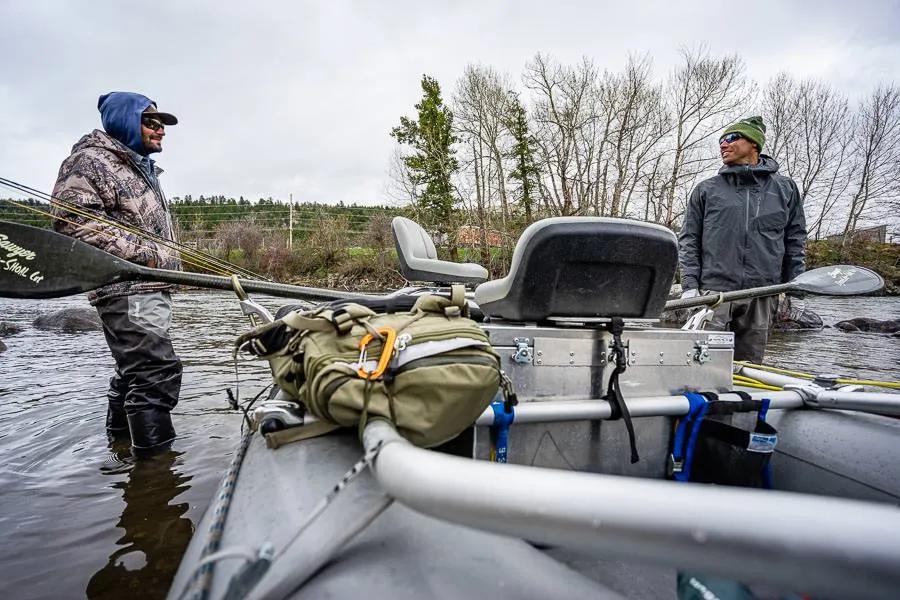
Our local Montana fly fishing guides look forward to March every year. This is also a Montana Angler staff favorite because it is the best month to fish AND ski in the same week, or sometimes the same day if you plan your logistics correctly. With Big Sky Ski Resort and Bridger Bowl both close to the Gallatin River or Paradise Valley Spring Creeks, March is the month for a cast-and-carve outing. However, planning for going on a fly fishing trip in March is all about flexibility, including the possibility of not going fishing at all. The weather in March can range from daytime highs in the 20s to 60s. Snow and freezing rain can occur regularly, so safety can always be an issue. Bottom line for fly fishing in Montana in March, hope for the best but plan, and expect the worst, and always have a Plan B.
April and May
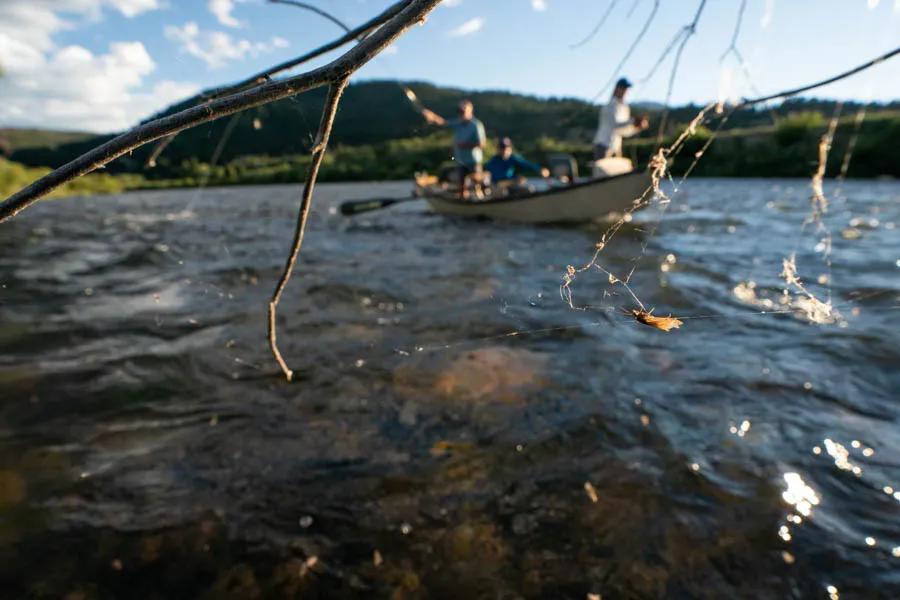
We lump April and May together because of Montana's varied topography and mini-climates. April in the Gallatin Valley near Bozeman has different weather than April on the Upper Madison near Yellowstone National Park. May on the Smith River is going to feel different than May on the Missouri River near Helena and Great Falls. Hatches of Blue Winged Olives, March Browns, Mother's Day Caddis, and early season stoneflies can occur in either month, so the season's first real shot at good dry fly fishing is a possibility. Spring weather can be beautiful. The mountains are still covered in snow, and the valleys begin to turn green in May. On nice days, the sun shines, and the sky is crystal blue with highs in the 50s to 70s. Spring can bring in Pacific storms that tend to produce unsettled weather for two or three days at a time. When these storms roll in, it often drizzles on during the day with temperatures in the high 40s or low 50s. Wet snows are possible even in the valleys in the spring. It is important to bring layers and rain gear (our guides have extras!) in case one of these storms arrives. Fishing can be outstanding in the spring when the skies turn grey however!
June
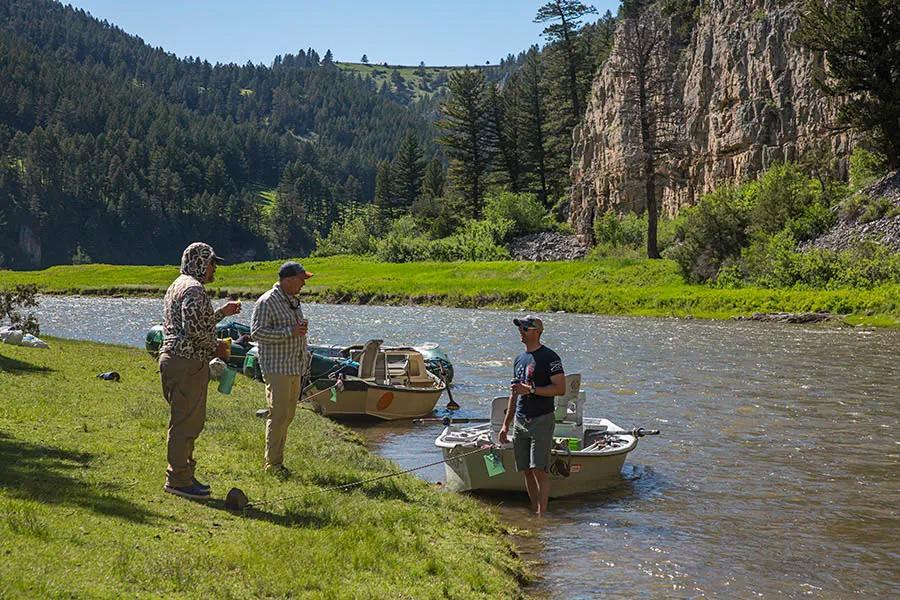
Montana's best fly fishing can occur in the month of June, just as it can occur in all of the other months, but the weather during June can run the gamut. Because June is a transition month, the weather is inconsistent. However, as the month grows warmer, fewer transitional days occur. The beginning of June still has the potential to have some sustained wet weather, even snowstorms with some accumulation. On freestone rivers, the first few weeks of June are typically immediately after runoff, and this is often the most consistent time to find big trout. Just after runoff, streamflows are still high, and water clarity is still turbid; therefore, big fish are feeding with less caution compared to lower streamflows. By mid-June, hatches of stoneflies, caddis, and Pale Morning Duns are common on most of our rivers. From the Missouri River to the Madison to the Paradise Valley Spring Creeks, anglers seeking out the best dry fly fishing in Montana start doing so in June. Montana isn't nearly as wet as the East Coast or northwest, and by mid June high pressure systems begin to set in and precipitation is limited to passing thunderstorms and the occasional multi-day front. The list of rivers with potential for consistent action and strong hatches is long in June--the Smith, the Missouri, the Madison, and a few other smaller rivers like the Boulder.
July and August
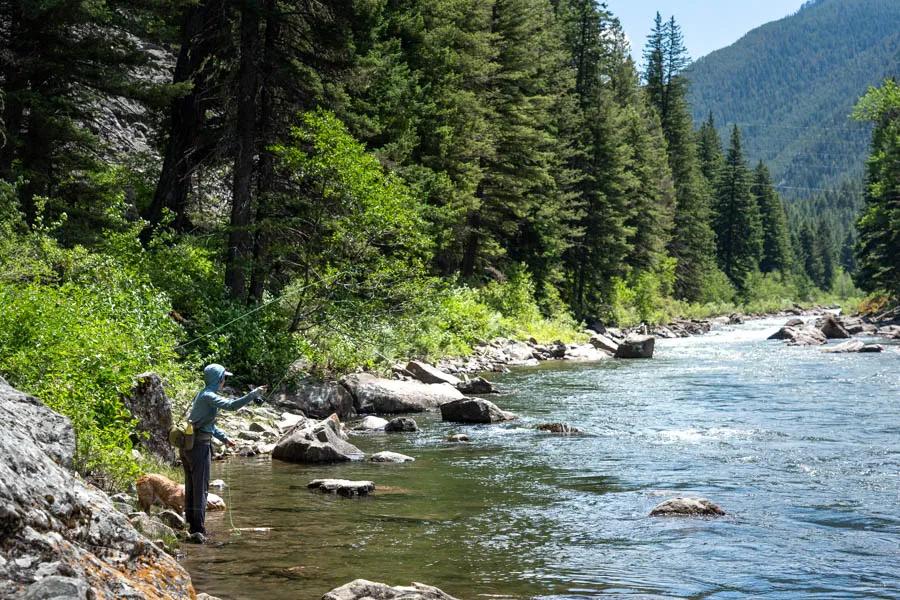
These two months offer the most consistent and easy-living style of weather of the angling season. If shorts, flip-flops, and sunny skies are your vision of going fly fishing in Montana, July and August fit that bill better than any other month. But, these two months are not just reserved for easy-peasy planning; these two months are often dry and pleasant, which makes them good months to explore backcountry waters like the Bob Marshall Wilderness or the wilds of Yellowstone National Park. These two are often the driest months of the year, and precipitation is generally limited to the occasional passing thunderstorm. Every once in a while an occasional shower will bring some light showers for a day or so, but these are rare, and often the overcast skies and moisture are a welcome respite from the otherwise warm and dry conditions. The highlight of July and August is the potential for exciting fishing with terrestrials. From twitching hoppers to small stream angling, these two months are consistently a fan-favorite when fly fishing in Montana. Average highs are in the 80's during these months of the summer, but we occasionally get heat waves. Temperatures in the 90s are considered hot, and temperatures in the low 100s are very rare but possible. Large rivers like the Yellowstone and Madison Rivers are known for exceptional hopper fishing in late July and August, while many of the smaller ranch waters can also provide intimate terrestrial fishing for adventurous anglers.
September
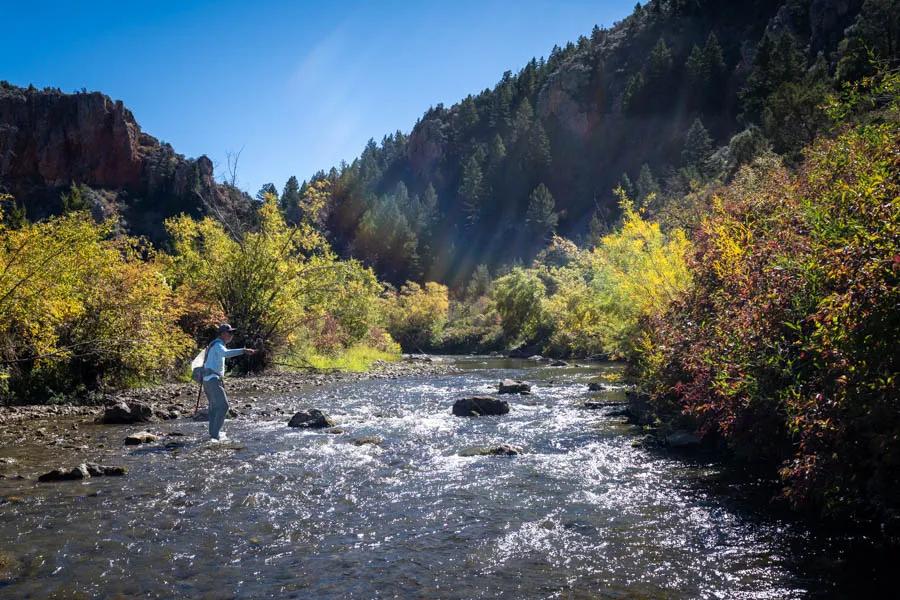
Not quite summer and not quite fall, September in Montana is the month where anything is possible, and everything happens. The first week of September feels a lot different than the last week. Most of our Montana fly fishing guides treat September as a transition month. Stream flows are low and consistent, meaning the trout are easy to find; however, because hatches aren't as thick as in spring and early summer, trout feed a little less consistently in September. The first half of September can feature some spectacular hopper fishing. The combination of lots of grasshoppers with breezy afternoons results in some of the world's best hopper fishing into September. Large rivers like the Yellowstone and Madison Rivers are known for exceptional hopper fishing, while many of the smaller ranch waters can provide intimate fishing for adventurous anglers. The early part of the month is dry, and the daily temperatures are usually very pleasant with highs in the low 80s and 70s, transitioning to slightly cooler and wetter weather later in the month. Occasionally, an early fall storm moves in to bring chilly weather. Valley snow is very rare in September. But by the end of September, the longer nights and potential for a cold front mean the fly fishing with streamers is a legit possibility.
October
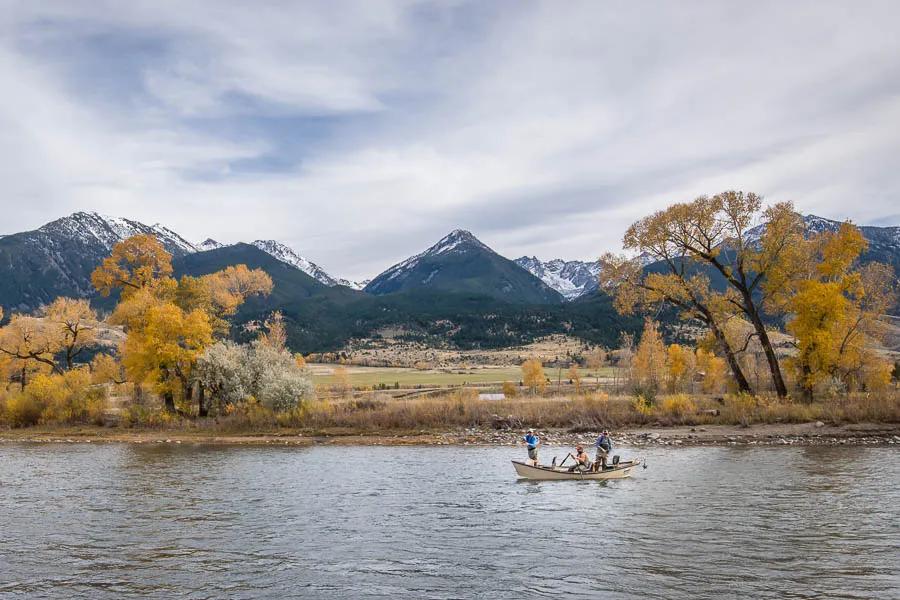
Fly fishing in Montana in October is something every angler should experience at least once. Crisp mornings, fall colors, and the potential for big brown trout set the tone for each day in October. Gone are the summer-time tourist crowds and casual anglers, so local establishments and rivers feel as authentic as any time of the year. Hatches of Blue Winged Olives and October caddis are common, but there is always the potential for inclement weather, despite October being one of the driest months of the year. It is typically very dry overall, but as fronts move in, a day or two of rain or snow is possible. Temperatures at the beginning of the month are usually very pleasant. In most years, October produces great fall weather during the entire month, but in some years, early winter storms move in late in the month. Fishing can be quite good in October, but the difference between good fishing and lousy fishing is usually because anglers are not prepared with quality gear to stay warm. During October, colder weather rarely shuts down the fishing, but it is important to be prepared so that you are still comfortable if cold weather arrives early. Oftentimes, during October, a passing squall can kick-start a Blue Winged Olive hatch, so without proper gear to stay warm, you could miss the best fishing of the day.
November
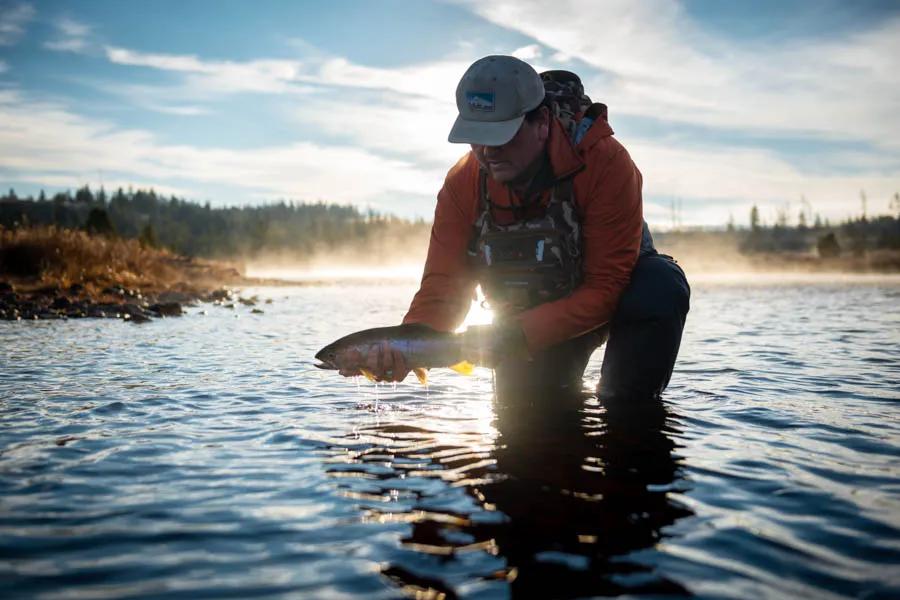
By November, most Montana fly fishing guides have hung up the oars and stored the boat for the winter. The weather is cold, days are short, and hatches are minimal. But, that doesn't mean that fly fishing in November should be completely ignored. In most years, early November feels like fall, but by Thanksgiving, a few cold fronts and heavy snows have occurred, and the short days and long nights make for a very short window of fishing action each day. A few dwindling hatches of Blue Winged Olives occur on larger rivers like the Madison, Missouri, and Yellowstone. The most consistent fly fishing in November is often on the Paradise Valley Spring Creeks. Experienced anglers and those willing to hike and who possess a high-level of patience head to the Madison River outside of West Yellowstone to target migratory brown trout moving up from Hebgen Lake into the main river channel to spawn, or chase rainbow trout targeting eggs of spawning brown trout. Each year, various cadres of anglers head to the Madison in Yellowstone National Park in hopes of landing a trophy-sized trout from Hebgen Lake. November fly fishing in Montana is similar to fly fishing in Montana in March in that the tough, cold days of fishing far outnumber the warm, good days of fishing...but even the toughest day of fishing often beats out any day of working.