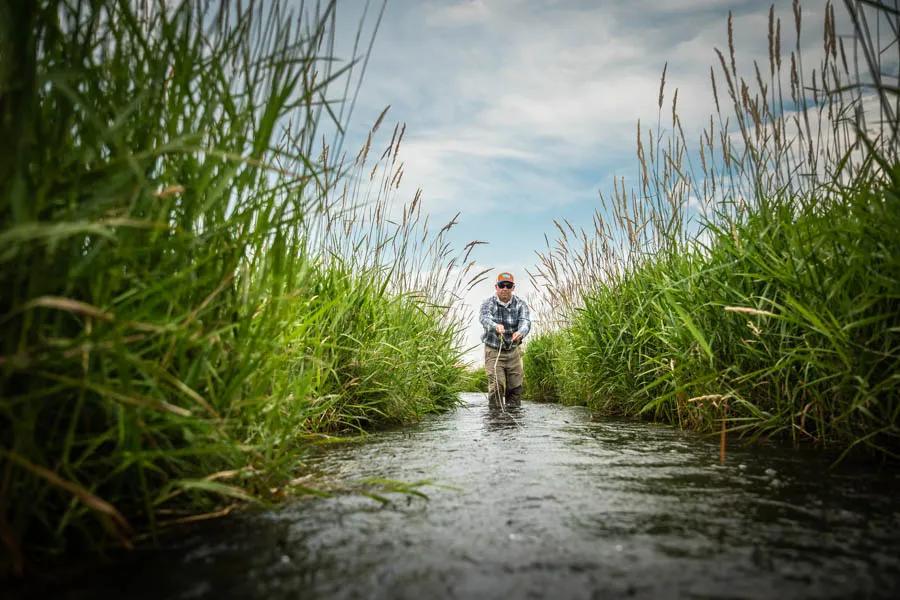

Many of us learned to fly fish on small streams. Whether that was hiking into the backcountry of Yellowstone National Park, an eastern US brook trout stream, or a mountain stream high in the Sierra Nevada range, trout live in some of the most unique fly fishing waters on the planet. Going fly fishing for trout in Montana or anywhere they swim, often means you will be fishing a small creek. And, you might be surprised just how big trout can grow in these small streams. But, to catch fish in small waters, it is important to hone some fly fishing skills. Here are some tips and tricks for going fly fishing in small creeks, no matter where in the world you want to go fly fishing.
Walk More Than Wade
Trout have one of the most advanced biological adaptations to sense vibrations of any other animal. They have a unique lateral line of hypersensitive cells running along both sides of their body and throughout their head. This gives trout a remarkable sixth sense that few other animals have. Being able to sense vibrations is key to a trout's survival because trout are unable to see behind them, they live in rivers that are not always clear, and predators lurk in all directions, both in the water and above. The easiest way to ensure a trout cannot feel your presence is to stay out of the water as much as possible, so when wading, before you make a cast, ask yourself, can I place my fly where I want to without stepping into the water? If you have to step into the water, try to do it in water that is moving fast, as the vibrations from the faster water may mask your vibrations. If this isn't possible, then wade as shallow and as slowly as possible. If you still must wade deep, because trout can sense movement, wade as slowly as possible. This is true whether you are fishing the Madison River's famous 50-mile riffle or stalking big brown trout in New Zealand.
Learn the Steeple Cast--Keep Your Backcast High
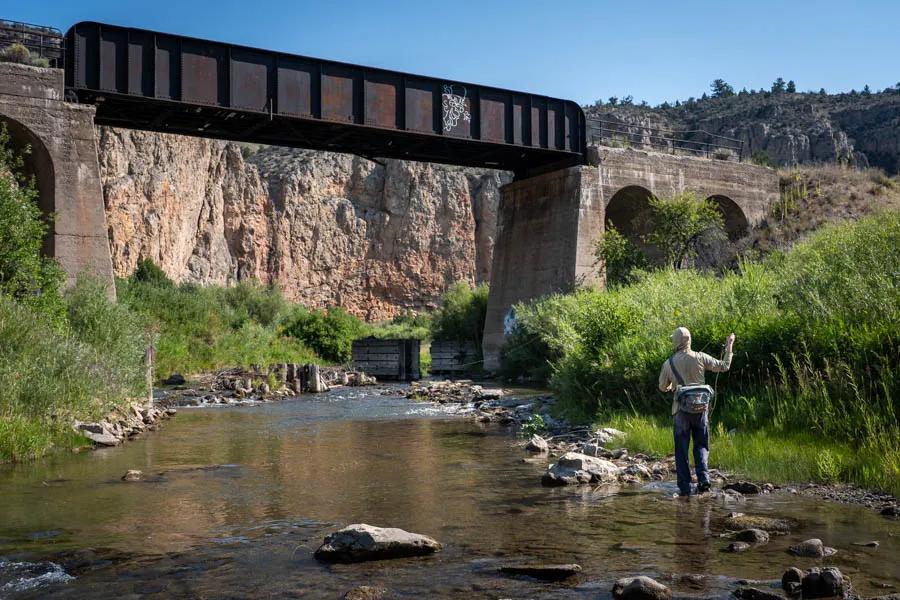
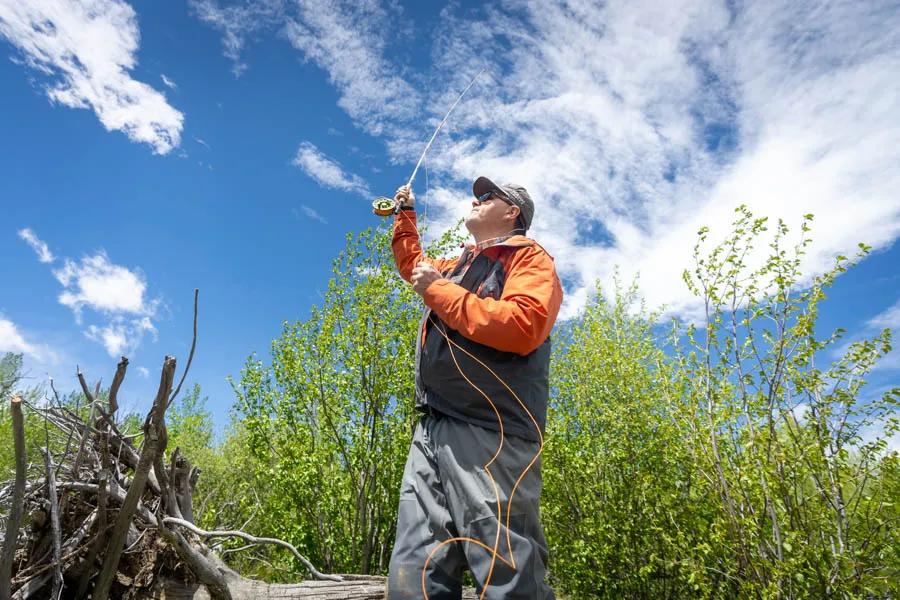
When fishing small streams, oftentimes there are obstructions behind you, so making a normal backcast can be challenging, if not impossible. Learning a steeple cast can help you have more success when fly fishing small streams. A steeple cast is best described as a backcast that goes directly into the sky above rather than behind you. You can perform a steeple cast by having the rod tip low and pointing down towards the water.
Rotate your wrist so your palm and your wrist both face upward. Start to move your arm as if you are making a sidearm-angled backcast, but then sweep the rod upward, directly over your head and into a straight vertical position. Once directly over your head, stop the rod aggressively, ensuring your rod tip is pointed directly into the sky above. Time your pause appropriately before you transition and accelerate into your forward cast. This a great cast to help you learn to catch more fish.
A Side Arm Cast is Key
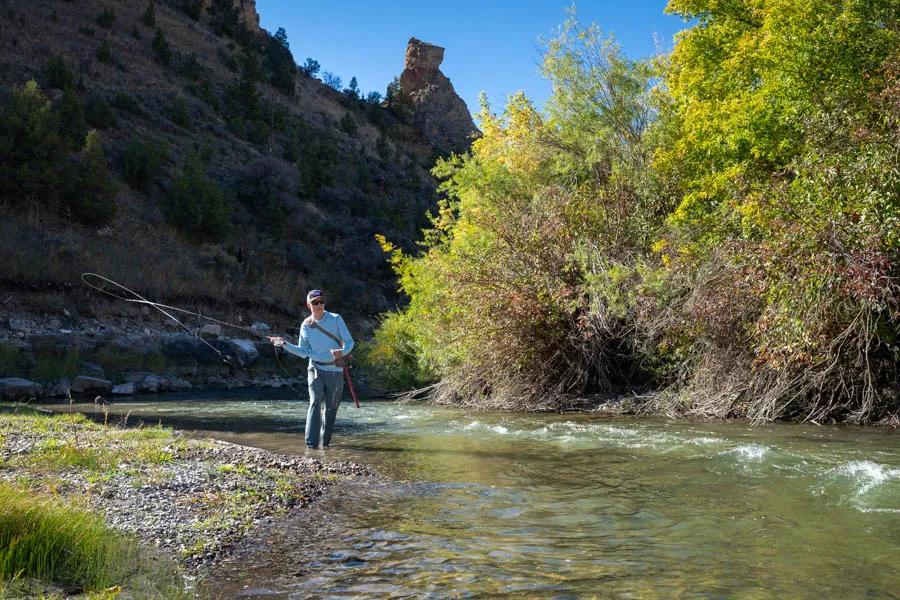
Small streams have lots of nooks and crannies where trout hold, feed, or wait in ambush. Many of these places are tight to banks, near overhanging structure, or along undercut banks. Being able to put a fly in the right place, at the right time, is crucial to having success when fly fishing on a small stream. A tuck cast is exactly what it sounds like--tucking your fly in one of those tight spaces where you might be rewarded with a fish. This can come in very handy during snowmelt runoff when streams are running high. Another massive benefit to a side arm cast on a small stream is that by casting your fly line away from the main current, you can false cast without spooking fish. A sidearm cast also allows you to see your backcast a little so you can help to avoid any brush or snags behind you, allowing you to alter to a steeple cast at the last second if needed.
Travel Light and Cover More Water
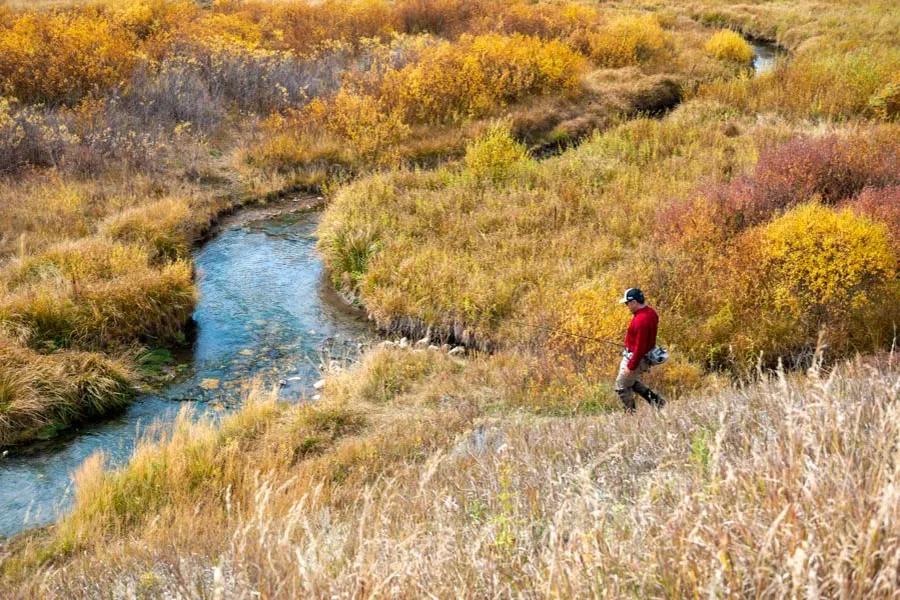
Going on a fly fishing trip in Montana can mean one of two things--you may float fish one of the larger rivers in the state, or you may walk and wade a small stream. You could also venture into Yellowstone National Park and fish one of the world-famous creeks or rivers in the nation's first national park. If you are planning to fish one of the smaller streams in Montana or in Yellowstone National Park, such as the world-famous Slough Creek or the Firehole, being able to cover water and move freely is key to catching more fish. While you may not be able to wet-wade in the spring or fall, you can still focus on pairing down your pack and take just the essentials.
When choosing what tackle and flies to take, consider the season, the possible hatches, the size of the fish, and how you might need to fish. For example, if you are headed to fish the Paradise Valley Spring Creeks during one of their epic Pale Morning Dun or Blue Winged Olive hatches, you can narrow down your pack to only the essentials--5X and 6X tippets in both monofilament and fluorocarbon (mono for dry fly fishing and fluorocarbon for nymphing), floatant and desiccant, and a selection of nymphs to cover adults, emergers, nymphs, and spinners. Because it is unlikely fish will be chasing streamers, the streamer box and heavier tippets and tackle can stay in the car.
Blend in, Don't Stand Out
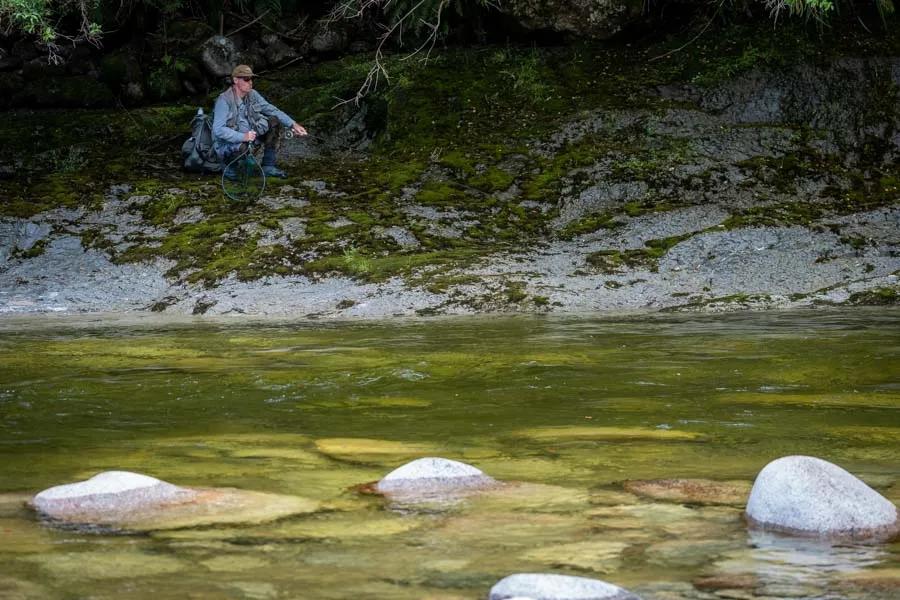
Because most of a trout's predators come from overhead, being camouflaged when fly fishing for trout is nearly as important as choosing the right fly and fishing it appropriately. Moving slowly and acting like a predator is very important, so be sure to disguise yourself and choose clothing that is drab and loosely matches the colors of the surroundings. For example, if you are fishing a mountain stream like many of the best fly fishing rivers near Bozeman, Montana, and the banks are tree-lined or rocky, choose grays and darker greens for your shirt and hat. If you are wearing waders, that isn't usually an issue as it is unlikely you will find a pair of waders that are brightly colored.
Walk Past Easy Access Points and Busy Areas
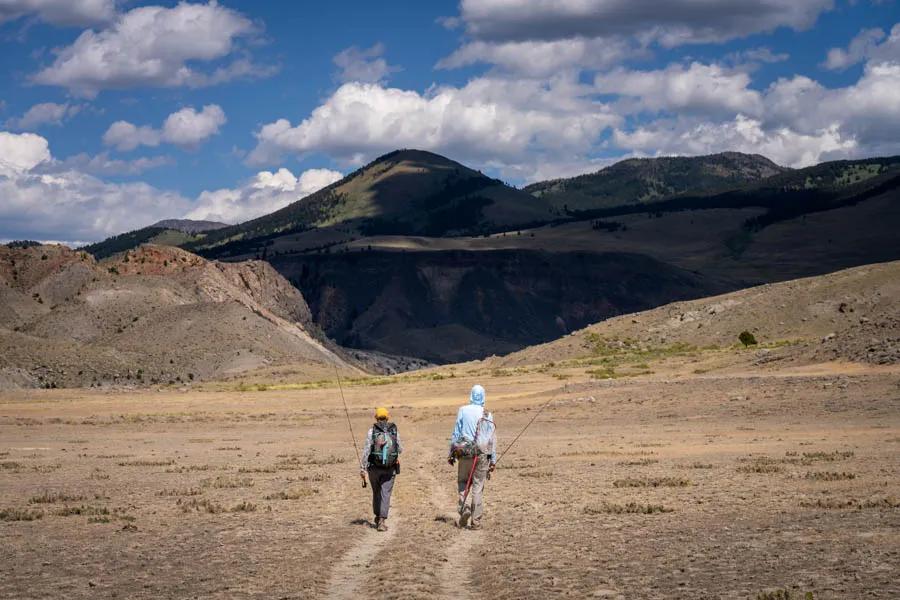
This is pretty simple--the further you walk beyond a popular access point, the more likely you will find better fishing. This is especially true when fly fishing in Yellowstone National Park or on trout waters that have easy access, like a road that parallels the river, like the Gallatin River near Big Sky, Montana. If the river you plan to fish is accessed by an end-of-the-road trailhead or parking area, the further you get from the parking lot, the better the fishing will be.
But, how do you know if you are going to have better fly fishing just by walking? The answer is you don't. However, a good rule is to plan to walk at least 20 to 30 minutes from the parking lot, and you can increase your odds of having more water to yourself and also fishing water that is less fished than the water close to the trailhead or parking lot.
Another good tactic is to "blue line" some possible waters by using a mapping app. This is becoming more and more common. If you don't want to use an app, you can always check in with your local fly shop and chat some with the fly shop staff. They will surely be willing to give you some ideas.
Always Work Upstream
While this may seem painfully obvious, many of Montana's best fly fishing guides can attest that many beginning anglers spook more fish than they ever see. Fish in a small stream are often very spooky, and walking downstream not only kicks up mud and debris, clouding the water and making the fish more skittish; it also spooks fish down into downstream holes, cutbanks, and runs, alerting fish that something is awry. When going fly fishing on small creeks and streams, always walk slowly and work runs and holes from the downstream side. Occasionally you can fish a deep run or cutbank from the side, but do not make your first casts from an upstream angle--approach slowly from downstream and then swing it wide. This avoids any chances of spooking fish.
Fishing upstream also gives you a much better angle to set the hook. When fishing downstream, your fly line is often tight; if there is slack, there is often a lot of it because you are feeding it downstream to get a realistic drift. These two circumstances make it difficult to get a hookset. When fishing upstream or slightly upstream and across, the directional pull of your hookset is more favorable to setting the hook.