

If you are wondering where to go fly fishing in Montana, but maybe have not yet been on a Montana fly fishing trip, the choices can seem endless. Whether you want to find the best place to learn to fly fish or have fished a little but want to go fly fishing in Montana on great rivers for beginners, from the Missouri River to the Madison River or Yellowstone River, there are several rivers that are ideal for learning to fly fish or for a first fly fishing trip to Montana. Here are some of the best rivers on which to learn to fly fish in Montana.

The Missouri River near Helena and Great Falls
The Missouri River is a world-famous river in Montana for fly fishing. Why is the Missouri River a great place to go fly fishing for beginners? For starters, it is filled with fish--annual fish counts estimate the Missouri River has over 6,000 trout per mile, and many of those fish are over 15 inches long. The Missouri River's stream flows are also carefully managed through a series of dams. This constant maintenance of river levels means aquatic growth is healthy and thick, providing ample food for plenty of trout. With so much food available, that means the trout on the Missouri River often feed more regularly and more frequently than in other rivers. The consistent feeding behavior of the Missouri River's trout translates to beginning anglers with plenty of opportunities to get their flies in front of feeding trout.
But the Missouri River is not just for beginners. In fact, experienced anglers fish this river on a regular basis. Anglers travel from all over the world to fish dry flies to rising trout during many of the river's famous mayfly and caddis hatches. The fertile waters of the Missouri River tailwater near Craig are famous for prolific hatches throughout the season. The river is often described as a "giant spring creek." Blanket hatches are frequent and bring pods of fish to the surface to eagerly intercept aquatic insects. Match the hatch fishing on the Missouri is a technical game that values quality of quantity. Caddis and Pale Morning Dun (PMDs) have strong emergence in the summer on the Missouri, and summer is one of the best times of the year to fish the Missouri River. Look for fish to actively feed on emerging and hatching insects once flows drop below 8,000 cfs. At levels below 6,000 cfs, wading anglers can begin to pursue these hatches.
The Madison River near Ennis and Bozeman
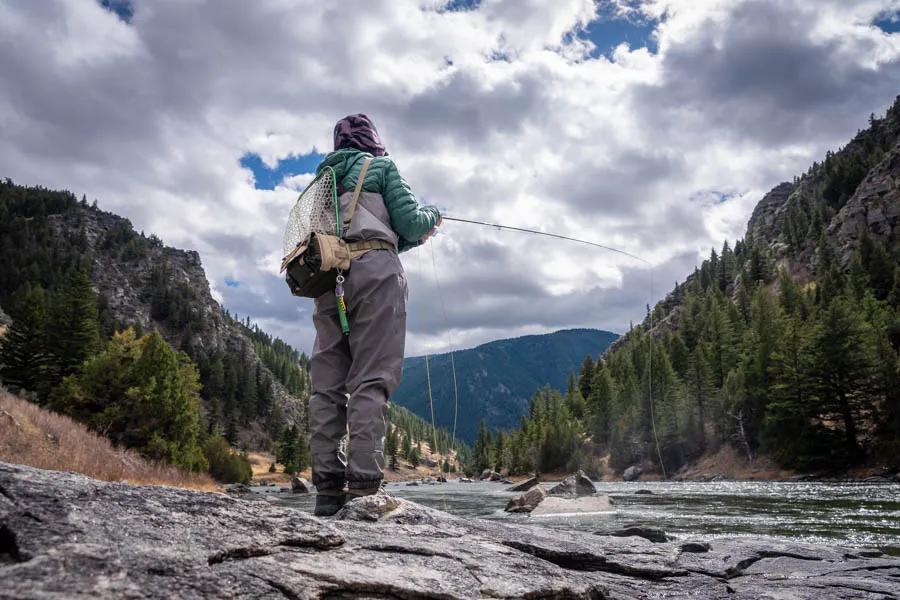
The Madison River begins in Yellowstone National Park when the Firehole and Gibbon Rivers join. While the fishing can be quite good on the Madison River inside Yellowstone National Park, it isn't until it flows out from Quake Lake that the world-famous Madison River begins. With well over 5,000 trout per mile, much like the Missouri River, the Madison River is a fertile river with plenty of trout and plenty of ways to catch them. For beginners, a fly fishing trip on the Madison River is one of the best introductions to fly fishing in the United States, if not the world. For nearly over 50 miles the Madison River flows and eventually empties into Ennis Lake near the town of Ennis. When considering where in Montana to go to learn to fly fish, planning a fishing trip to the Madison River is great for every level of angler. It is a favorite for both DIY anglers and guided fishing trips with some of the best Montana fly fishing guides. Although different sections of the river have their own peak fishing times, there is almost always a location on the Madison that is fishing well nearly every month of the year.
Due to the river’s water quality and natural habitat, it harbors large populations of mayflies, stoneflies, caddis, and more. The Madison River’s hatches are varied and prolific, resulting in large populations of wild trout. The Madison River truly offers some of the most diverse and consistent fly fishing in Montana. The Madison River flows through one of the most scenic valleys in Montana and is flanked by the towering Madison, Gravelly, and Tobacco Root ranges. The impressive scenery, high trout counts, potential for trophy fish, and the variety of ways fish can be caught, all make fly fishing the Madison River one of the best rivers for beginners to learn to fly fish.
The Smith River in Central Montana
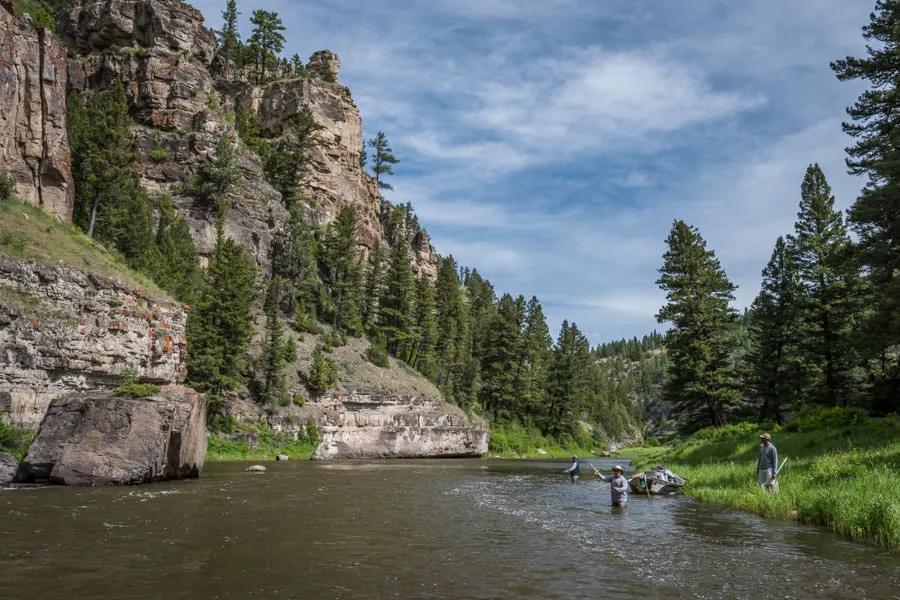
With 60 miles of some of the best trout water in the entire state, a fly fishing trip on the Smith River is ideal for beginners, with one caveat: you must be ok with a full immersion experience. A Smith River fly fishing trip is more than just a fishing trip. In addition to the Smith's trout-friendly habitat and prolific hatches that grow plenty of trout, the Smith River is only accessible by taking a multi-day river camping trip; anglers on the Smith River need to know they will be experiencing several days of fly fishing. But for learning to fly fish in Montana, spending several days learning and fishing only means that your angling skills will certainly improve, and you will finish the trip a much better angler. If fly fishing in Montana is known for broad valleys with views that go on for miles, rugged canyons with picturesque rivers, and waters that are home to several species of wild and native trout, then the Smith River epitomizes the many great things about fly fishing in Big Sky country.
To go fly fishing on the Smith River, you will most likely need a permit to float and camp in the famous 60-mile section that flows from Camp Baker to Eden Bridge. This is where the most consistent fishing occurs, and the state of Montana has created the Smith River State Park--a specially managed river camping permit system with campsites and special regulations. This unique management system has allowed the amazing quality of the Smith River fishery to continue to provide some of the best fly fishing in Montana available to any level of angler. Because the headwaters of the Smith River are heavily irrigated, the main season for floating, camping, and fishing on the Smith is during the months when streamflows are the highest and most favorable for floating and fishing conditions--April through mid-July and again in late September and October.
While the season on the Smith River might seem shorter than, say, the Madison, Missouri, or even Yellowstone Rivers, the Smith River is also unique to many freestones because even during times of muddy or high water that often occur during snowmelt runoff, trout on the Smith River continue to feed. Because of this, there are very few days during the Smith River's angling season when the river is truly unfishable. The Smith River canyon is one of the most scenic fly fishing rivers in Montana as it cuts its way through the Big Belt Mountain range. The impressive scenery, high trout counts, potential for trophy fish, and proximity to Yellowstone National Park make this a must-fish river for any angler, regardless of ability.

The Yellowstone River downstream of Yellowstone National Park
As the longest free-flowing river in the lower 48, a fly fishing trip on the Yellowstone River is special. Unlike the Missouri, Madison, and Bighorn River, the Yellowstone River in Montana doesn't have any dams or lakes that alter its course as a wild, changing, free-flowing river. With abundant islands, side channels, and the longest snowmelt runoff of any river in Montana, going fly fishing on the Yellowstone River is special. But, for beginners, it can be one of the most iconic Montana fly-fishing trips. A Yellowstone River fishing trip has it all: lots of trout, huge trout, a variety of trout species, amazing scenery and a huge choice of different sections to choose from that each have their own personalities. The style of fishing on the 'Stone is classic western big water angling with the most productive techniques often involving big rabbit-fur streamers and large foam attractor dry flies.
While the Yellowstone River doesn't have the high fish counts like the Madison or Missouri, when fly fishing the Yellowstone River anglers experience a trout river that has been mostly unchanged for thousands of years--something that is rare to find with so many rivers being impeded by dams. The mighty “Stone” offers more than 200 miles of high quality trout waters that include a variety of fish species and water characteristics. Many avid anglers consider this big and sometimes brawling freestone river to be the quintessential Montana fly fishing experience.
Many of the veteran fly fishing guides in Livingston and Bozeman have a special love affair with the Yellowstone River. Because of the massive amount of water that the river has to offer, the wide range of water levels, the diversity in the river sections, and the seasonal changes in fishing patterns, the Yellowstone River holds a special place in the hearts of many guides and local anglers can take years before a fly fisher truly understands the full majesty of this amazing river, but with its population of hungry trout and mountain whitefish, even beginning anglers can enjoy and appreciate the special Yellowstone.
The Gallatin River near Big Sky and Bozeman
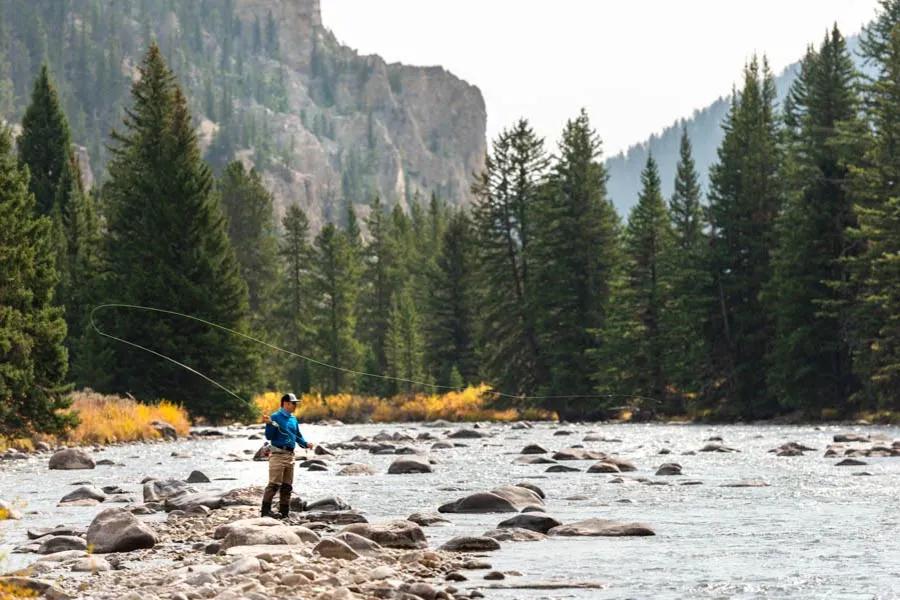
The Gallatin River begins in the mountains of Yellowstone National Park, where it feels like a wilderness river and it is not unusual to see grizzly bears and moose along the river's willow-lined banks. As the river exits Yellowstone National Park it enters the Gallatin Canyon near Big Sky and flows for almost 40 miles through a steep, forested canyon. While the river is free-flowing and undammed, the water in Gallatin Canyon is easily accessible and an ideal place for beginning anglers. With lots of riffles and pocket water, there is ample habitat to grow plenty of trout. Once the river exits the Gallatin Canyon near Bozeman, access is much more difficult as it flows through several large swaths of private land. Fishing from a boat is not allowed on the Gallatin River, so anglers n need to be good at walking-and-wading to truly enjoy the Gallatin River.
The Gallatin River is a very picturesque river with crystal-clear water and lots and lots of trout. The river is not known for trophy trout like some of the other larger rivers in the area, but the beauty of this river and its high trout density make it a special Montana river for fly fishing. Because of the very high trout density, this river often produces fast action and high catch rates. For catching fish for beginners on the Gallatin River, it is one of the best. There may be some spring creeks and tailwaters that have more prolific hatches than the Gallatin, but no other river in Montana has the accessibility to fish these hatches as the Gallatin River. And, you wouldn't know it, but very few rivers in Montana have a season that lasts as long as the Gallatin River in the Gallatin Canyon near Big Sky--this is mostly due a few springs that flow into the river, so trout can feed on the Gallatin River nearly every day of the year. Because the Gallatin River is so accessible and it can be fished year-round--even in winter--it is an ideal stream for learning to fly fish.