

April in the Bozeman area means a mix of spring, winter, and a hint of summer. Hatches of Blue-Winged Olives can happen any day on any river near Bozeman. Rivers are out of winter mode, and more Montana fly fishing guides are on the water every day than not. Within an hour's drive of Bozeman flow some of the world's most renowned trout rivers and creeks. With so many top-quality fly fishing waters in one area, how do you choose the best place to go fly fishing near Bozeman, Montana? Because April fly fishing in Montana is not-quite-spring-yet-not-quite-summer, it is crucial to know where to go fly fishing in Montana in April. Here's our guide to fly fishing in Bozeman in April.
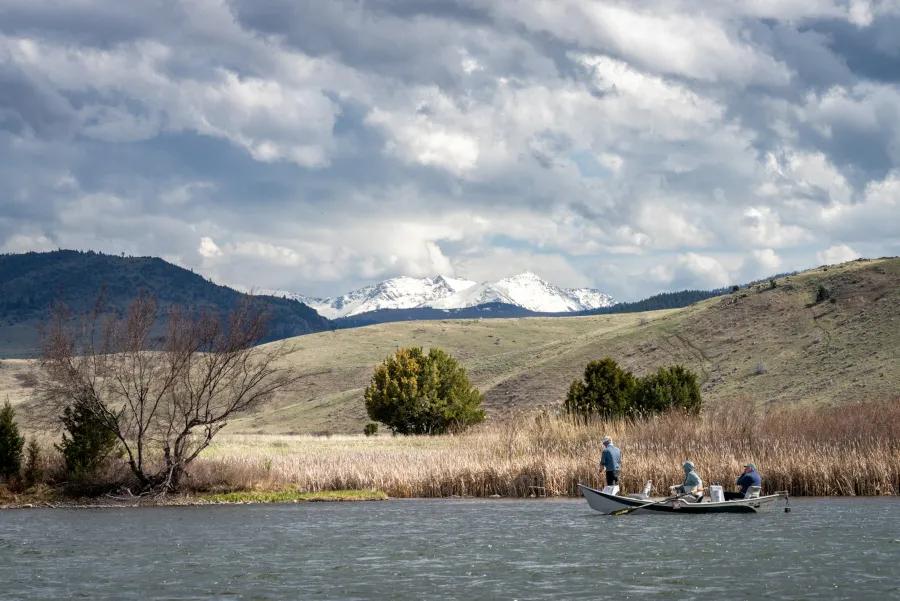
Rivers
Knowing exactly when in April the fly fishing rivers near Bozeman will be at their best isn’t an exact science. Seasonal weather patterns, snowpack, and short-term weather all play a role. Below is an outline based on decades of experience from some of Montana’s best fishing guides:
Gallatin River—boundary of Yellowstone National Park to confluence with the Madison and Jefferson Rivers near Three Forks. Most likely fishable all month.
Early to mid-April is the most consistent fishing window of the month because flows remain stable and clear. As the days of the month tick away, warmer weather means warmer water temperatures, which means more actively feeding fish. However, warmer air temperatures can also mean spring snowmelt runoff can commence, causing a muddy river.
April on the Gallatin River is best fished with two-fly nymph rigs. Because nymphs are active year-round on the Gallatin River, and in April, water temperatures are typically on the rise more than on the drop, nymphs become that much more active. Choose beadhead or weighted nymphs that imitate mayflies, caddis, or stoneflies. Anglers desiring to fish streamers on the Gallatin River in April will find some opportunity, but the Gallatin River in April is best fished with subsurface nymphs. A slowly stripped or lightly drug streamer may entice some fish in slower, deeper water. For two-fly nymph rigs, choose a stonefly pattern for one of the flies and then a smaller nymph, such as a Pheasant Tail or Prince Nymph, as the second. A size 8 or 10 is best for the stonefly nymph, and a size 12 or 14 is best for the second fly. Because hatches of BWOs, March Browns, or caddis are possible in April, it is wise to carry a variety of dry fly patterns. For streamers, black and olive are the go-to color choices, and most anglers fish a smaller size compared to choices for the Yellowstone or Madison Rivers. The Gallatin River is home to plenty of trout, but on average, they run smaller than other rivers. The exception can be some of the deeper runs of the river once it enters Gallatin Valley—here some true lunkers lurk.
If hatches of Blue Winged Olives (BWOs), March Browns, or caddis are to occur, they will emerge around mid-day. BWOs will hatch on a cloudy, overcast or rainy day. March Browns, sporadic at best, may hatch midday as well.
There is no need for early starts on the Gallatin River in April. Trout will become active as the water temperatures warm up. As the saying goes, there is never bad weather, only bad gear. On the Gallatin River in April sun, rain, and snow can all happen on the same day. And many days the worst weather creates the best fishing conditions so be prepared to be flexible and fish in a variety of changing weather conditions.
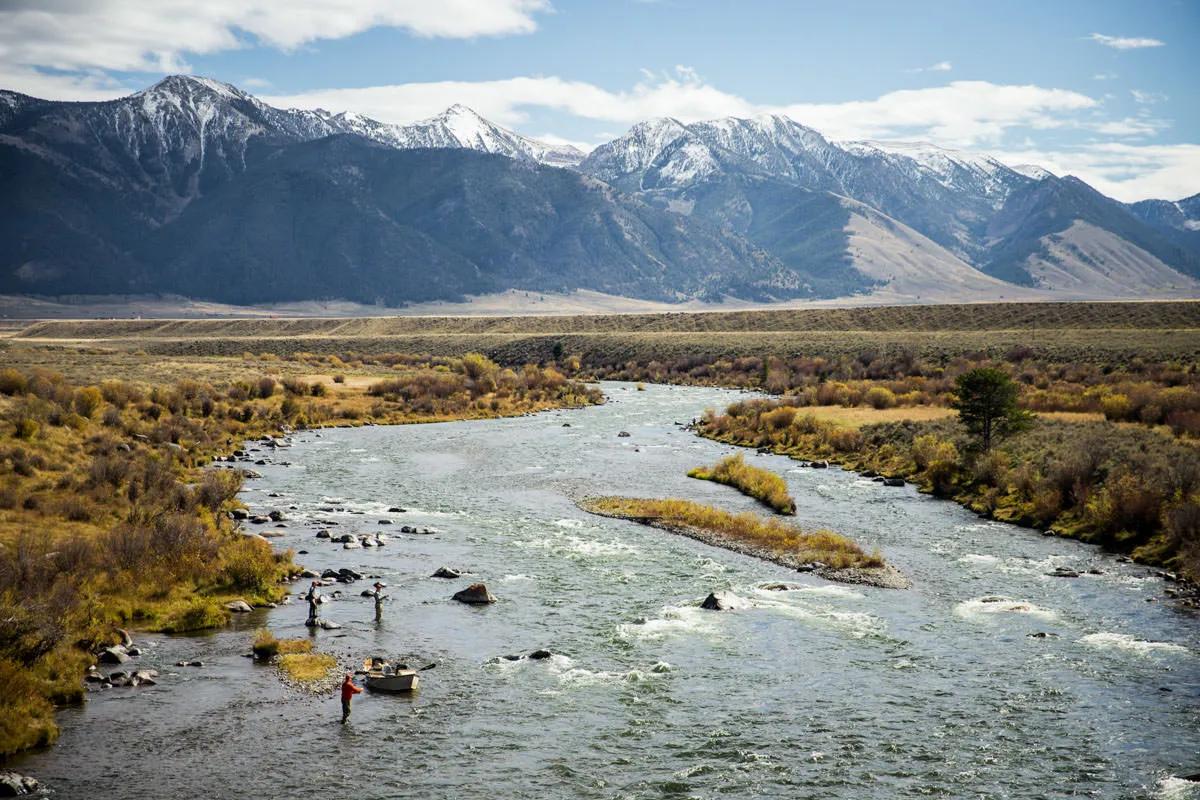
Madison River—Lower section near Bozeman and Upper section upstream of Ennis to Quake Lake. Fishable all month.
April fly fishing on the Madison, and the month-long progression of its fishing action, means that this is the month when fishing on the Madison kicks into gear. From the river outside of Bozeman and then south towards Yellowstone National Park, anglers desiring consistent nymph fishing, matching-the-hatch opportunities, and the potential for big fish on streamers can find success in April. Because the river has two dams, flows on the Madison River in April are often consistent. Unlike nearby freestone rivers that can become high and muddy due to snowmelt runoff, the Madison River typically flows clear and predictable.
As Montana glides out of winter and slips into spring, the fishing on the Madison follows suit. From April 1 through April 30, we see an increase of almost 10 degrees F in our daily high temperature. This translates into a variety of fishing options on the Madison throughout the month of April.
A typical day fly fishing the Madison in April begins with nymph fishing double-nymph rigs below a strike indicator. Various mayfly and stonefly nymphs, dead-drifted or slowly swung, often pick-up most fish. Anglers committed to slowly stripping or dragging streamer patterns can also find some success, and potentially hook a trophy trout. As conditions change related to changes in weather—more or less sunshine, overcast or rainy, etc.—hatches of Blue Winged Olives (BWOs) or March Browns may begin around mid-day, especially towards the latter half of the month. This is the time to take off the strike indicator and weighted nymphs and fish the appropriate dry fly. For both BWOs in a size 16 or March Browns in a size 10 or 12, parachute patterns are ideal, and for a caddis hatch, choose a favorite darker bodied caddis pattern in sizes 12-16.
Trout will still be opportunistic when there is no hatch. When nymphing, try a fly rigged with a larger pattern that will move bigger trout, then use a second fly of a smaller pattern, such as a BWO nymph. On the Lower Madison below Ennis Lake, anglers may have success with crayfish, sculpins, or worm patterns as the lead nymph. On the upper river, try a larger stonefly nymph, sculpin or worm pattern as the lead fly. Early in the month of April, there are still a lot of trout eggs in the system and anglers may also find success with smaller egg patterns for fly fishing the Madison in April.
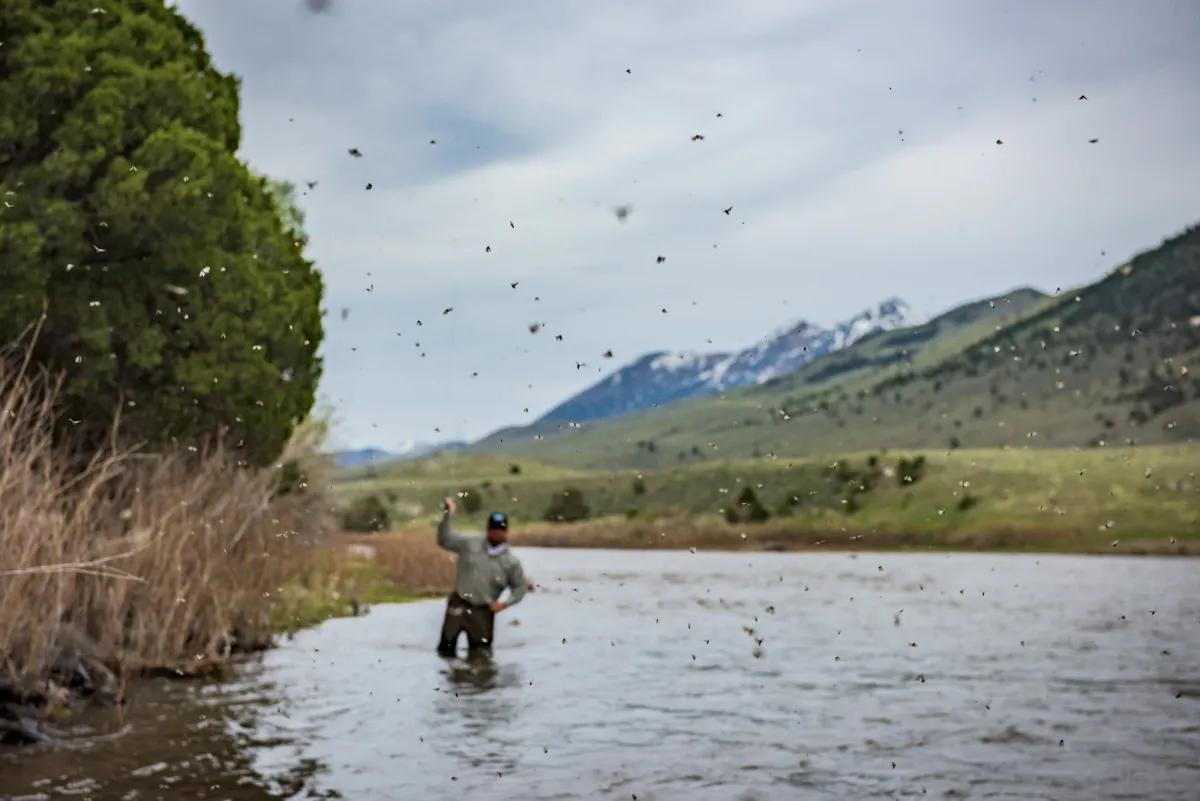
Yellowstone River—downstream of the Yellowstone National Park boundary to Billings. Most likely fishable all month.
April on the Yellowstone River can be one of the best months of the year for consistent fishing...but it is all dependent on localized weather patterns. From where the river leaves Yellowstone National Park to downstream of Columbus, all the way to Billings, fly fishing on the Yellowstone River in April is a favorite of local fly fishing guides. If heavy spring rains or an early start to summer-like temperatures occur, the river can become muddy and unfishable. Such is the nature of Montana’s longest and largest free-flowing, undammed freestone trout river.
On most days, fly fishing the Yellowstone in April, anglers can find fish using two-fly nymph rigs. Choose beadhead or weighted nymphs that imitate mayflies, caddis, or stoneflies. Anglers willing to drag a large, heavily weighted streamer or Wooly Bugger pattern may entice one of the river’s large brown trout to strike. Dry fly anglers can find some success prospecting with attractor patterns in sizes 8-16, but, unless mayflies or caddis are hatching in abundance, many trout in the Yellowstone River prefer to feed subsurface. Because of this, dry fly-dropper nymph rigs are the go-to choice of rig for dry fly fishing on the Yellowstone in April.
If hatches of Blue-Winged Olives, March Browns, or caddis are to occur, they will emerge around midday. When this occurs, dry fly anglers can experience a special sight—thousands of insects bundled together creating a floating mat of trout food. Depending on the type of insect species hatching, a size 16 parachute mayfly pattern or a size 14 caddis dry fly should be fished.
Experiencing a hatch of this abundance is not always a daily occurrence, but always be prepared. Due to the ever-changing weather of the month, fishing the Yellowstone River in April is multi-faceted. This day-to-day nature of the fishing action is one of the appeals of the wild and free-flowing Yellowstone—you just never know what you’re going to get.
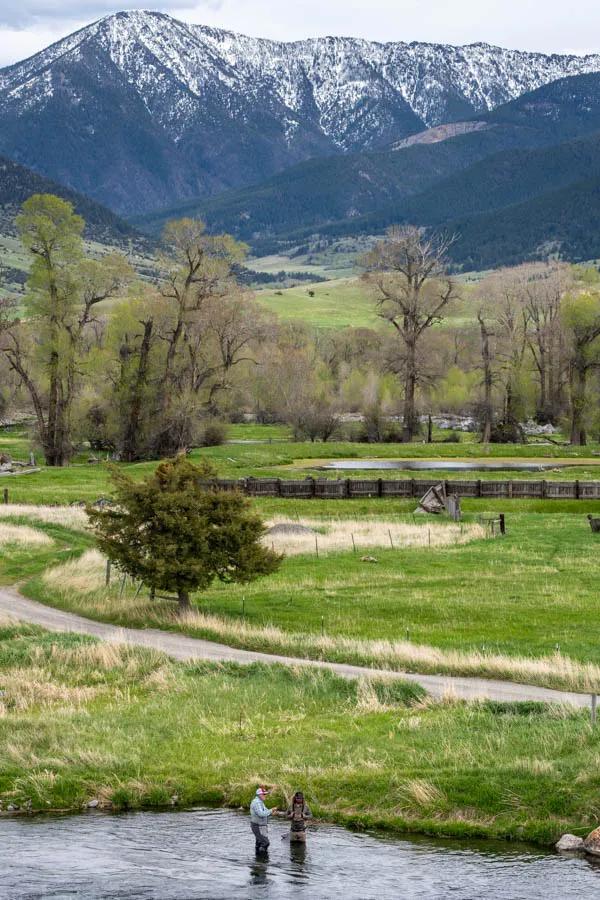
Paradise Valley Spring Creeks—near Livingston. All month, but best mid-June and on.
April on any of the Paradise Valley Spring Creeks is a favorite of our local fly fishing guides. There are often strong hatches of Blue-Winged Olive (BWOs) mayflies and consistent action with midges, but most midge action will be with subsurface flies. A typical day fishing DePuy’s or Armstrong’s spring creeks in April often begins with fishing a shallow-water, sight-fishing nymph rig with size 18 or 22 midge or mayfly nymphs. Long leaders of 12- to 15-feet are best, tapered to 5X or 6X fluorocarbon tippets. Around mid-day, the BWOs begin to hatch, and anglers with moderate casting ability switch to targeting trout eating BWOs on the surface.
A strong BWO hatch can last up to four hours, but most BWO hatches in April last around two to three hours. Like a well-written movie, a BWO emergence on the spring creeks will draw in the angler and trout during the early phases of the hatch, then there will be a period of peak activity with plenty of trout rising to adults or emergers, followed by the easing of activity. Most BWOs on the spring creeks are sizes 18 to 22. Dry fly anglers should be armed with supple tippets in sizes 5X and 6X, plenty of quality floatant that works well with CDC, and the ability to execute a reach cast.
The spring creeks are home to massive populations of scuds and sowbugs. These aquatic insects do not hatch like a midge or a BWO, but when fly fishing the spring creeks in April, spring creek trout gobble up these high-protein-packed morsels on a regular basis. Sight-fishing opportunities abound on the spring creeks in April, so a tandem, shallow water rig on a 12- or 15-foot leader tapered to 5X or 6X fluorocarbon with a size 18 or 20 scud, sowbug or midge can produce fish. Most experienced spring creek anglers use small yarn or light pinch-on indicators and small size—6 to 12—split shot. Because most currents on the spring creeks run slower than larger rivers, less weight and shorter depths from fly to indicator are essential. Successful patterns include Wondernymphs, JuJu Baetis, Zebra midges, and WD-40s.
Streamer anglers may find some success on the spring creeks in April, but most spring creek trout consistently eat dozens of small flies rather than a few larger flies. Think of them as foragers rather than predators. Generally speaking, streamer anglers on the spring creeks choose a light color on a sunny day and a dark color on an overcast day, but the most successful streamer is sparsely tied and loosely weighted.
April sees many rainbow trout, Yellowstone cutthroat trout, and cutthroat-rainbow hybrid trout still spawning or recovering from spawning. All three of the Paradise Valley Spring Creeks are important spawning habitats for Yellowstone River trout. To ensure the long-term health of the Yellowstone River’s trout populations, do not target actively spawning trout or trout near redds. Be extremely cautious while walking and wading, and avoid walking on redds or fishing in the vicinity of redds. Redds are sections of small cobble in the stream bed cleared by spawning fish. Additionally, if a spawning or spawned-out trout—skinny, dark in color, and has the appearance of looking beat-up and tired— is caught, please release as quickly as possible.
Hatches
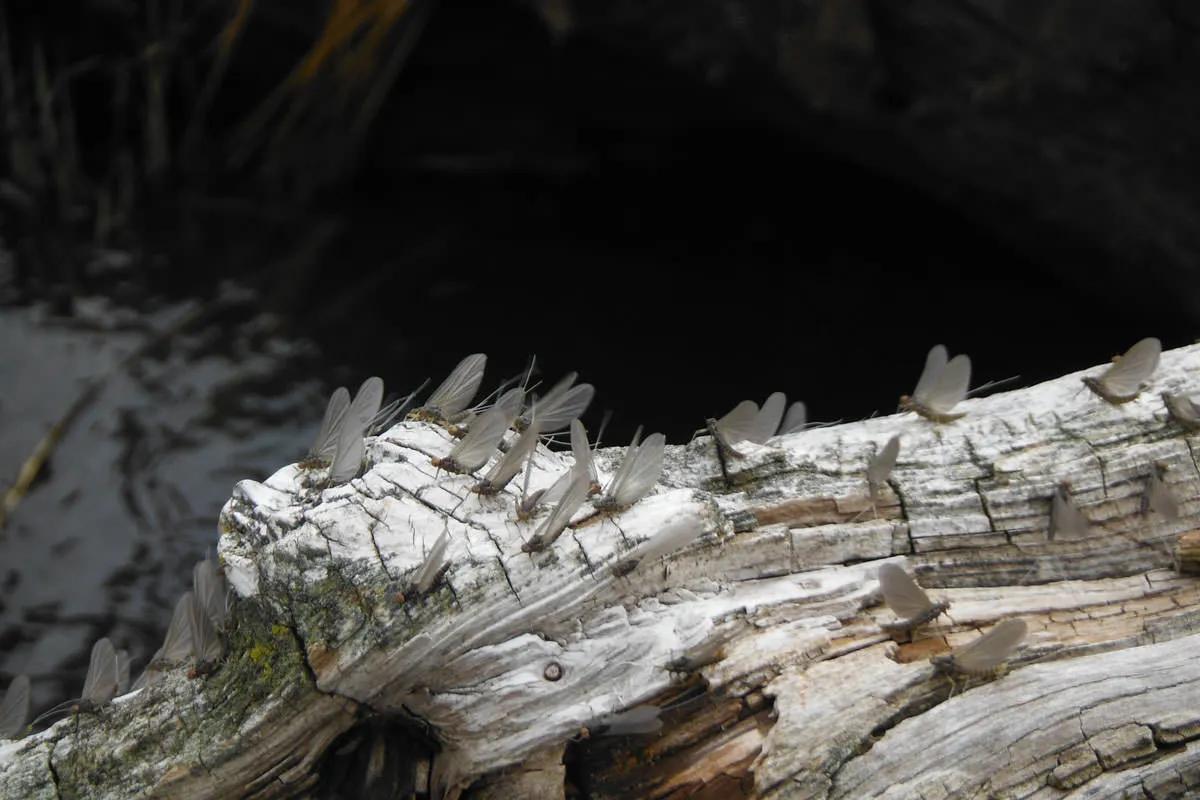
During April, on most rivers near Bozeman, hatches of Blue-Winged Olives (BWOs) and March Browns can be a daily occurrence. On sunny days, these mayfly species will just trickle off and may not bring trout to the surface. On cloudy days, expect more intense hatches and look for rising trout in slower water. On warmer days, caddis can begin to show up on the Yellowstone and the Lower Madison by late April. On the Upper Madison, caddis often show up in early May. On the Gallatin and parts of the Yellowstone River, it is possible to see some early-season stoneflies—skwala, capnia, and pnemora—may also hatch, so anglers fond of large dry flies can enjoy some action if in the right place at the right time. As the month progresses and local weather becomes more spring-like than winter-like, caddis can hatch in prolific numbers. Most caddis will be size 14 and 16 and are dark-bodied. However, as the warmer weather ensues and the month’s end nears, on the Gallatin and Yellowstone Rivers, the risk of off-colored water and rising flows increases, thus decreasing the clarity of the water and the onset of spring runoff.
Hatches on the spring creeks are going to be more prolific than on larger rivers. There are strong hatches of Blue-Winged Olive (BWO) mayflies. On sunny days, these mayfly species will trickle off and may not bring trout to the surface, but even if adult insects are not seen on the water’s surface, spring creek trout are most likely chowing mayfly nymphs or emergers subsurface. On cloudy days expect more intense hatches and look for rising trout in slower water, in runs, around weed humps, or along seams created by depth changes.
Midges are active year-round on the spring creeks and make-up a massive chunk of a trout’s diet. Fishing midge patterns is best done subsurface in some of the deeper holes. If adult midges hatch, most spring creek trout rarely feed on hatching midges because adult midges rarely lay still on the water, rather they skitter in search of a mate.
Scuds, sowbugs, aquatic worms, and craneflies are also abundant in the Paradise Valley Spring Creeks. Strictly subsurface, these insects are active throughout April and readily available to hungry trout. Scuds and sowbugs are not exactly what an angler may think of when it comes to fly fishing a spring creek, but they are part of a trout’s diet. Even if they are different, a trout on the spring creeks in April may gobble up a size 18 or 20 scud or sowbug.
Weather
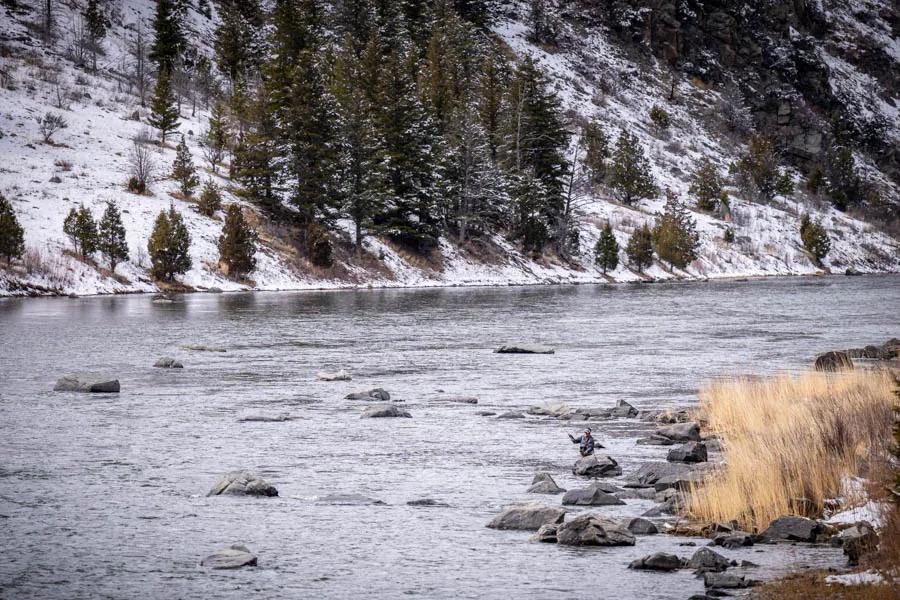
April fly fishing on many of our Montana rivers is one of the wetter months of the year, with an average of seven days of measurable rain or snow. Daytime high temperatures vary from the beginning of the month to the end of the month, with an average daytime high temperature range of 40s to 70s degrees F. The weather in April can be a variety of snow showers, sunshine, and rain showers—and all can occur on the same day. Wind, as Montana changes from winter to spring, is common on the Yellowstone and Madison Rivers in April. But with plenty of rivers and many of them flowing through canyons, finding a place to fish on a windy day is not as hard as it sounds--just inquire locally.
Early to mid-April is the most consistent fishing window of the month. Unless a large rainstorm moves through, flows remain stable and clear. But as the days of the month tick away, warmer weather means warmer water temperatures, which means more actively feeding fish. However, warmer air temperatures can also mean spring snowmelt runoff can commence.
The ideal scenarios to maintain consistently good fishing on Montana's freestone rivers in April are daytime highs not above seventy degrees and nighttime lows not above freezing. If this weather pattern holds for several days, anglers can experience some exceptional fishing opportunities, including the start of the famous Mother’s Day caddis hatch, which, if conditions dictate, can occur in April and not May. On Montana's tailwater rivers of the Madison, Missouri, and the Paradise Valley Spring Creeks, snowmelt runoff in April is rarely a factor in the opportunities to go fly fishing on Montana's tailwaters and spring creeks.