

It’s a nice spring day, and you’re excited to fish your favorite spot. The sun’s out, and it’s looking like it will be a beautiful day. The fishing was great last week, and you’ve been daydreaming about getting back all week at work. Crossing the river over the bridge just before the parking area, you look down at the river. It’s brown, muddy, and swollen. A tree floats down in the swift current...it is runoff season, and it is time to pick the right spots for fishing.
Here are the best places to go fishing near Bozeman during runoff.
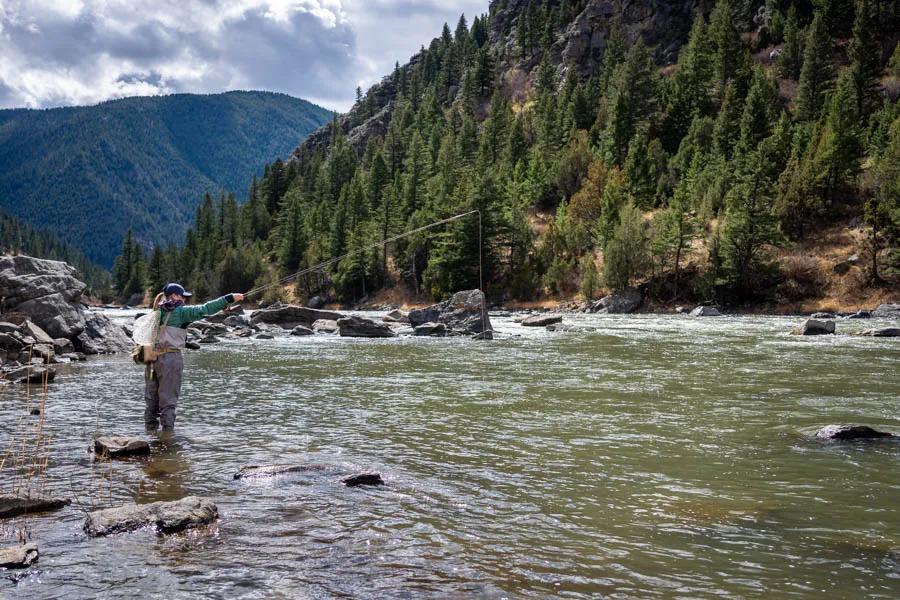
The Madison River
The timing of runoff on the Madison River changes from year to year depending on the snowpack. Typically, the runoff on the Upper Madison begins around late May and extends until mid to late June. In extremely high water years, runoff can extend into early July. Runoff on the Madison is generally shorter than that of the surrounding rivers, and it clears earlier than the Gallatin River or the Yellowstone River. The Lower Madison is more resistant to runoff and, in most years, provides good fishing even during June. The Upper Madison River actually fishes very well during the middle of runoff upstream of the West Fork near Lyons Bridge. Hebgen Dam releases clear water year-round, and the two small tributaries (Beaver Creek and Cabin Creek) between Hebgen Lake and Quake Lakes only put enough sediment in the Madison to turn it an “army green” color.
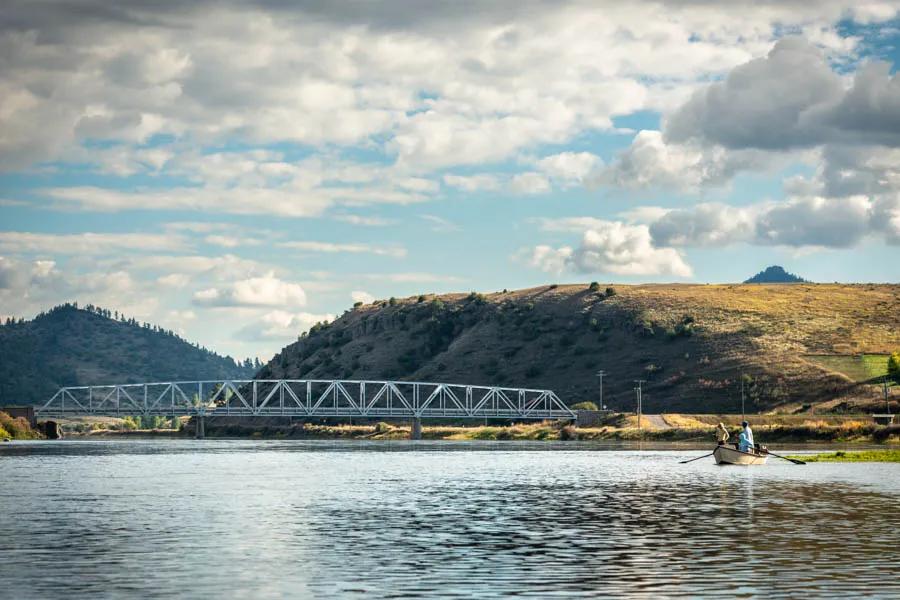
The Missouri River
When runoff is occurring in other rivers in Montana, the Missouri River often has some of the best fishing of the year. May and early June on the Missouri River are also great for dry fly anglers wanting to experience some of the Missouri River’s world-famous “pods” of rising trout. As long as water temperatures remain above 50 degrees F, look for hatches of Blue-Winged Olives or caddis. For BWOs, look for fish to rise to a well-presented dry fly in sizes 14 to 16. For caddis, choose flies in sizes 14 to 16. For either species, flies tied with CDC—Cul du Canard—are favorites of many of the river’s dry fly experts. June on the Missouri River is about timing things to match with the desired type of fishing. It is fair to have high expectations for quality fishing on the Missouri River in June—water temperatures are ideal for trout, hatches are strong, and the river is full of fish.
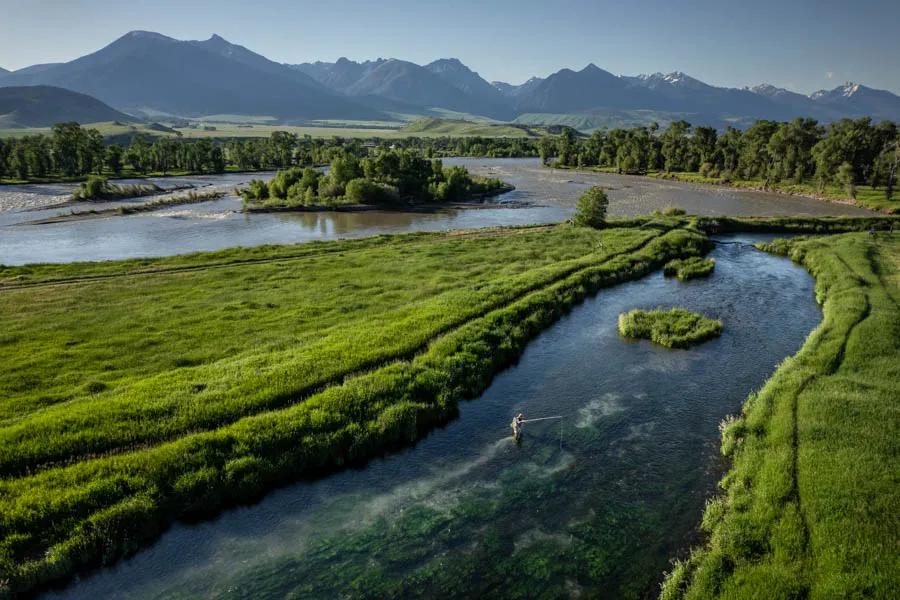
Paradise Valley Spring Creeks
With clear and cold flows throughout May and June, the Paradise Valley Spring Creeks are ideal for fly fishing during runoff near Bozeman. May on the Paradise Valley Spring Creeks is a unique month. The prospect of strong hatches of Blue-Winged Olive mayflies dwindles as the month progresses, and caddis hatches in May tend to also be stronger early in May. In most years, by the middle of May, the spring creeks are mostly fished with subsurface nymph rigs. Granted, most of that subsurface nymph fishing is still sight fishing—fish are seen feeding near the bottom or suspended in current seams. As spring fades into summer, June is the month many Paradise Valley Spring Creek veterans look forward to each year. Similar to many rivers in southwest Montana, the fishing in June on the spring creeks gets better as the month progresses. Early June on Nelson’s, DePuy’s, and Armstrong’s is going to feature very consistent sight-fishing opportunities with shallow water nymph rigs. Plenty of fish can be caught on the spring creeks in early June, but it isn’t until mid-June when Pale Morning Dun (PMDs) mayflies begin to hatch that the spring creeks live up to their world-famous reputation.
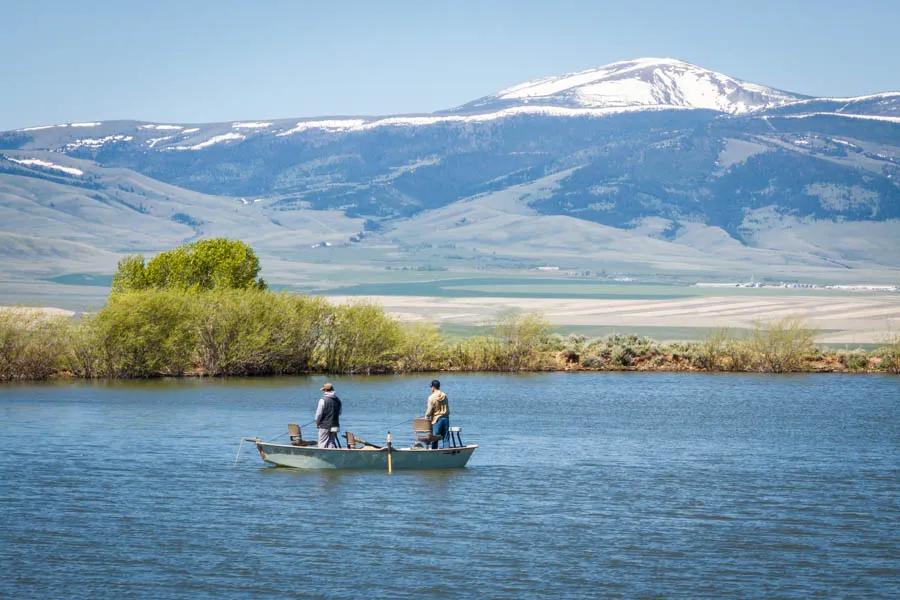
Lakes (& private ranch lakes)
When the Gallatin River near Big Sky and the Yellowstone River flowing from Yellowstone National Park and near Livingston are running too high and muddy to fish, fishing some of our local locals is a good way to find opportunities for fly fishing for trout. Ennis Lake, Harrison Lake, and Hebgen Lake are our most well-known public lakes for fishing during snowmelt runoff. But there are also many smaller private ranch lakes and ponds that are at their best in May and June during snowmelt runoff.
A few of our favorite small ranch lakes are Burns Lake, the Sitz Lakes, and Jones Lake. While these are just a few, we can arrange fly fishing during runoff near Bozeman on many other lakes.
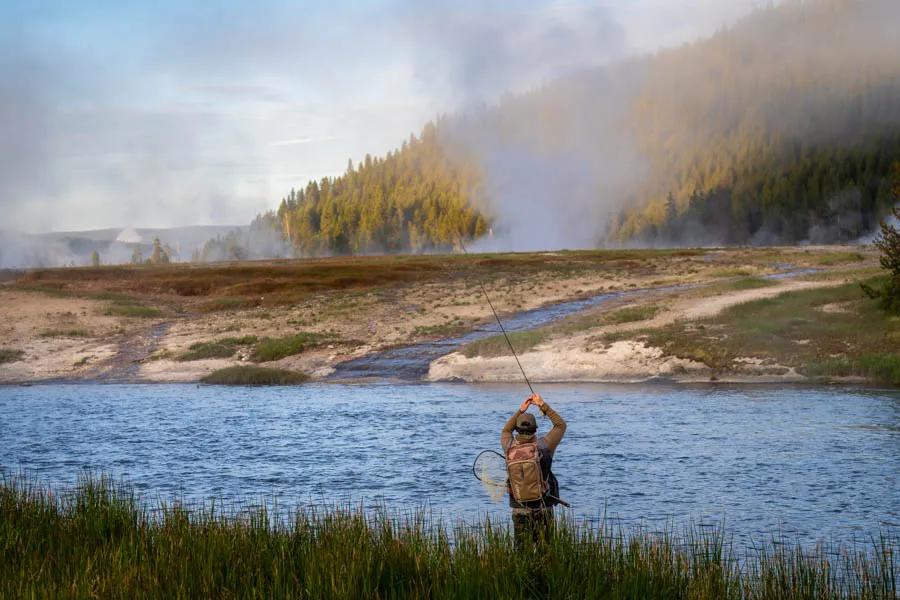
Firehole River, Gibbon River, Madison River in Yellowstone National Park
Now that these world-famous waters in Yellowstone National Park are open on May 1st, the fly fishing in Yellowstone National Park is now a great way to fly fish when other rivers are heavy into snowmelt runoff.
The Firehole River
Because the Firehole River is heavily influenced by thermally heated water, it behaves differently from your typical Rocky Mountain trout stream. It produces excellent fishing early and late in the season, but it becomes too warm during the hot summer months. From opening day, it will sometimes be high and tea colored, but we have never seen the river too muddy to fish. Consistent dry fly fishing can happen right away, but after high snow years can take a week or 10 days to really get cranking. 4
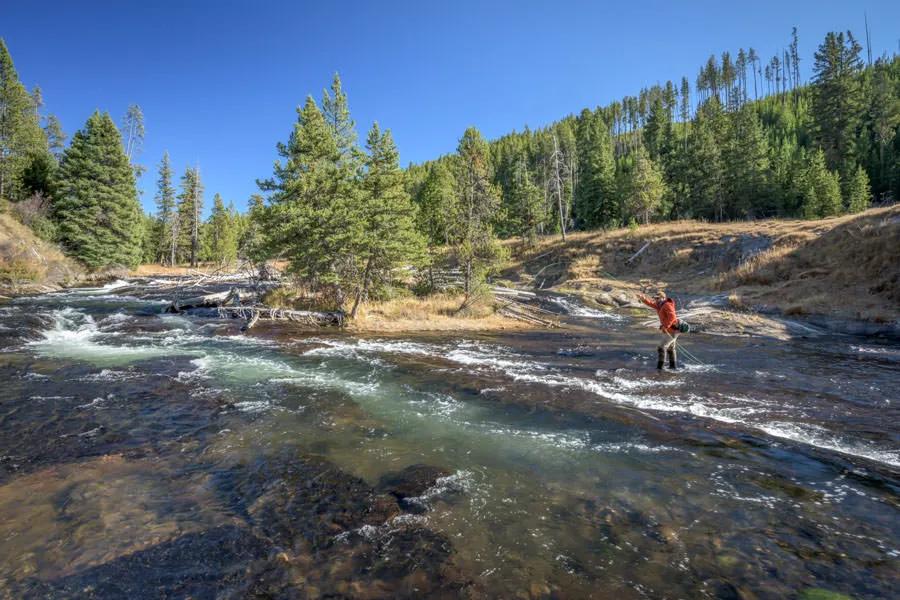
The Gibbon River
Most of the Gibbon River that is ideal for fly fishing during runoff is canyon water, although there is a decent-sized meadow just upstream from the Madison Junction, where the Gibbon meets the Firehole River to form the Madison River. Most of this 5-mile stretch is visible from the road, and the river runs 20’ to 30’ wide. Fishing is available for resident trout from early May to early July. The lower Gibbon River is often fishable with nymphs on opening day, with dry fly fishing kicking in closer to the middle of June. Resident fish run 6-14” on average, but are not nearly as numerous as on the Firehole River.
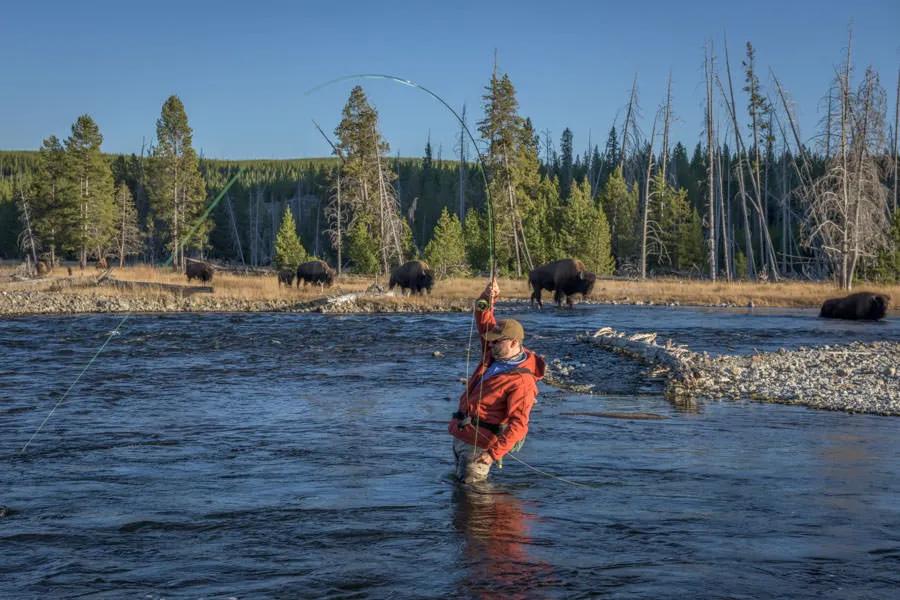
The Madison River
The Madison River in Yellowstone National Park is productive when other rivers are in snowmelt runoff, as it holds both resident and migratory fish. Riverside Drive is located about 5 miles inside of the park from West Yellowstone and is adjacent to an enormous riffle where the river flows only a few inches deep. Below this point, the population of resident trout is very sparse, making it a poor choice in the spring. The fishing holds on for about a month before water temperatures become too warm. The main attraction during June is hatches of Pale Morning Duns during the day and Caddis in the evenings. For the PMD’s, be sure to carry emergers, duns, and cripples in a #16. For the caddis, carry both olive and tan patterns in #12-#16. This stretch of river sees a sporadic hatch of Salmonflies during the middle of June.
The months of May and June in Montana and Yellowstone National Park can serve up some of the most dynamic fishing of the year, but they can also be some of the most challenging fishing of the year. As mountain snowpack comes tumbling out of the high country, many of Montana's freestone rivers will have periods of time when they are just too high and muddy to fish. But with an abundance of spring creeks, tailwaters, and smaller rivers, there is almost always a good place to go fly fishing in Montana during the snowmelt runoff timeframe of May and June.