

Farmers often despise grasshoppers because they can eat crops, but trout and fly fishermen love grasshoppers because they are a reliable food source for trout and can provide exciting fly fishing opportunities. Our Montana fly fishing guides always look forward to late summer and fishing grasshopper patterns. However, for anglers who have been fishing in Montana for a while, they know that some years are better than others for fishing grasshoppers.
Sometimes the hopper fishing can make for the best part of the season, but other times the fish just don’t seem as interested in the big bugs.
So what makes for a good hopper year?
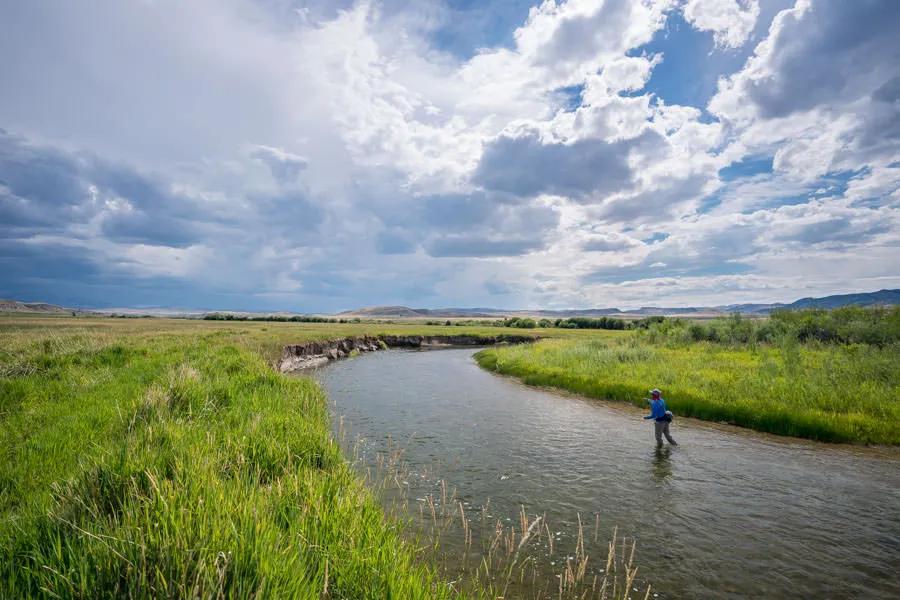
Weather Patterns
Localised weather patterns are the biggest factor and can make all the difference to grasshopper numbers and the crop fields they call home, and it starts sooner than you think.
In general, for a good hopper fishing season, you want the previous fall to be gradual, with no harsh, early cold snaps. Then you want mountain snowpack that is not overly high or alarmingly low to build throughout the winter. Most important for large grasshopper populations is a warm spring and early summer, which can mean ideal late summer conditions for grasshoppers. If spring and early summer are very warm though, some farmers and ranchers may make their first cutting early, killing grasshopper nymphs before they mature into fully winged adults that can escape farm machinery. If farmers and ranchers cut their fields by late July and August, most species of grasshoppers are fully mature. These are the cuttings that cause large numbers of adult bugs to fly and flee towards the riverbanks. Keeping an eye out for which fields are getting cut and then fishing nearby can make for some great days.
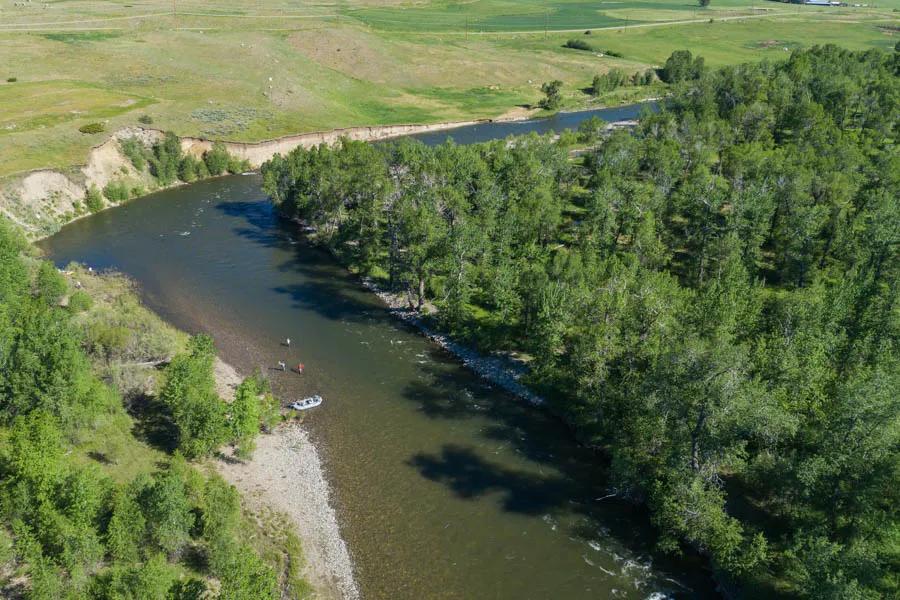
Early vs. Late Crop Cuttings:
Many of Montana’s river valleys are filled with a variety of crops, most of which make for phenomenal grasshopper habitat. During late summer and early fall, you can often hear them chirping by the millions at times while fly fishing the Yellowstone, Missouri, and Madison Rivers, among others. As summer kicks into gear by early July, farmers must decide when they will harvest their first crop of the year. The timing of the first cut in particular, can make a big difference to grasshopper populations and to how good the hopper fishing is that season.
Farmers and ranchers mainly consider their crops’ maturity when deciding when to harvest. They look to optimize their crops' yield and nutritional value for livestock. Spring-season weather plays a huge role when farmers decide to make their first cuts. Long, wet springs push back crop maturity times and harvest dates. If cutting hay, the crop must dry in the field for three or four sunny days before being baled to avoid mold growth and to dehydrate properly. If it rains on cut hay, the crop’s value can plummet, or it can even be ruined entirely. While waiting later into the season to harvest may be safer weather-wise, the quality and nutritional value of the hay can decrease, which can make deciding when to harvest a challenging decision for farmers and ranchers.
When farmers and ranchers see a chance in the forecast to do an early cut in early July, it can take away grasshopper habitat and force the undeveloped, flightless, vulnerable nymphs to seek refuge in other nearby fields and uncut borders. A fair amount of all hoppers, but especially these unwinged nymphs, are killed by hay balers and other farm equipment at each cutting, regardless of the timing.
Generally speaking, if farmers start cutting their fields early, it’s not great for the grasshopper populations. However, if they’re cutting early because of a warm, dry spring, it could bode very well for the overall grasshopper population. It’s also possible, though unlikely, that a cut is done so early in the season that it’s before most of the grasshoppers have even hatched, leaving most of them to survive into adulthood.
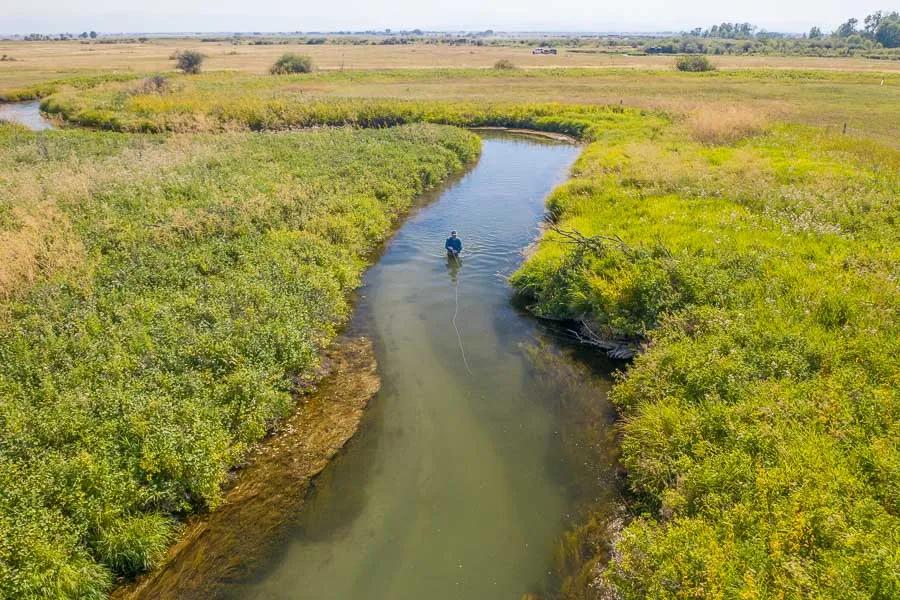
A first cut that occurs later in summer can mean that most of the nymphs will have had time to fully develop into adults. Once they reach the adult stage, grasshoppers have fully developed wings and can easily fly relatively far distances to escape farm machinery and find safe havens of uncut crops or grasses. They also often end up errantly falling in rivers, though, especially on windy days. A late cut also gives adult hoppers additional opportunity to lay eggs for the next generation, leading to potentially higher numbers of hoppers the following year.
While hot, dry spring weather is good for grasshopper nymphs, it can also mean farmers will cut their fields early and reduce hopper habitat. If spring weather is variable, however, it can push back the first cutting, potentially preserving grasshopper habitat and giving the bugs more time to mature and be able to survive. The weather can’t be too cool and wet, which kills off hopper nymphs, but if an uncertain forecast keeps farmers from cutting really early, it can help make for a boon hopper fishing year.
The needs of grasshopper species contrast somewhat with those of farmers. It’s a balance of these factors that makes for a good hopper fishing season, all stemming back to the weather in one way or another. Grasshoppers depend heavily on warm, dry weather to thrive, and their life cycles are dictated by Mother Nature, just like crops.
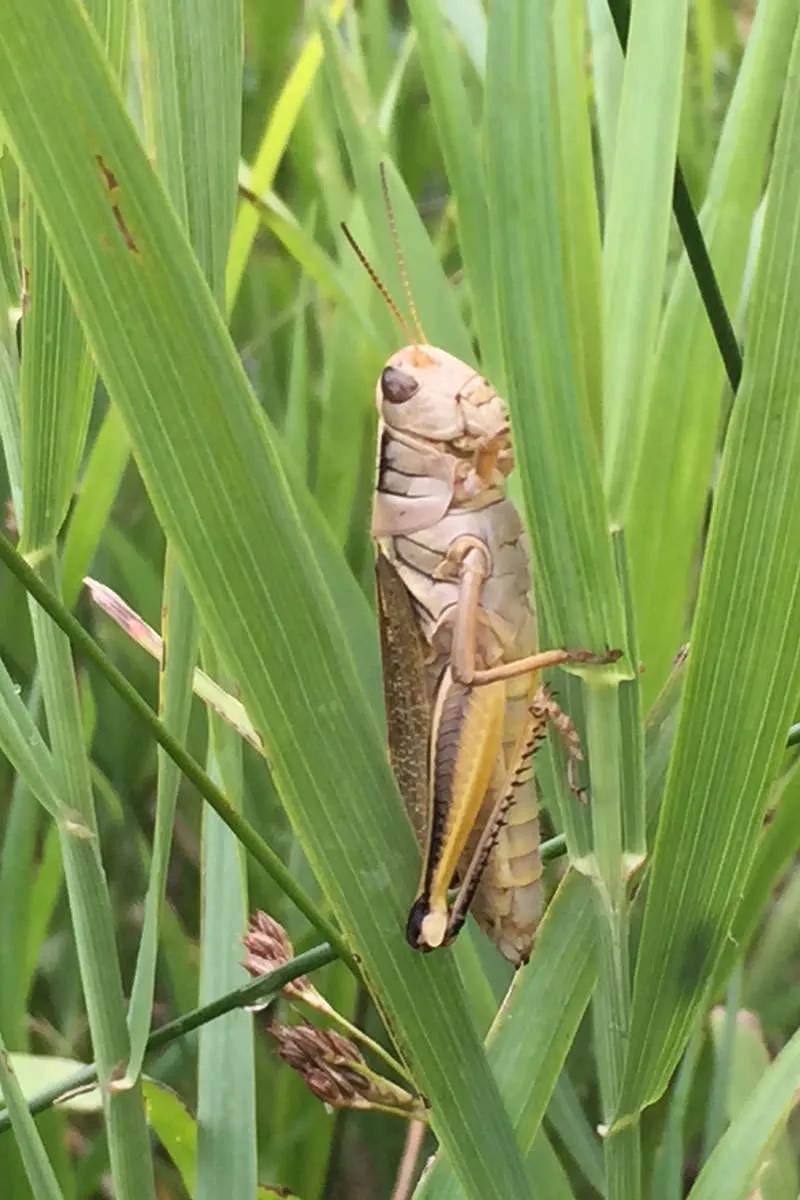
Grasshopper Lifecycle
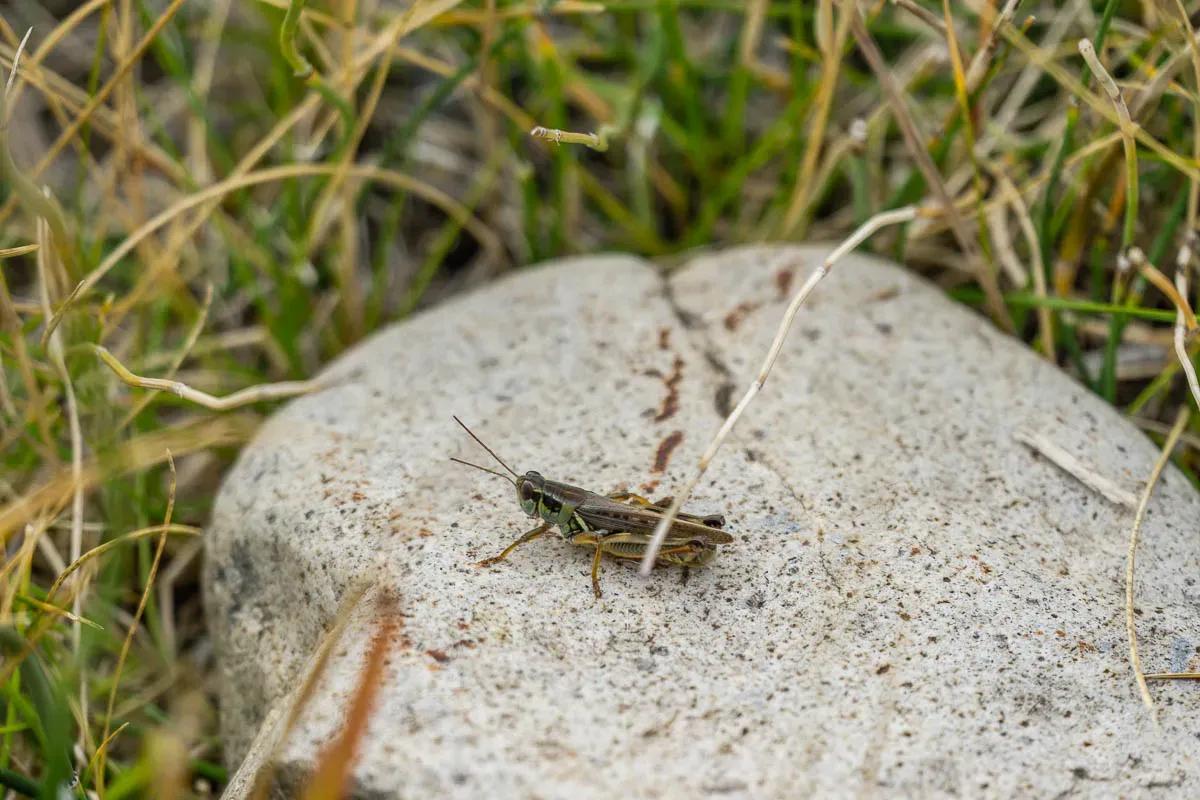
More than 70 different grasshopper species exist in Montana, but only three similarly behaving species - migratory, two-striped, and clear-winged grasshoppers - are really important for fly fishing in Montana. These hoppers have one generation per year, and their populations are cyclical, with periods of drought years sometimes producing huge populations, as they generally thrive in warm, dry conditions. Because there are several species that develop under different timings, a mix of nymphal and adult hoppers may be present all season.
In late summer and fall, female grasshoppers deposit pods of eggs until the first hard frost of the year. These pods usually have 8-30 eggs each, depending on the species, and are deposited an inch or two below the soil surface by a purpose-made “ovipositor” organ on female hoppers that essentially digs into the soil. The eggs are largely unaffected by frigid temperatures and will remain there, insulated by snow, until they hatch in the spring and early summer. The eggs of most hopper species have an “embryonic diapause” that kicks in when freezing temperatures are hit in fall or early winter, which pauses their development until the spring, so that they can finish hatching in the spring and summer when they’ll be able to survive in warm temperatures.
When soil temperatures reach about 50-55 degrees F, typically early in May through the end of June, hopper eggs begin to hatch and that is the start of when Montana fly fishing fans can begin to think about hopper fishing. After the embryos develop for a few weeks or so and the eggs hatch, most hopper nymphs reach their adult, fully winged phase in 30-50 days, after going through 4-6 exoskeleton sheddings.
While developing into adults and going through their shedding phase, hopper nymphs do not have functioning wings, making them extra vulnerable. They are able to crawl and hop and will seek forage almost immediately after hatching, but not being able to fly limits their ability to escape from predators and farm machinery. Once fully developed, fully winged adult hoppers survive a few weeks to a couple of months before reproducing and then dying off as the weather becomes harsh and food scarce.
Weather’s Importance to Grasshopper Populations
Like most insects, hatch timing for grasshoppers is largely dependent on weather and temperature on Montana's best fly fishing rivers and creeks. In general, grasshoppers need a warm, dry spring and early summer to thrive. In hot and dry spring conditions, eggs are laid earlier, nymphs develop faster, and the hatchlings move into crop areas sooner. In general, hopper eggs actually fare better during drought periods because their main enemy, fungus, thrives when the soil is damp and moist. Years of drought can bolster hopper populations as they mean a consistently reduced amount of fungi and therefore less nymphal hopper mortality. Large regional hopper outbreaks typically last 2-4 years, then collapse as natural diseases build in the population.
The previous season’s fall and winter weather can also impact the next year’s hopper population by affecting how soon parents lay their eggs. If eggs are deposited late in the season, during a particularly cold summer, or just before an early cold snap, and do not sufficiently develop before their diapause is triggered by freezing temperatures, they have a reduced chance of hatching successfully in the spring at the proper time and surviving into adulthood. Abnormally warm mid-winter weather spells can also trigger eggs to begin hatching too soon, putting the nymphs at risk of emerging in cold, wet spring weather, where they will be unlikely to survive.
Over the winter, grasshopper eggs are insulated by snowpack and largely unaffected by air temperatures. It would take a week plus of sustained, double-digit-negative temperatures to kill off a high number of hopper eggs. Okay, so maybe that does happen now and again in the fields near Montana's fly fishing rivers, but not too often. A good winter snowpack helps survival rates as the snow not only insulates the eggs but also prevents them from drying out. A healthy winter snowpack also means plenty of water in the ground for hay and other crops that comprise grasshopper diets later in the summer, not to mention for the trout in the river.
The most important factor for high hopper populations is a lack of moisture in the soil as the eggs begin to hatch come springtime, triggered when the soil reaches around 50-55 degrees. Cool, wet spring weather is not good for emerging hoppers, as they are very vulnerable to fungi and other pathogens, which become more prominent the more moisture is present in the soil. In the spring, a slow, week-long drizzle with temperatures hovering in the 60’s can infect and kill off a lot of that year's hatchlings.
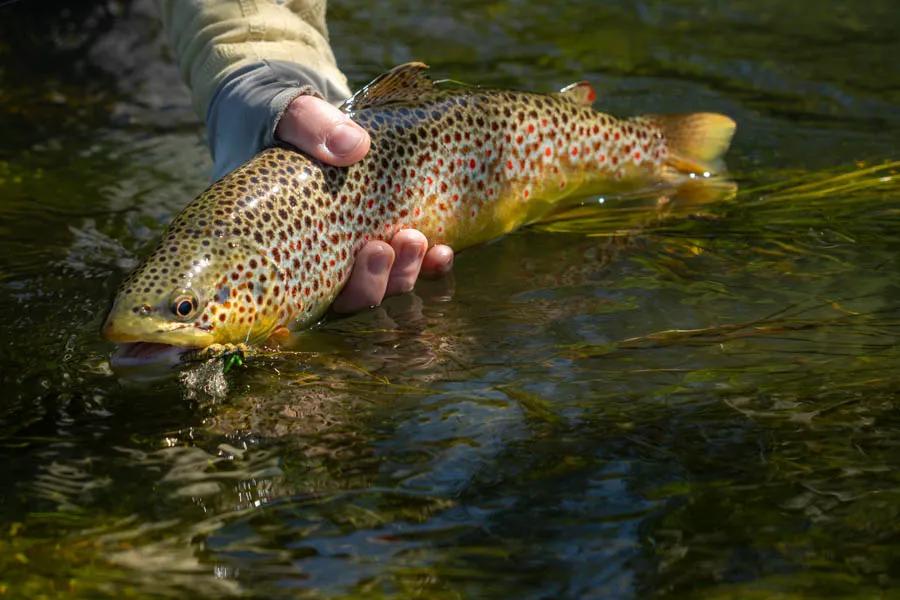
Newly hatched hopper nymphs are small and fragile, and the fly fishing weather on the first few days after hatching is also crucial to their survival. A heavy rainstorm or an ill-timed cold snap can kill them off easily because they have limited fat reserves and must immediately seek food after hatching. Extended wet, cold weather in the spring and late summer (less than ~65 degrees) can easily starve and kill off nymphs in large quantities, resulting in few hoppers around later in the season and poor fishing.
Once fully mature, winged adults, hoppers depend on warm, sunny days for crucial activities like feeding and mating. Cold weather is the primary cause of adult hopper mortality, and prolonged wet, cold periods can make them inactive and eventually kill them off.
Predicting how good the hopper fishing will be each season is tricky and depends on a lot of variables that are out of our hands, but recognizing what conditions are conducive to good hopper years can at least give anglers an idea of how much they should stock up on big foam dry flies. How do you think the hopper fishing will be this year?
By: Derek DeYoung & Patrick Straub
Read More About Montana Fly Fishing with Grasshoppers and Terrestrials
6 Great Tips for Fishing Hoppers, Ants, and Beetles
5 Tips for Twitching Hoppers
The Montana Fly Fishing Guide's Favorite Hopper Patterns